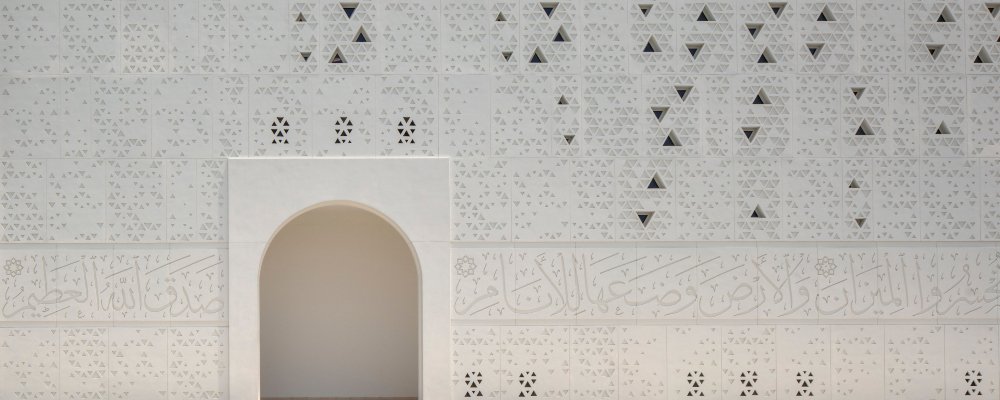
In the middle of the arid village of Basuna (Sohag, Egypt), Dar Arafa Architecture has recently completed a brand new mosque with light block made of sand, lime and air.
The Basuna Mosque by Dar Arafa Architecture stands over a site amidst a noisy, dusty and densely constructed area with encroaching residential buildings, a cemetery, cattle frequently moving back and forth on the road and a weekly makeshift small market right outside the main entrance of this place of worship posed a major challenge. The new building must offer peace and tranquillity for its users and so a few requirements had to be met.
The solution depends on a cavity-wall with only one window, overlooking the calm cemetery, covered with a hybrid roof system; consisting of a concrete beam gridiron, cast in situ, forming a central square (6.0x6.0m) covered with a main dome, and 108 smaller square openings (0.82 x 0.82m) partially covered using pendentive-domes, complemented with fixed horizontal and operable vertical glass panels allowing fresh high-altitude northern breeze to filter into the mosque, indirect glare-less sunlight to naturally illuminate the interior, and rain-water to be collected and used for cleaning and watering plants.
The main dome was constructed using an Egyptian-made light block made of sand, lime and air. The remarkable lightness of the block decreased the building’s own-weight, in turn decreasing the required dimensions of all reinforced concrete elements. Its dimensions (100x200x600 mm) were perfect for introducing an original aesthetic, serving the conceptual scheme of the mosque, through employing a special cutting list and a simple staggered tessellation. The architect had to devise a special steel compass to guarantee the meticulous spatial positioning of every single block regardless of a mason’s skills and accuracy. Pendentive-domes are a known structural element, traditionally used to facilitate the transition from square to octagonal plans to finally receive the circular plan of a dome.
In the Basuna Mosque, this element was reimagined as an independent unit, with innovated functions; structurally as a roof system, environmentally as a wind-catcher and skylight, and aesthetically as an independent geometrical object, appreciated both from the interior and the exterior.
The entrance dome references the historical dome of the Cordoba Grand Mosque. It serves as a reminder of the rich potential of historical architecture in both the architectural discourse and construction innovations.
There are 4 entrances to the building, two of which could be made accessible for worshippers with special needs, once the roads and infra-structure of the village allows for free and independent movement of people with special needs.
The multi-use hall is designed to accommodate seasonal increases in the numbers of worshippers, of both genders, during Fridays and the Holy month of Ramadan, as well as serving an array of purposes all year round; temporary medical clinics, after-school and literacy tuition classes, etc...This brings back to mind the original all inclusive function of the mosque, not only as a place for ritualistic worship but as a service center for both Muslims and non-Muslims alike.
Pictures by Essam Arafa and Tariq Al Murri.
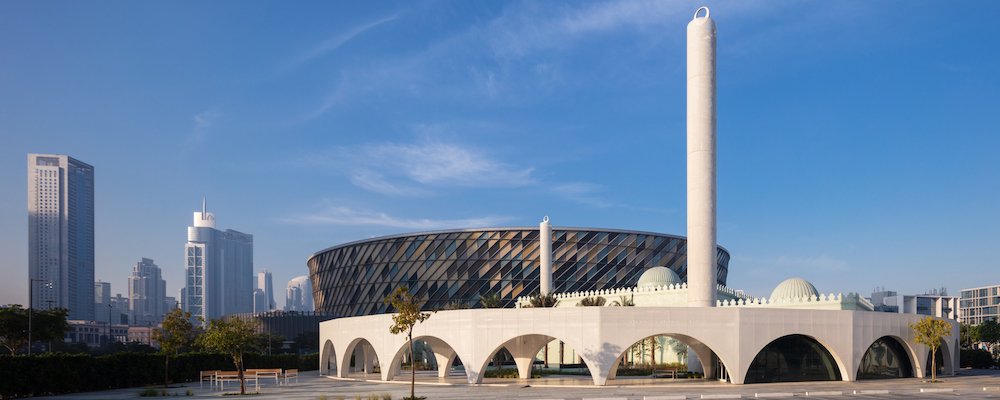
To close the 2023 #RamadanSeries, this project enhanced an existing building in popular district of Dubai by re-imagining the role of the mosque in the city.
Season 4, Episode 4 – Mosque of Reflection, Dubai, U.A.E.
In the warm and humid delta of Bengal, the idea of embodiment of spirituality by creating calm and serene environment is at the start of this project.
Season 4, Episode 3: Aman Mosque, Narayanganj, Bangladesh.
With an aim to return to the roots and basic building blocks of the Prophet’s Mosque, here is a humble construction topping an elevated rocky site.
Season 4, Episode 2 - Al Gharra Mosque, Al Madinah, Saudi Arabia
Published each Friday during the Holy Month of Ramadan, the #RamadanSeries looks at contemporary mosques around the world.
Season 4 – Episode 1: Masjid E Zubaida in Raichur, India.
For our last episode of the #RamadanSeries, let’s discover a ‘place of tranquillity’ with tree-like pillars built by Marks Barfield Architects…
Episode Four – Cambridge Central Mosque, UK.
A dome does not make a mosque and stacked stones can become calligraphy. With these two strong elements Urbane Indonesia created a religious building once listed among the Top 5 in 2010.
Episode Three – Al-Irsyad Mosque, Indonesia
Mixing old and new ideas into a contemporary concept, this mosque, by Shatotto, is also a departure from tradition worship places in both physical and philosophical designs.
Episode 2 - Mayor Mohammad Hanif Jummah Mosque, Dhaka
In Al Quoz, one of Dubai’s busiest industrial areas, The Mosque of Light by Dabbagh Architects is a contemporary place of worship that is quietly masterful in its use of form, materiality, and controlled natural light to evoke a sense of calm, spiritual connection, and to transition the worshiper from the outer material world to an inner sense of being.
#RamadanSeries - Episode 1 - Mosque of the Late Abdulkhaliq Gargash, Dubai
On the occasion of the Holy Month of Ramadan, Lebanese designer Nada Debs signs a new collaboration with FBMI and female weavers from Afghanistan.
Season 3 - Episode 4: The Transcendence Collection by Nada Debs
Lebanese designer Nada Debs unveils her brand new collection in exclusivity for our website.
Season 3 - Episode 3: The Transcendence Collection by Nada Debs
Aljoud Lootah finds her inspiration from traditional Emirati objects and customs. For her latest creations, she adds a touch of prestige to the Medkhened.
Season 3 - Episode 2: Medkhened by Aljoud Lootah
Jordanian design duo Naqsh Collective presents ‘Jhazek Ya Shams’ a series of home collectable line with traditional Palestinian embroidery patterns.
Season 3 - Episode 1: ‘Jhazek Ya Shams’ by Naqsh Collective.
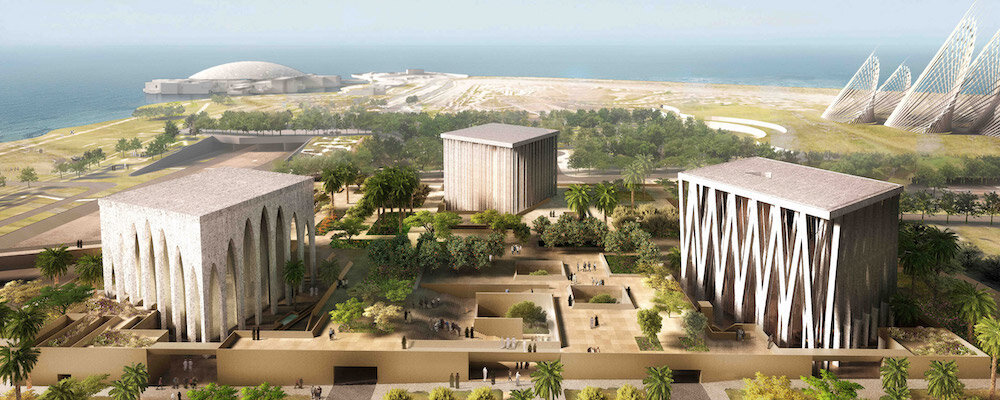
The last post for the 2020 Ramadan Series, we look towards the future with an interfaith complex unveiled in September 2019…
Season 2 - Episode 4: The Abrahamic Family House
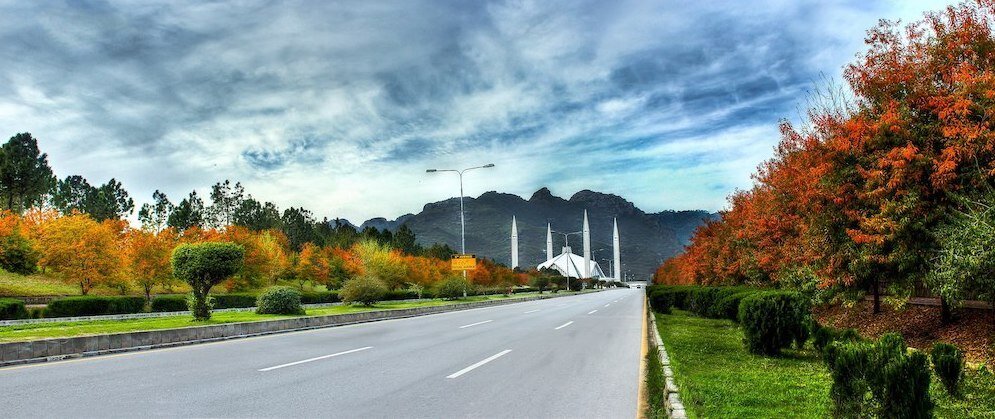
The journey continues but this week, we look at one of five biggest mosques in the world. Imagined in 1966, this building is a splendid realisation by a Turkish architect.
Season 2 - Episode 3: Shah Faisal Mosque, Islamabad, Pakistan.
We carry on our journey with contemporary mosques. This week, we focus on a location made out of terracotta bricks and a perfect interaction with day light.
Season 2 - Episode 2: Bait Ur Rouf, Dhaka, Bangladesh.
Last year, I launched the #RamadanSeries focusing on mosques and Islamic architecture during the Holy Month of Ramadan. Here is the Season Two.
Season 2 - Episode 1: Hikma, a religious and secular complex in Niger.
For the last entry of my Ramadan Series, here is some positive news… After its destruction in 2017, a committee lead by the UAE Minister of Culture has pledged to rebuild the 800-year-old mosque.
The penultimate stop of our series about contemporary mosques brings us to the Lebanese town of Moukhtara. There, L.E.FT Architects have transformed a 100-square-meter structure into a symbolic, picturesque mosque.
After working on a primary school for a Greek Orthodox community, Architect Angelo Candalepas received the commission in 2009 from the Australian Islamic Mission for the mosque in Punchbowl.
In the middle of the arid village of Basuna (Sohag, Egypt), Dar Arafa Architecture has recently completed a brand new mosque with light block made of sand, lime and air.