Verner Panton: Form, Colour, Space
Verner Panton at 100: The Man Who Declared War on Beige. From the Panton Chair to the Spiegel Canteen, the Vitra Design Museum's new retrospective makes the case for design's greatest provocateur.
“Most people spend their lives in dreary, grey-beige conformity, mortally afraid of using colours.”
Say what you like about Verner Panton (1926–1998), but he was not a man who minced words or muted palettes. A hundred years after his birth, that provocation still stings a little, especially if you have recently repainted anything in pastel colours. It also happens to be a precise description of everything his work stood against: the timid, the tasteful, the carefully restrained. Panton spent his career doing the opposite, and the Vitra Design Museum is marking the centenary with Verner Panton. Form, Colour, Space, a major retrospective running at the Vitra Schaudepot from 23 May 2026 through 9 May 2027. It is a rare opportunity to see the full sweep of a career that was stranger, more rigorous, and more visionary than even his greatest hits suggest.
From Copenhagen to Outer Space
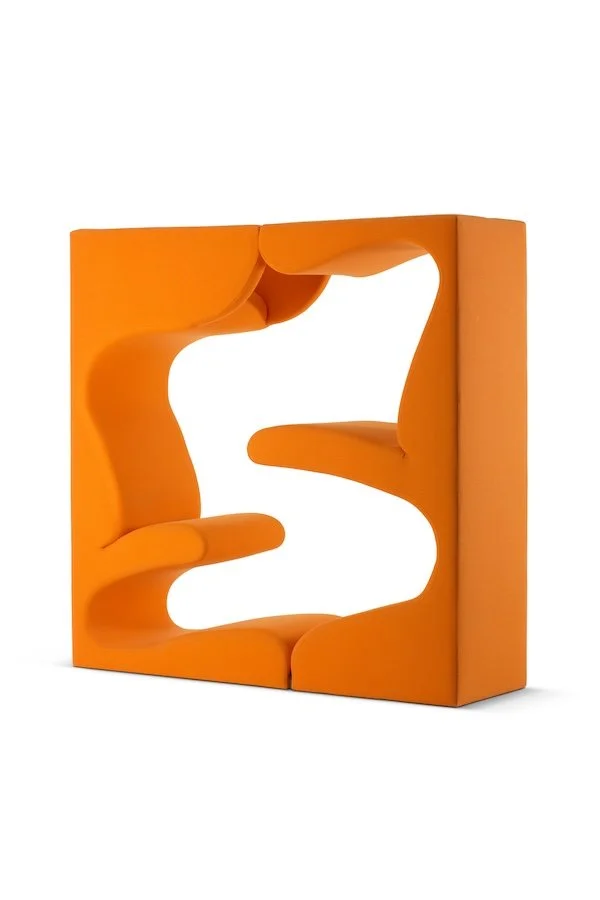
Panton trained as an architect at the Royal Academy of Fine Arts in Copenhagen and served his early years in the office of Arne Jacobsen about as orthodox a Danish design education as one could have. What followed was anything but orthodox. From the late 1950s onward, he began dismantling the clean, restrained logic of Scandinavian modernism and replacing it with something wilder: spaces saturated with colour, draped in textiles, populated by swings and living towers, and lit to alter your mood as deliberately as a stage set.
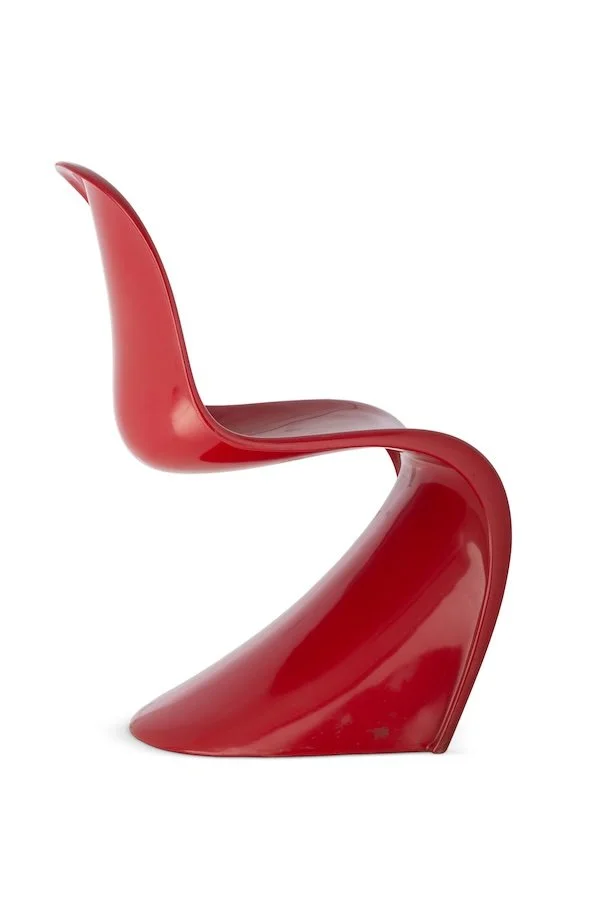
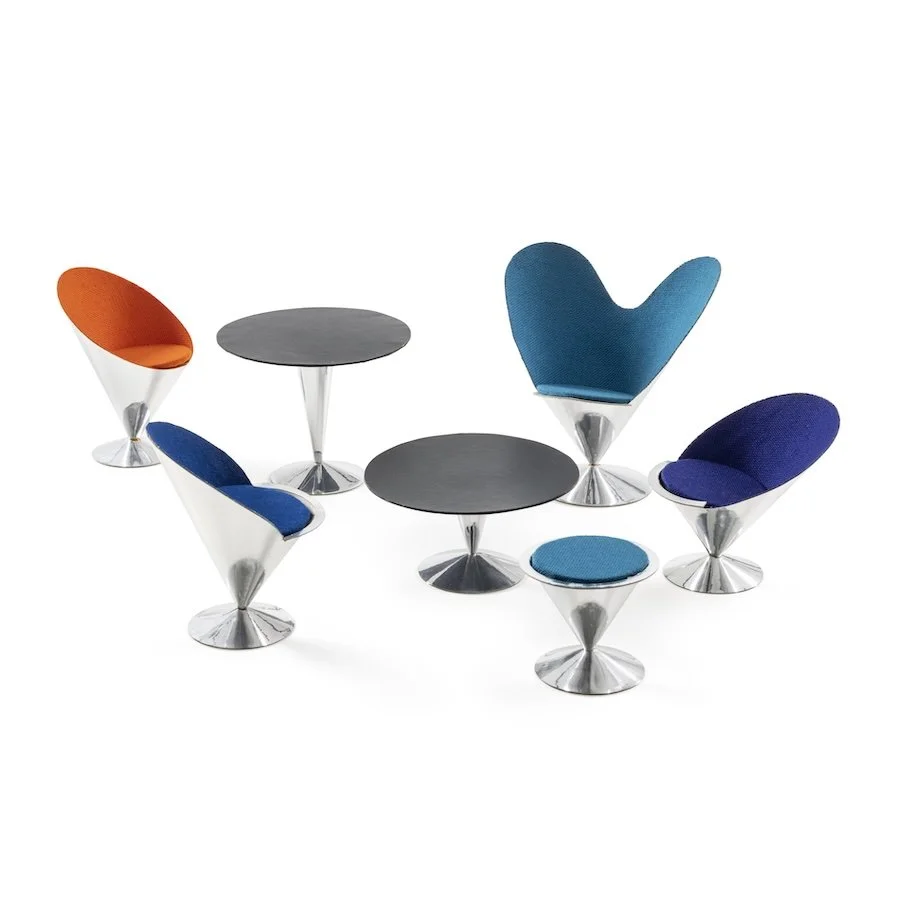
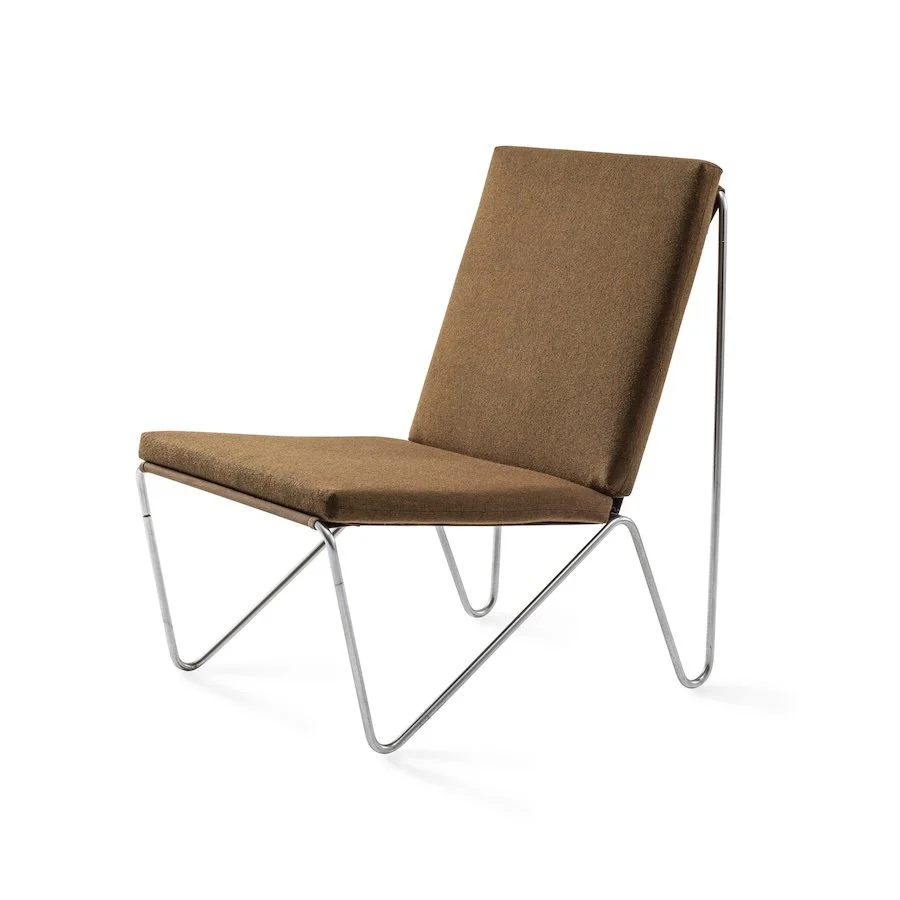
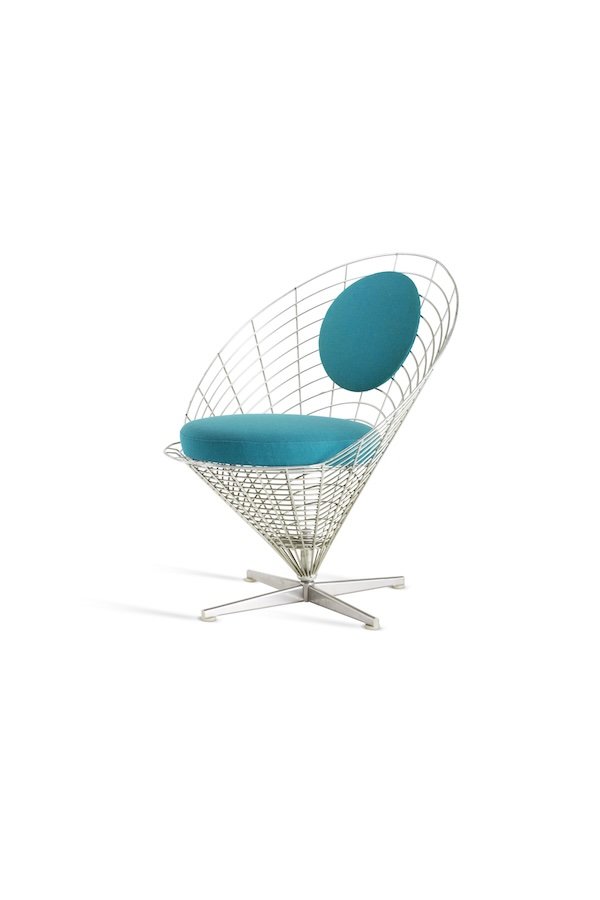
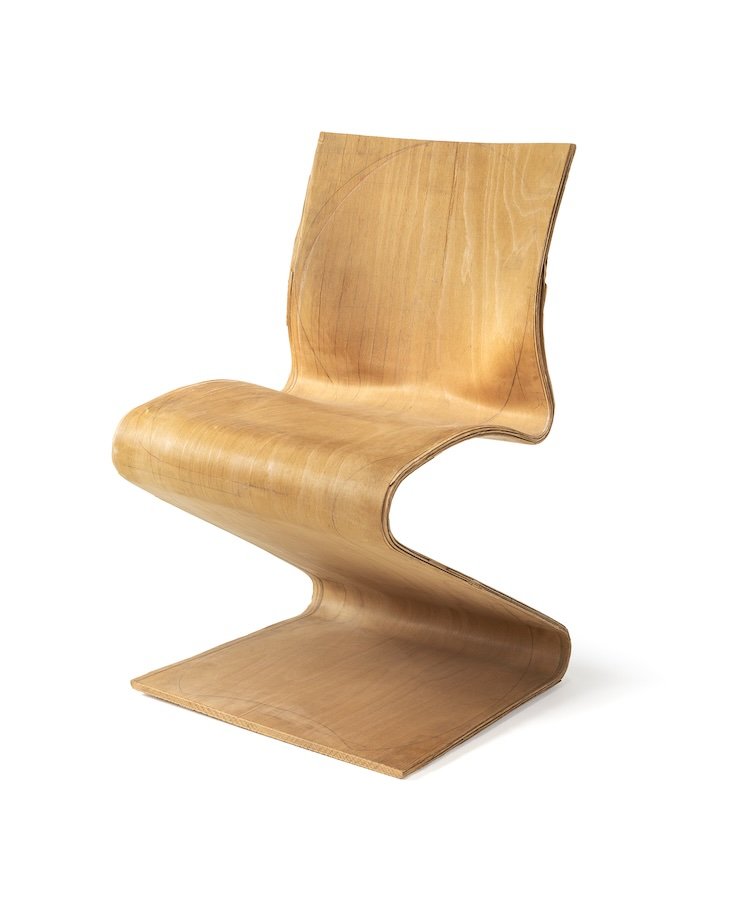
His most iconic product, the Panton Chair, captures this tension between discipline and abandon perfectly. The concept gestated for over a decade before Vitra finally launched it as a serial product in 1967. As the first chair made from a single piece of plastic with no back legs, it was as much an engineering feat as a design statement and it caused an immediate international stir that has never really died down.
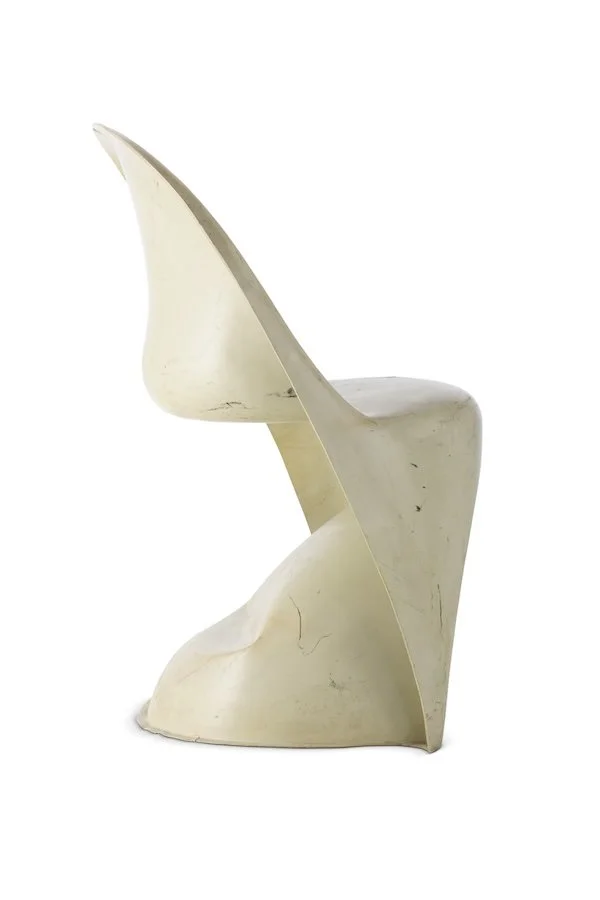
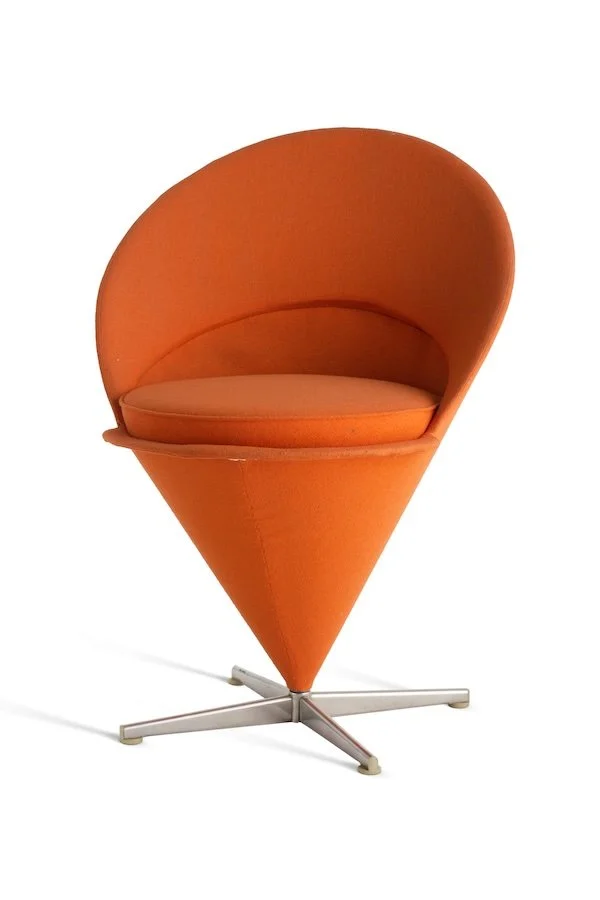
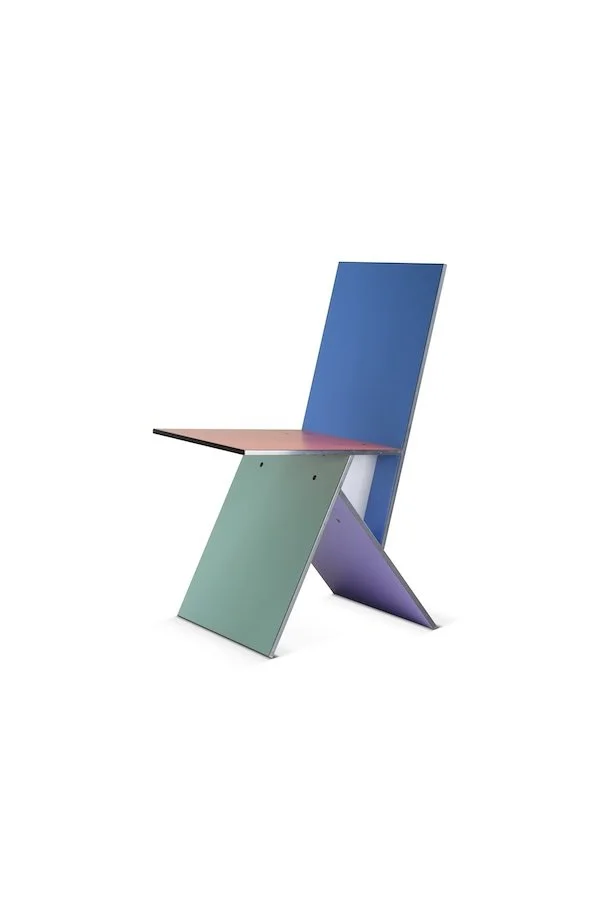
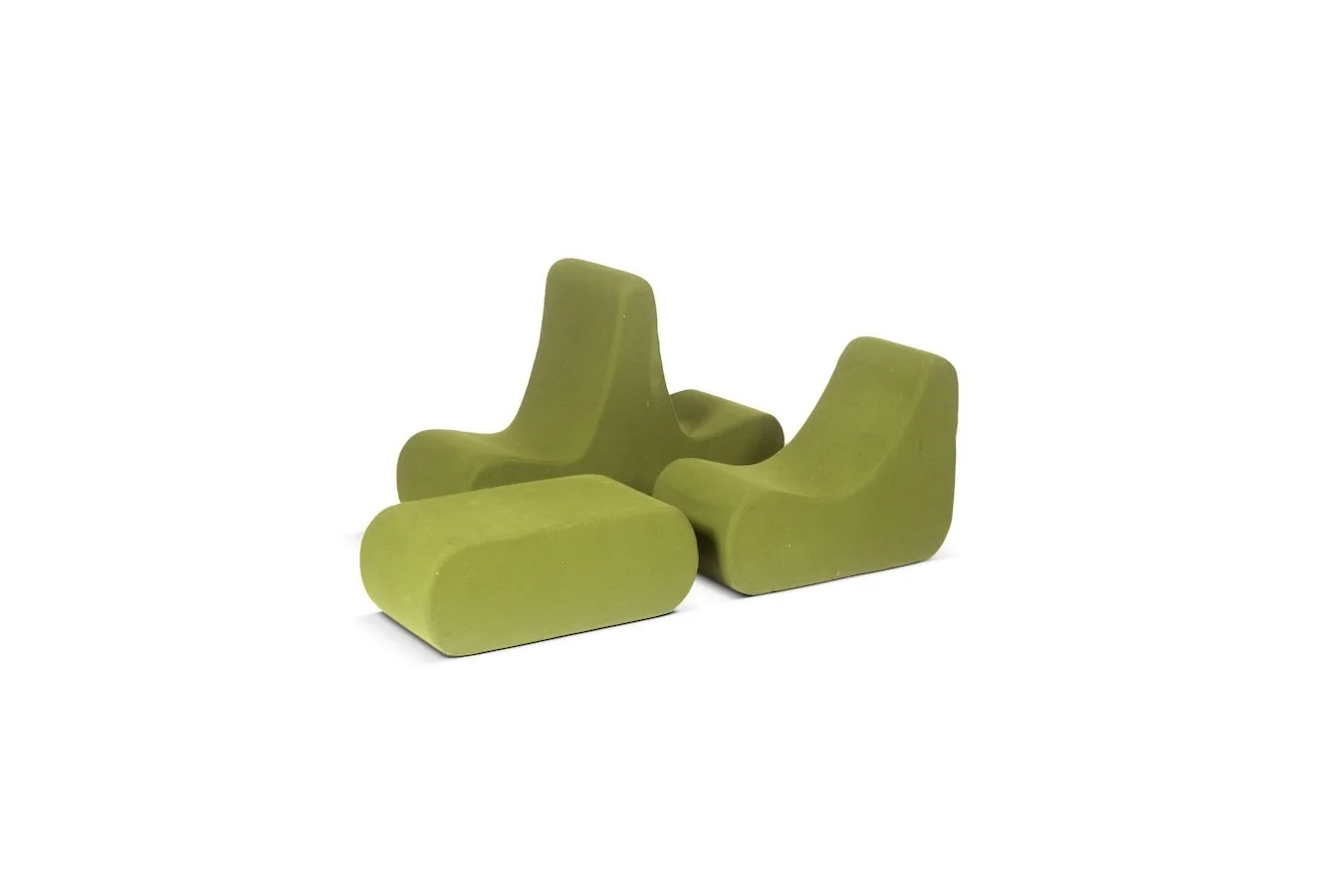
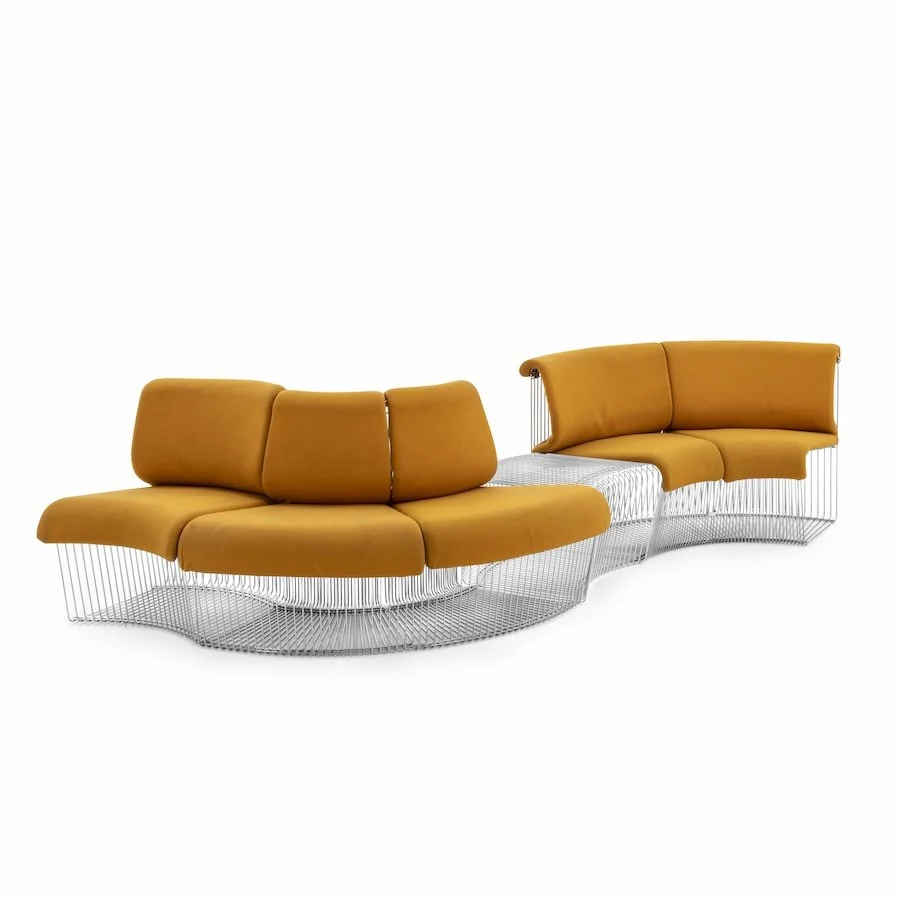
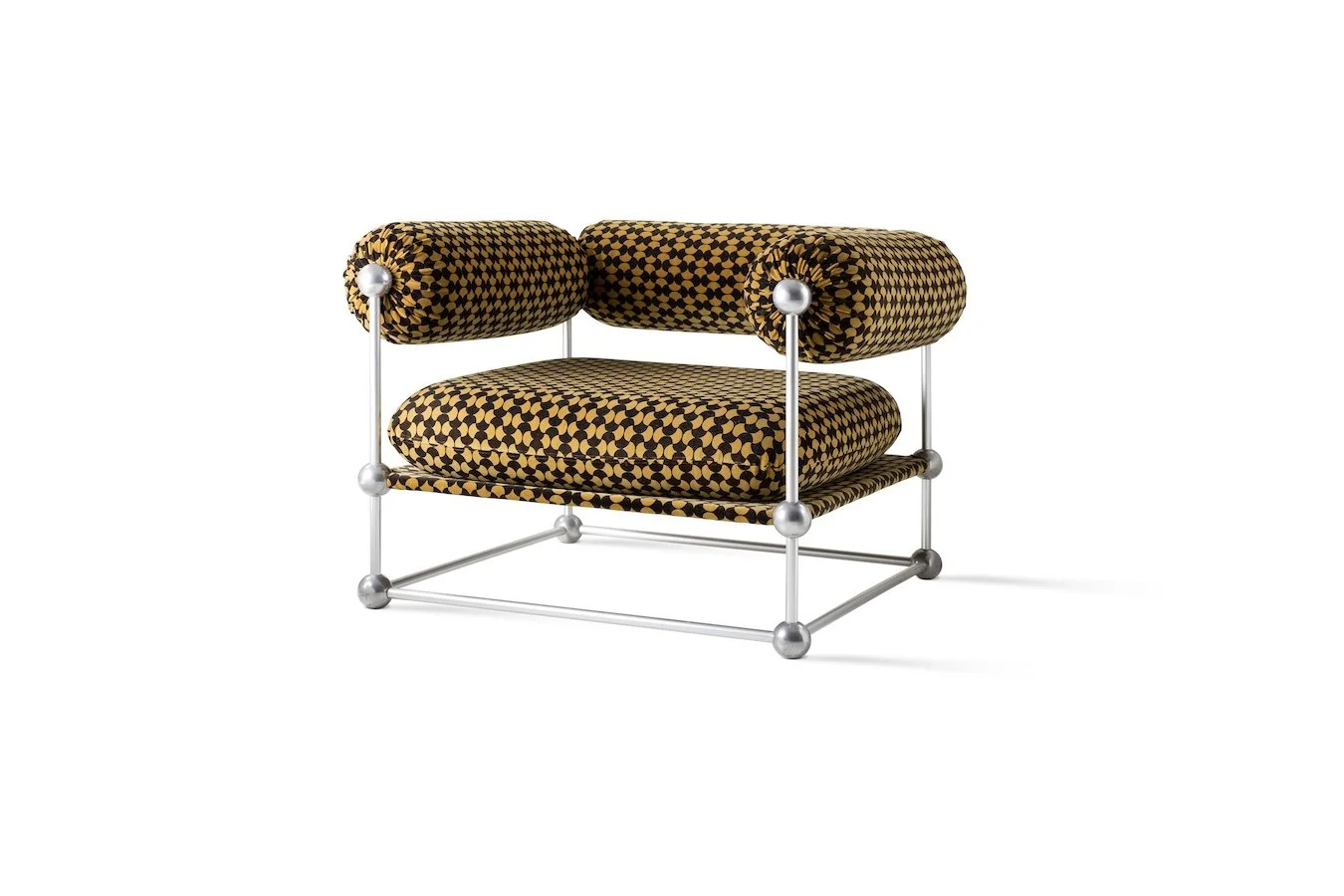
Total Environments
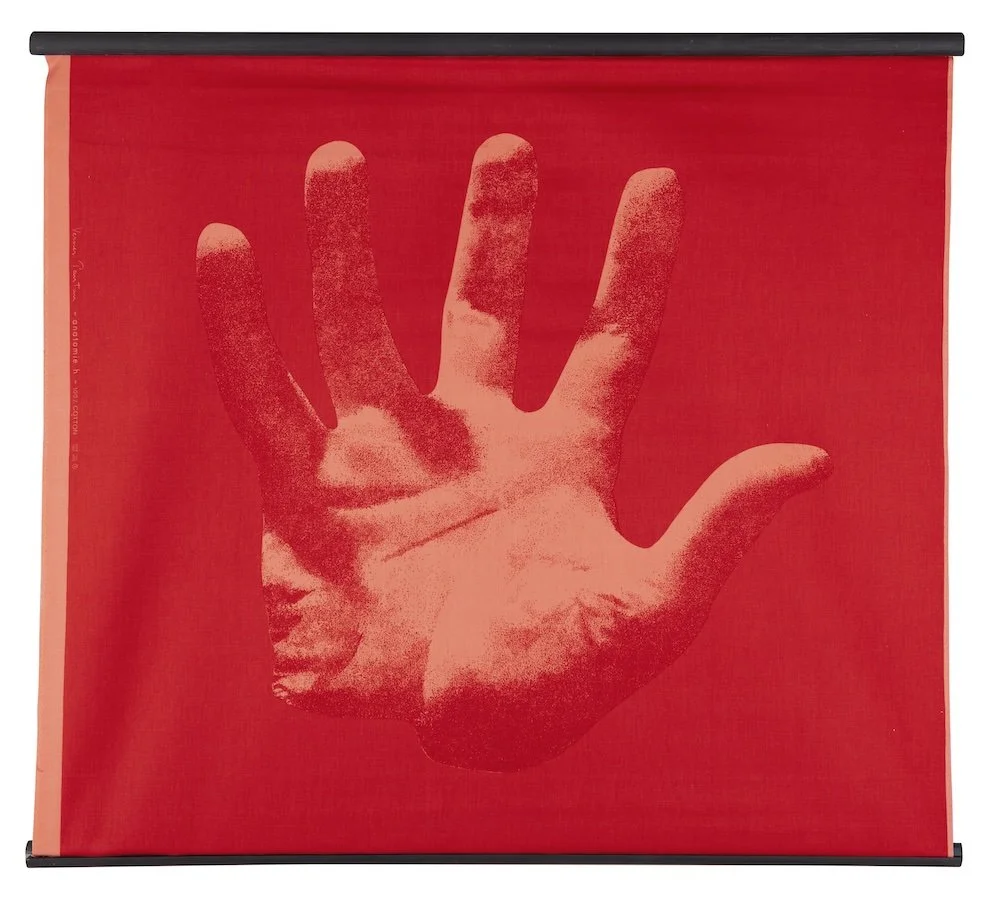
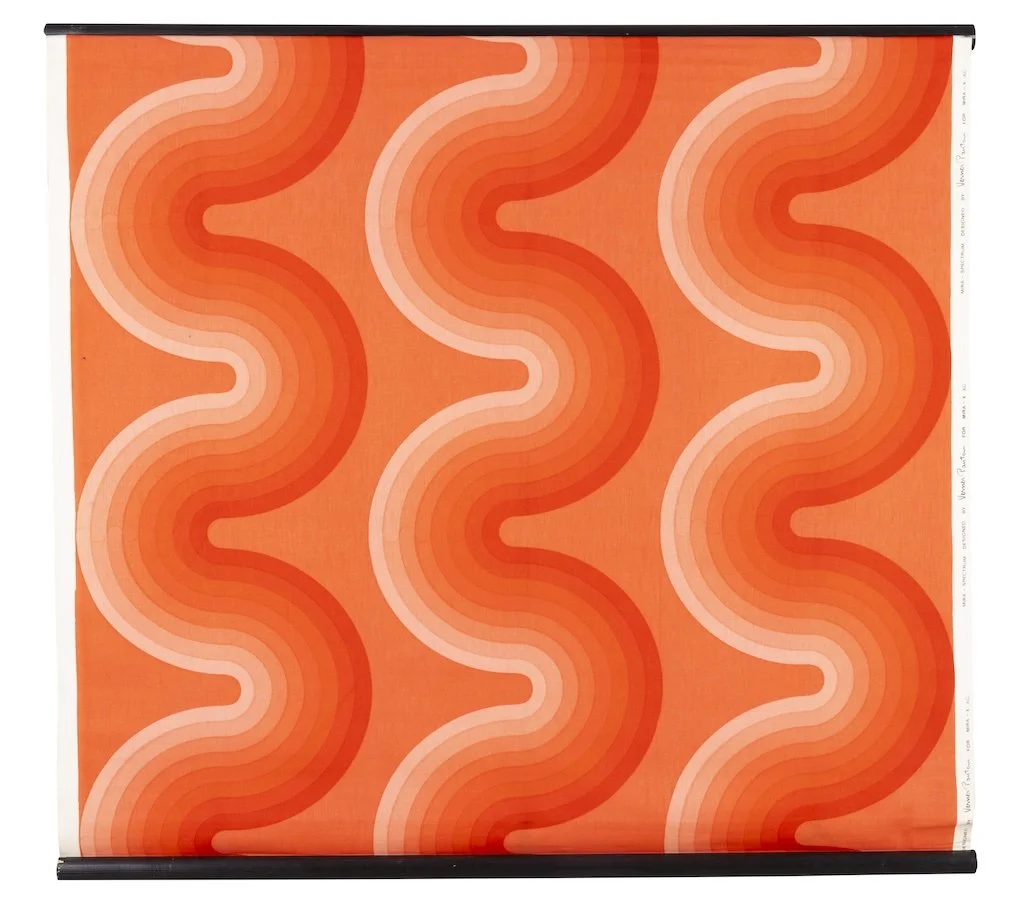
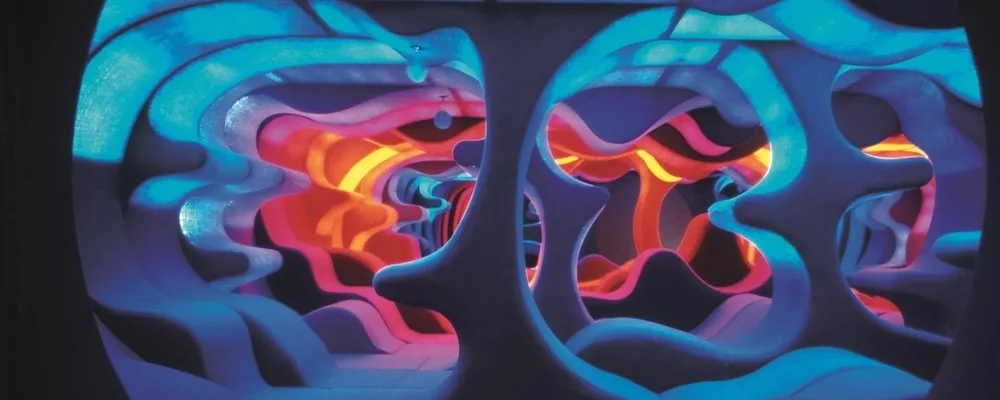
But objects were only part of the story. What Panton was really after was the Gesamtkunstwerk, the total environment where furniture, lighting, textiles, colour, and spatial form fused into a single, overwhelming experience. His Visiona IIinstallation of 1970, commissioned by the chemical company Bayer to demonstrate the possibilities of synthetic materials, remains one of the defining moments of twentieth-century design: an organically shaped Fantasy Landscape that dissolved the boundary between sculpture and habitation. A walk-in reconstruction of this legendary space anchors the Vitra exhibition, and rightly so.
The Spiegel Canteen: A Personal Favourite
Of all Panton's large-scale interiors, the one I keep returning to in images is the canteen he designed for the Der Spiegel publishing house in Hamburg in 1969. Panton filled it with specially designed furniture, lights, wall objects, curtains, carpets, and a coffered ceiling — an all-consuming vision in red, orange, and pink that Frankfurter Allgemeine Zeitungdescribed as "the most radical office interior that Germany had ever seen at the time." The idea that journalists were filing stories about world affairs from inside this psychedelic cocoon is almost too good to be true.
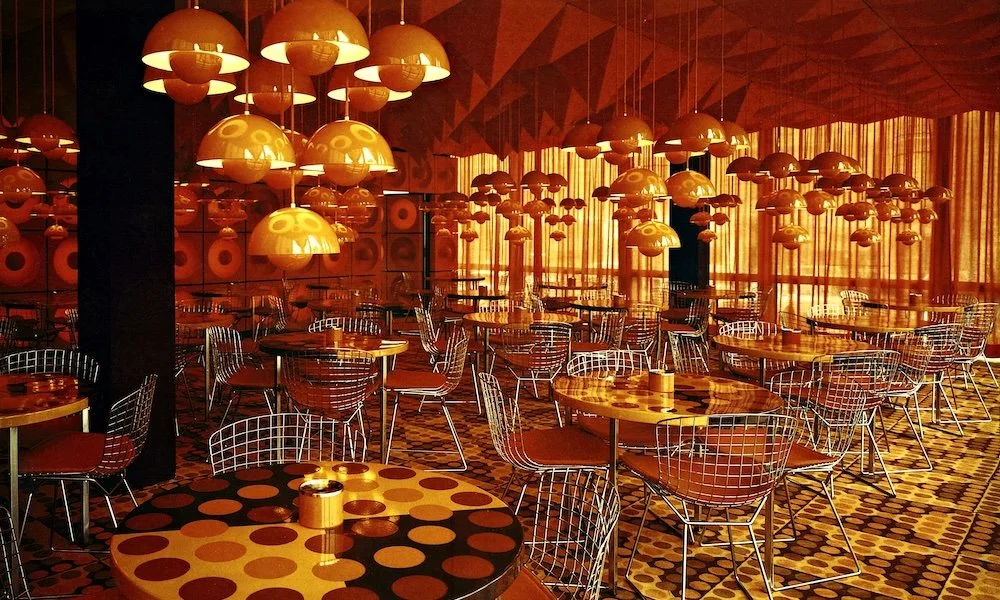
Canteen of the Spiegel publishing house in Hamburg, 1969 © Verner Panton Design AG
Panton designed not just the canteen but the entrance area, lobby, bar areas, employee swimming pool, editorial conference rooms, and the colour schemes for the entire administration building, every detail his own, right down to the mirror lighting that ran across walls and ceilings. The Spiegel Canteen is now a listed building, and after the magazine's move to HafenCity in 2011, it was preserved and relocated to the Museum für Kunst und Gewerbe in Hamburg, where it lives on as one of the most important interiors of the era. It's not the same as experiencing it in situ, of course but to stand inside it is still to understand, viscerally, what Panton was reaching for.
Why It Still Matters
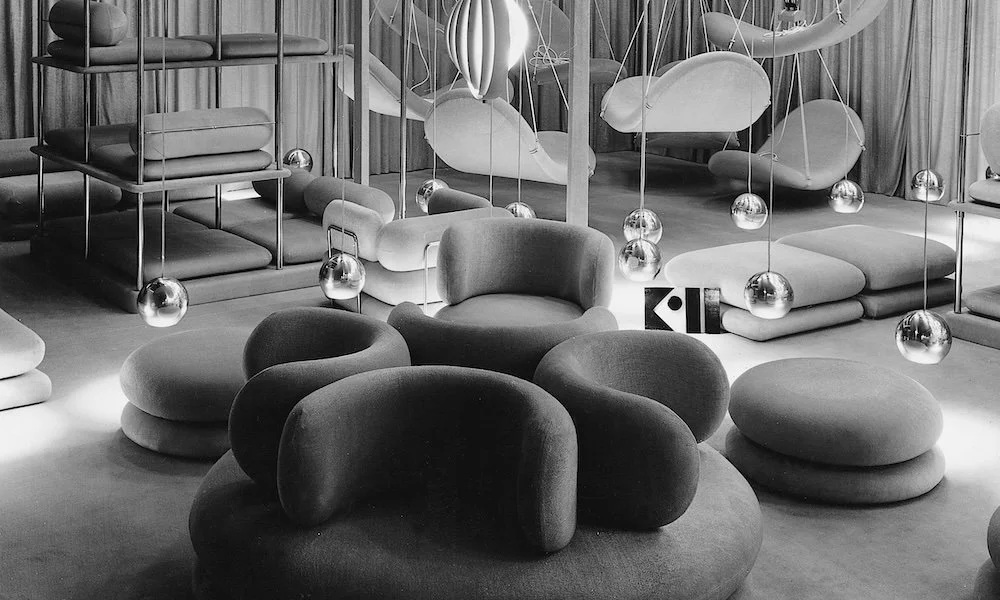
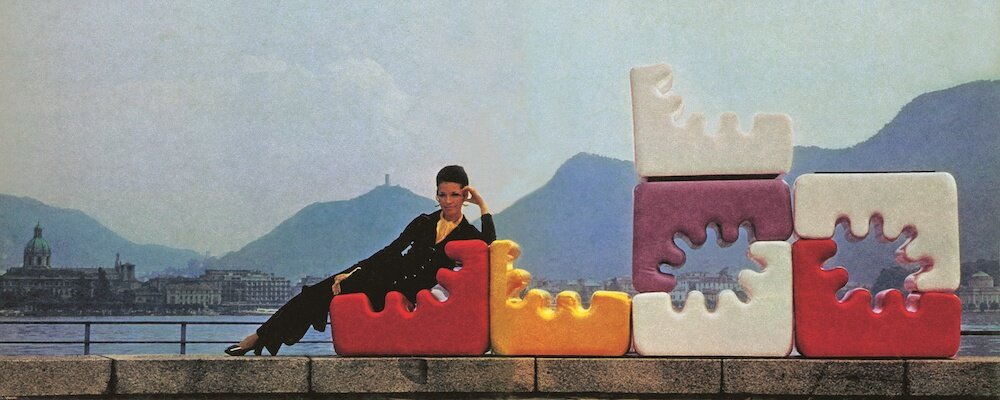
Verner Panton’s Flying Chairs, Multi-Level Lounger and seating furniture at the Cologne Furniture Fair, 1964 © Verner Panton Design AG


The Vitra retrospective draws on the extraordinary Verner Panton Archive, which holds furniture, prototypes, models, and over 40,000 documents including approximately 20,000 plans and drawings. Among the highlights is a first detailed presentation of Panton's largely unrealised architectural work, a reminder that even the projects that never got built were part of a coherent, lifelong inquiry into how design could reshape experience.
Panton himself put it plainly: "The main purpose of my work is to provoke people into using their imagination and make their surroundings more exciting." At a moment when so much design feels cautious, optimised, and algorithmically reasonable, that provocation still lands.
Verner Panton. Form, Colour, Space. 23 May 2026 – 9 May 2027. Curators: Susanne Graner, Nina Steinmüller