A Suspended Moment in Milan: How a Story About a Lost Sea Found Its Audience


I shall be honest. We knew the show had something. We believed in it in the story it was trying to tell, in the artisans whose work we had watched take shape over months, in the quiet intention behind every object and gesture we were bringing to Palazzo Citterio. But 25,000 visitors? That, none of us quite saw coming.
When Apricots Blossom, Uzbekistan's debut exhibition at Milan Design Week, closed on April 26th having been shortlisted for the main Fuorisalone Award and receiving a Special Mention from the media partners jury. The recognition matters, of course. But what stays with me is something harder to quantify the way people moved through the space, the conversations that spilled into the courtyard, the number of times I watched a stranger sit down on a velvet kurpacha and simply... pause.
That was exactly what we were hoping for. In a week when Milan's streets become a kind of competitive spectacle, every brand fighting for attention, every piazza turned into a launch pad, our intention was to offer something different. A suspended moment. A place to breathe, to understand, to be genuinely curious without being sold to.
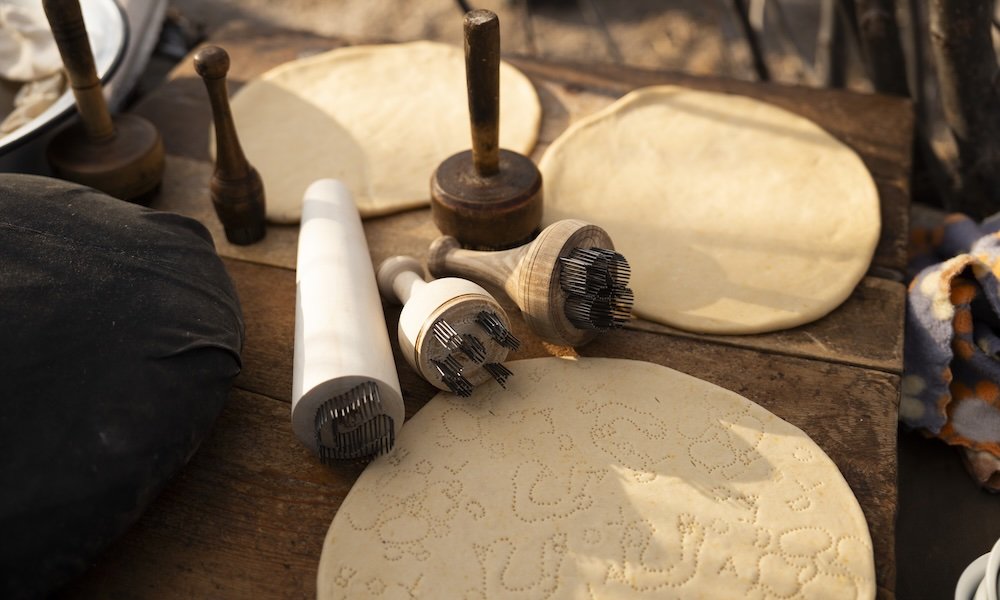
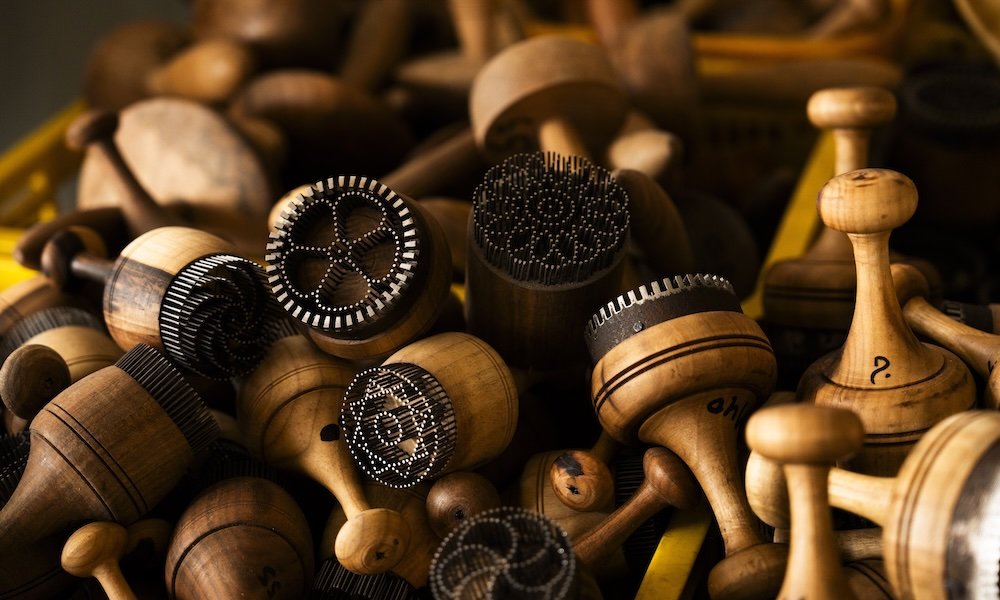
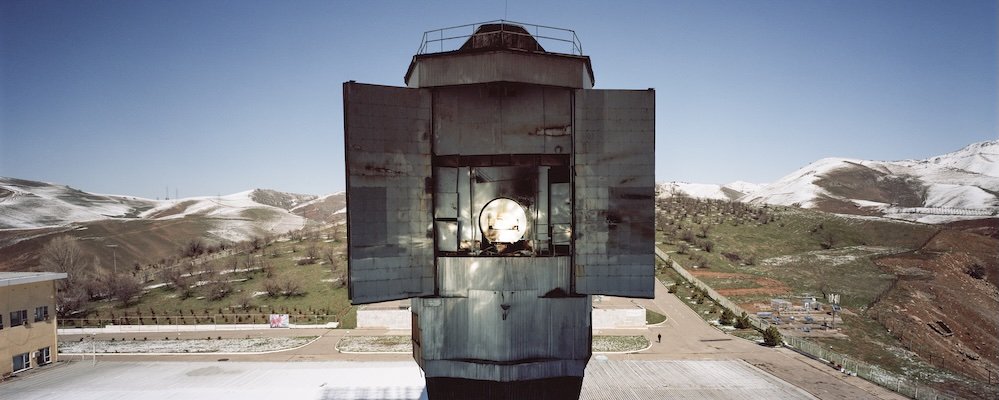
Gayane Umerova, Chairperson of the Uzbekistan Art and Culture Development Foundation (ACDF), commissioned architect and curator Kulapat Yantrasast of WHY Architecture to shape the exhibition around three elemental human needs: food, shelter and clothing. The frame was deceptively simple, but it gave us a way into a story that could otherwise feel distant, the cultures, communities and craft traditions of Karakalpakstan, a region whose landscapes and lives have been shaped, and in many cases unmade, by the decades-long shrinking of the Aral Sea.
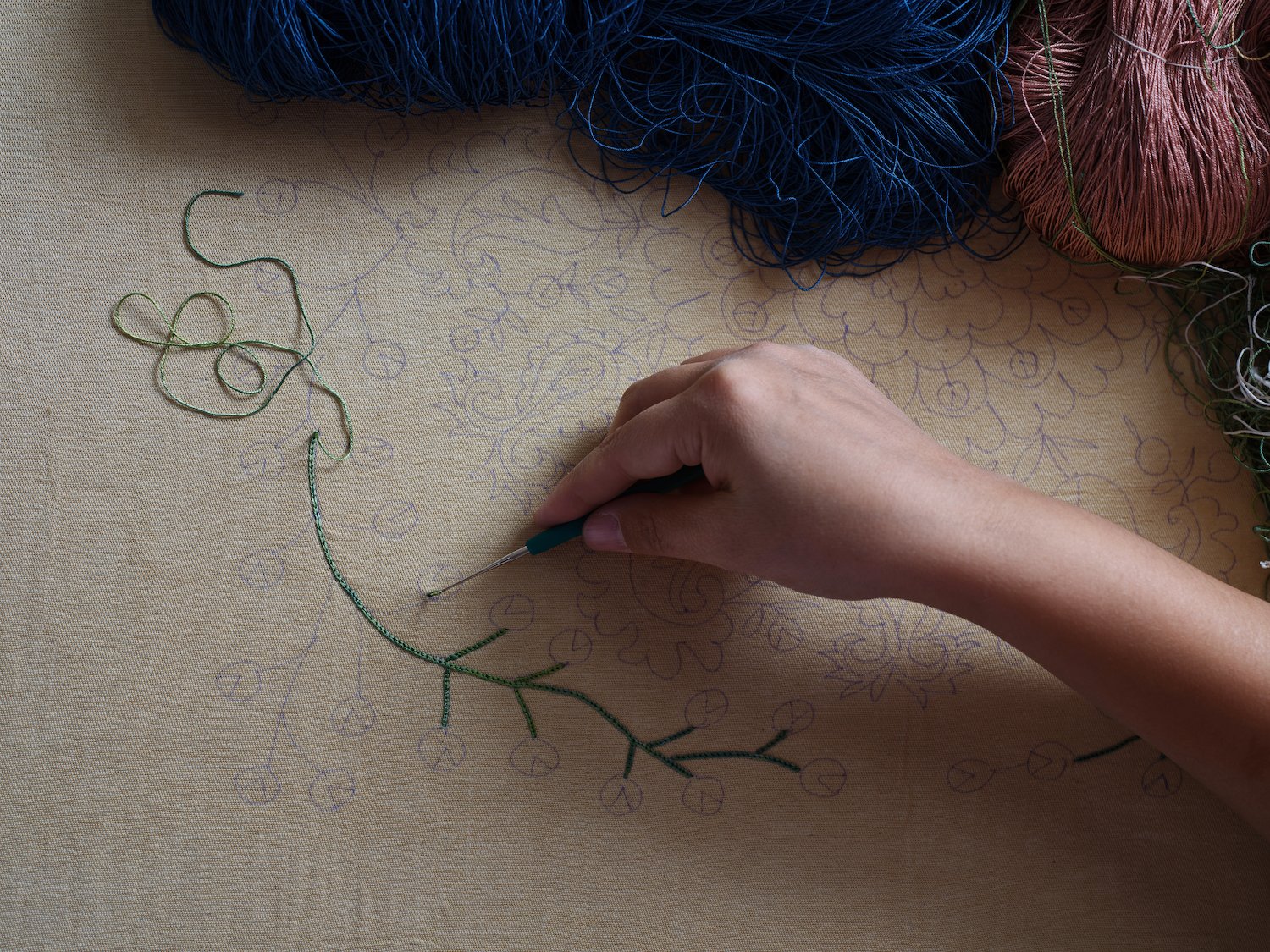
What moved me most throughout the making of this exhibition was watching what happened when the designers actually met the artisans. Twelve Uzbek and international designers (Bethan Laura Wood, Bobir Klichev, Didi NG Wing Yin, Fernando Laposse, Studio Glithero, Kulapat Yantrasast, Marcin Rusak, Nifemi Marcus Bello, Raw-Edges, Sanne Visser, Sevara Haydarova Donazzan, Studio Co-Pain) were invited to create bread stamps, the hand-held tools used across Uzbekistan to press intricate patterns into dough before baking, working directly with Karakalpak and Uzbek craftspeople using wood, silk, felt, ceramics and reed. These weren't collaborations of convenience or tokenism.


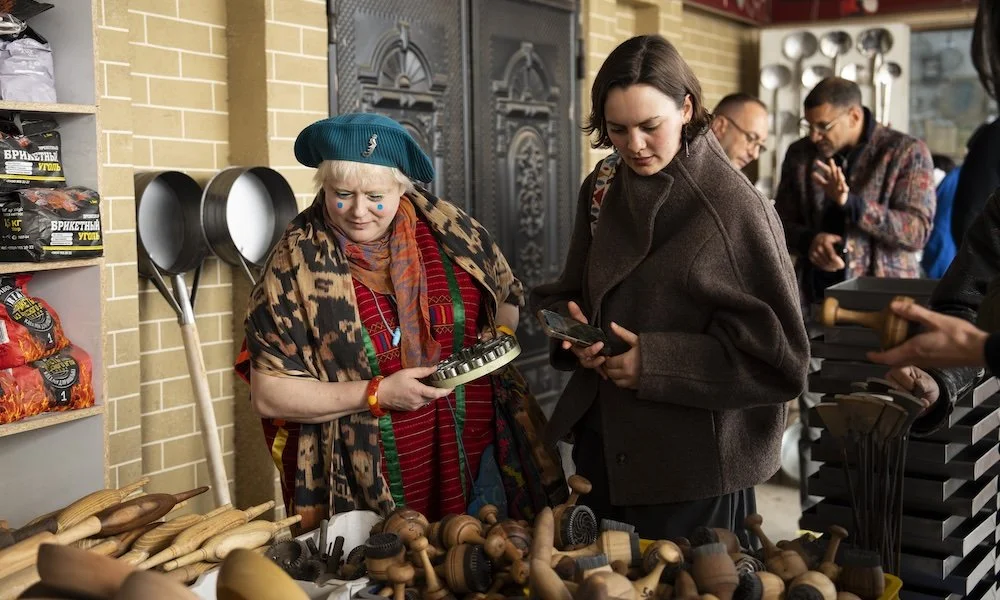
They were genuine exchanges, with all the friction and warmth and surprise that real creative dialogue involves. You could feel it in the objects themselves, the way a designer's formal instinct had been gently redirected by an artisan's generational knowledge, or the way a traditional motif had found an entirely unexpected new life in the hands of someone encountering it for the first time.
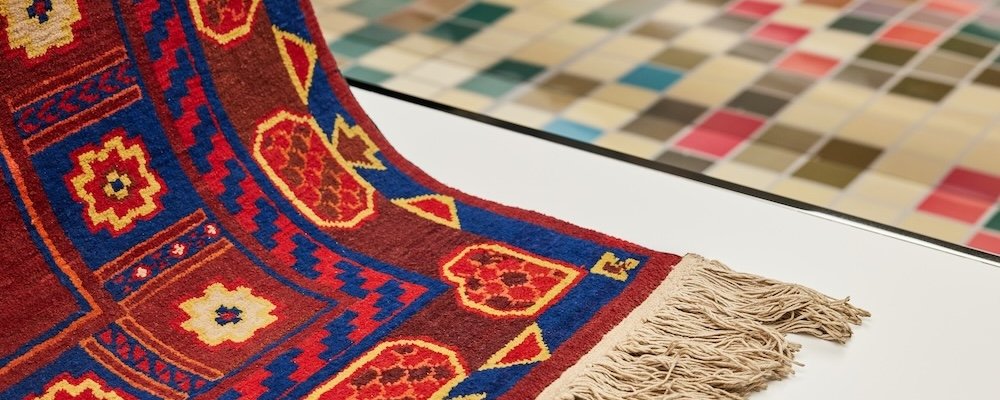
Bethan Laura Wood, whose cascading tassel installation greeted visitors at the threshold, put it well: the vivid yellow-orange of lemons, the green of an industrial boat, traditional knotting techniques and a colour vocabulary that holds past and present in the same breath. She did not impose. She listened, and then she added her voice.
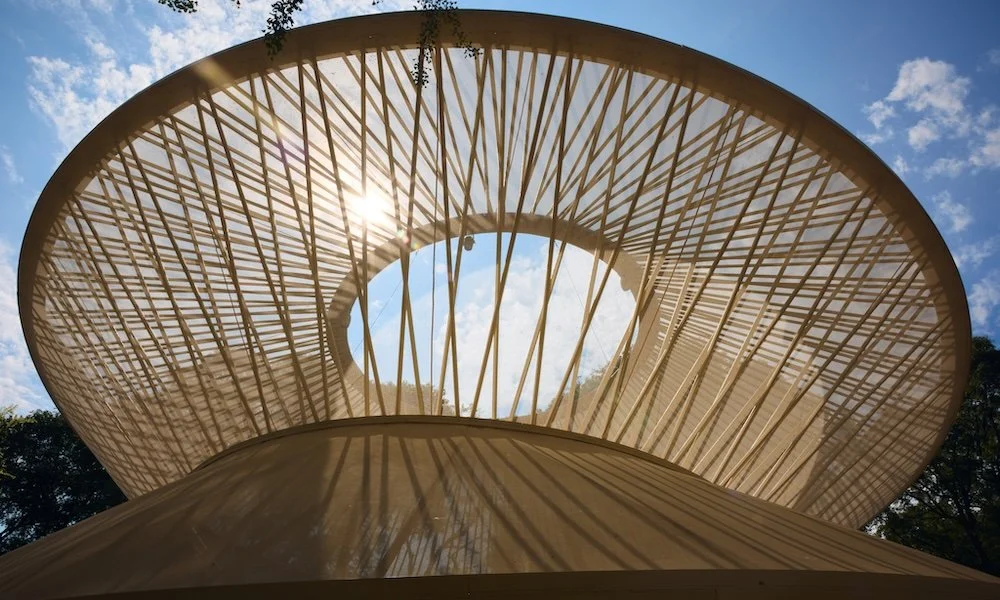


Yantrasast's garden pavilion, a 15-metre-wide deconstructed yurt in steel and translucent fibre gauze became the heart of the week. As both architectural space and social gathering point, it managed something that feels increasingly rare in design contexts: it created genuine stillness. People sat in it. They talked in it. They came back to it.
Alongside these are artefacts from the region selected by students of the Aral School, an international, multidisciplinary postgraduate programme that engages with the Aral Sea region as a site of inquiry and imagination – treating design as both a critical lens and an active agent in addressing environmental challenges and fostering cultural continuity. They sit in dialogue with Where the Water Ends, a film commissioned by ACDF and directed by filmmaker Manuel Correa and architect Marina Otero Verzier, that gives visitors a glimpse of the landscapes, communities and lived realities from the Aral Sea region.
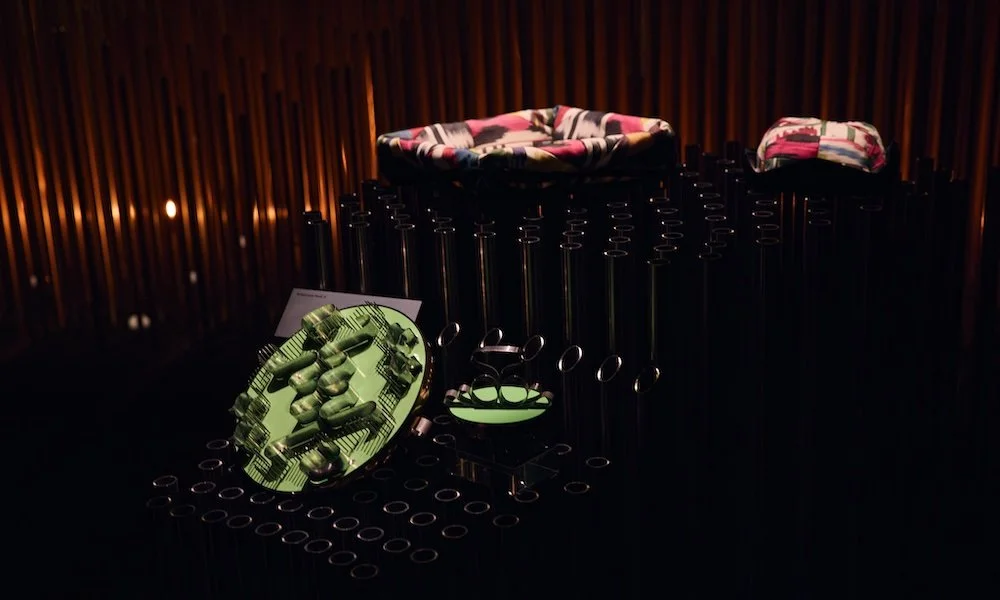


I think what surprised us most wasn't the visitor numbers, or the awards, or the press (over 900 registered). It was the quality of attention people brought with them. Milan Design Week audiences are sophisticated and often saturated by the time they reach any given venue. But again and again, people stayed longer than we expected. They read the wall texts. They asked real questions about the Aral Sea, about Karakalpakstan, about what it means to preserve a culture when the landscape that shaped it has disappeared.


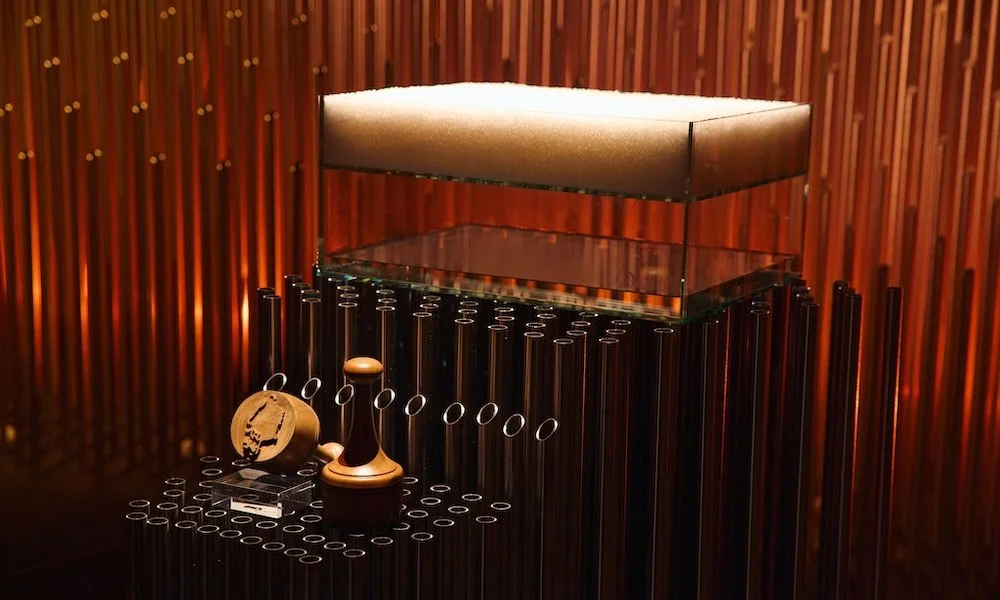


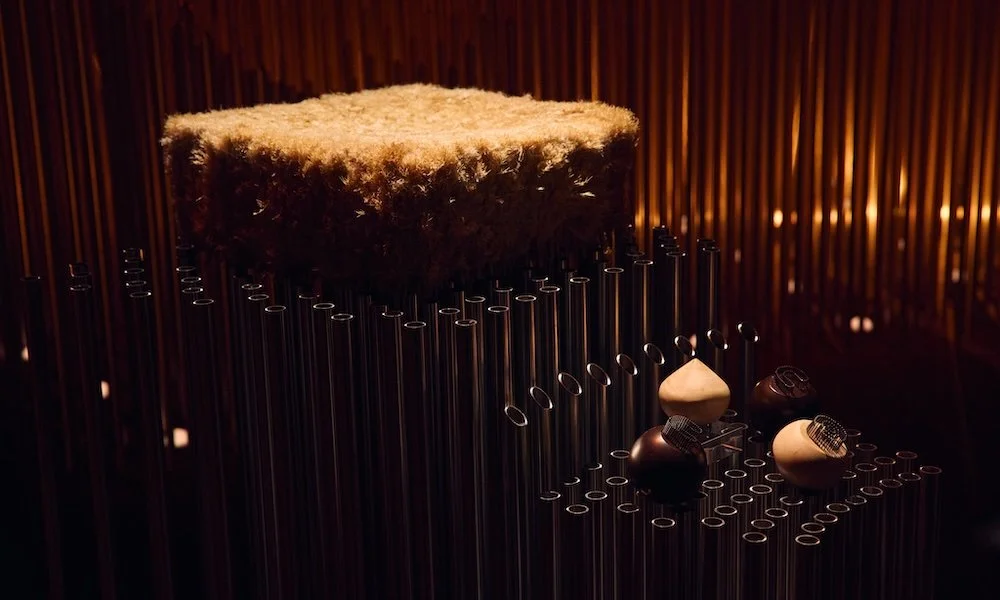
That feels like the deepest measure of the exhibition's success to me — not the footfall, but the quality of the encounter.

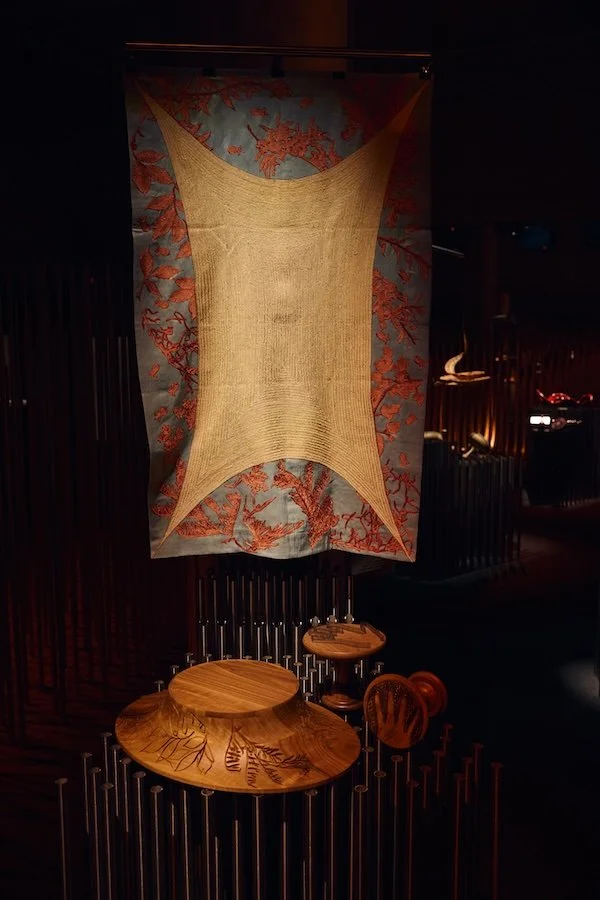
The story, thankfully, does not end in Milan. The installations, the bread stamps, the tassels all of it travels back to Uzbekistan. The second international edition of Tashkent Design Week opens June 1st. The Uzbekistan Pavilion also featuring a thematic around the Aral Sea, opens at the Venice Biennale in May. The second Aral Culture Summit takes place in September.
We planted something in Milan. I'm curious to see what blossoms from it next.