
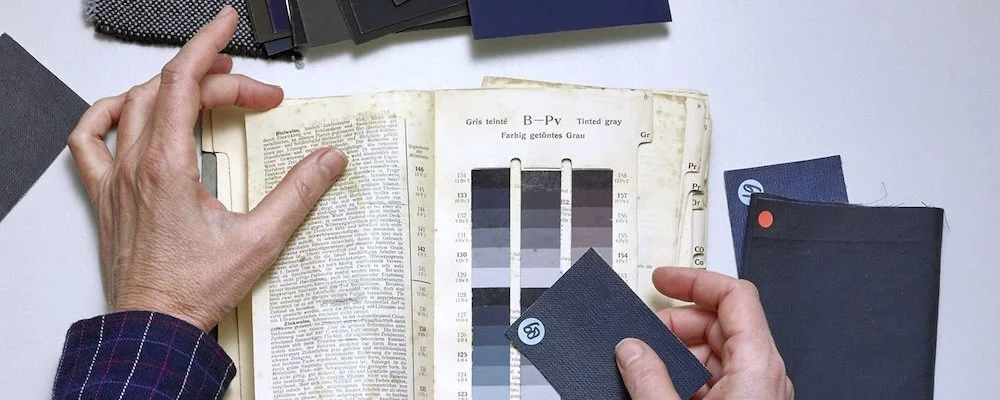
There are designers who make beautiful things, and then there are designers who make you think differently about things altogether. Hella Jongerius belongs firmly to the second category — and this spring, the Vitra Design Museum is making the case for her as one of the most consequential design minds of our era.
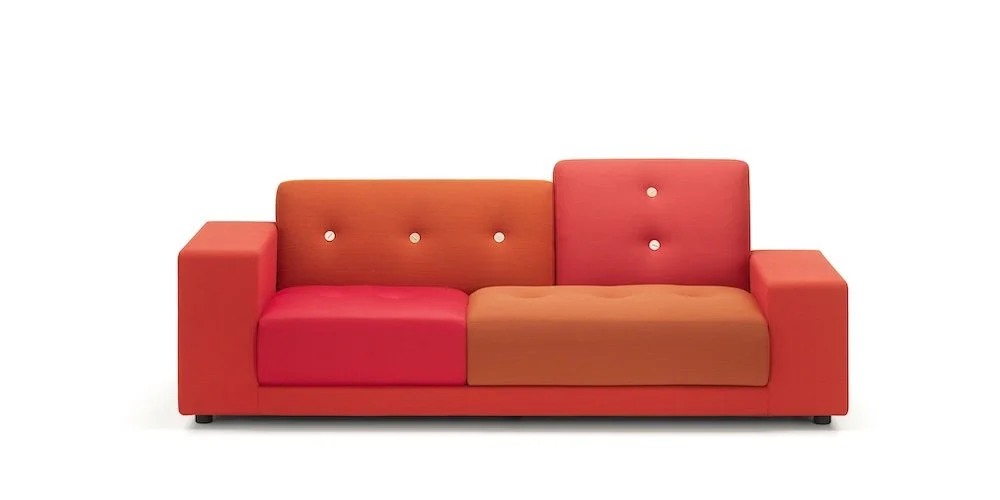
Hella Jongerius, Polder Sofa, 2015. Vitra
Hella Jongerius: Whispering Things opens on 14 March 2026 at the Vitra Design Museum in Weil am Rhein, and it is, by any measure, a landmark show. The first major comprehensive retrospective of her career, it brings together over 400 works — furniture, textiles, ceramics, sketches, prototypes, and film — spanning more than three decades of practice under her studio, Jongeriuslab. What's particularly notable is the breadth of institutional reach on display: alongside her well-known industry collaborations, the exhibition includes work developed for the Museum of Modern Art in New York, a reminder that Jongerius has never been easy to categorise.
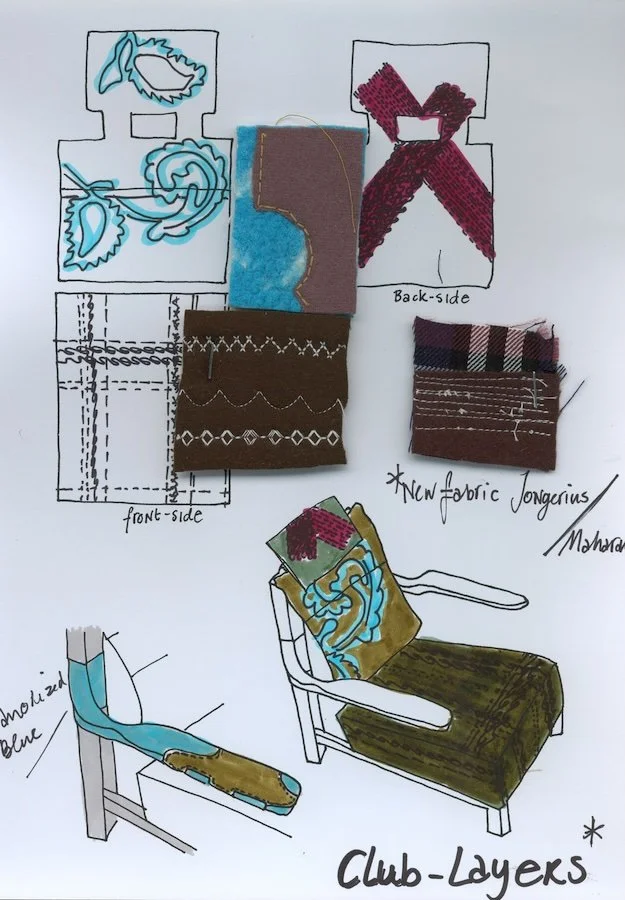
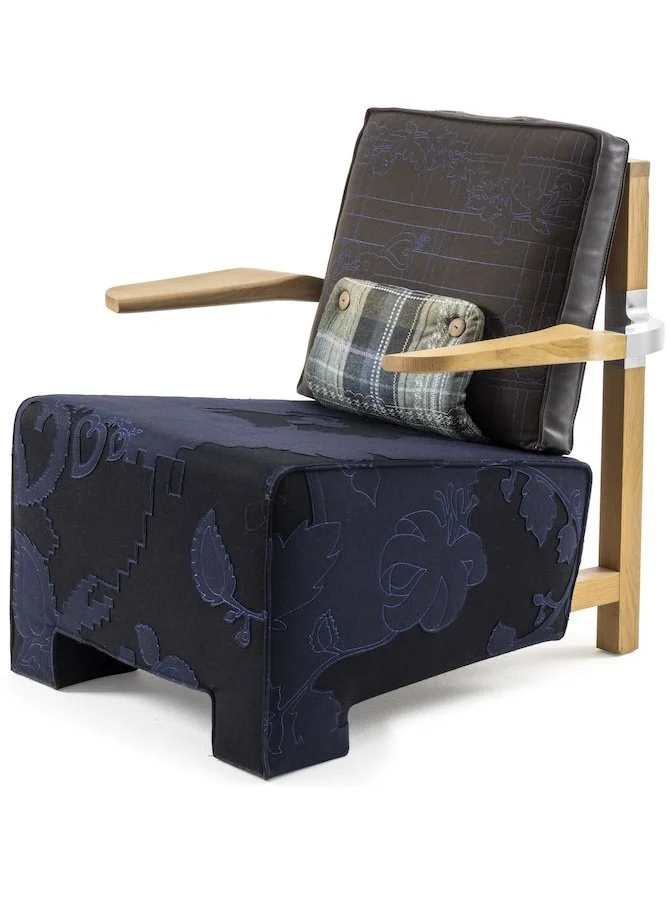
I have long been drawn to her refusal to accept the terms most commercial design operates under. Her central question — what does it mean to design in a world that already has enough? — feels not just timely but urgent. A second question sits alongside it: how can objects embody appreciation and care rather than consumption and waste? The exhibition takes both seriously, tracing her evolution from her early days within the Dutch avant-garde collective Droog Design in the 1990s, through her rise in the 2000s as a successful product and textile designer, to the deeply personal works of recent years that push at the boundaries between design and art.
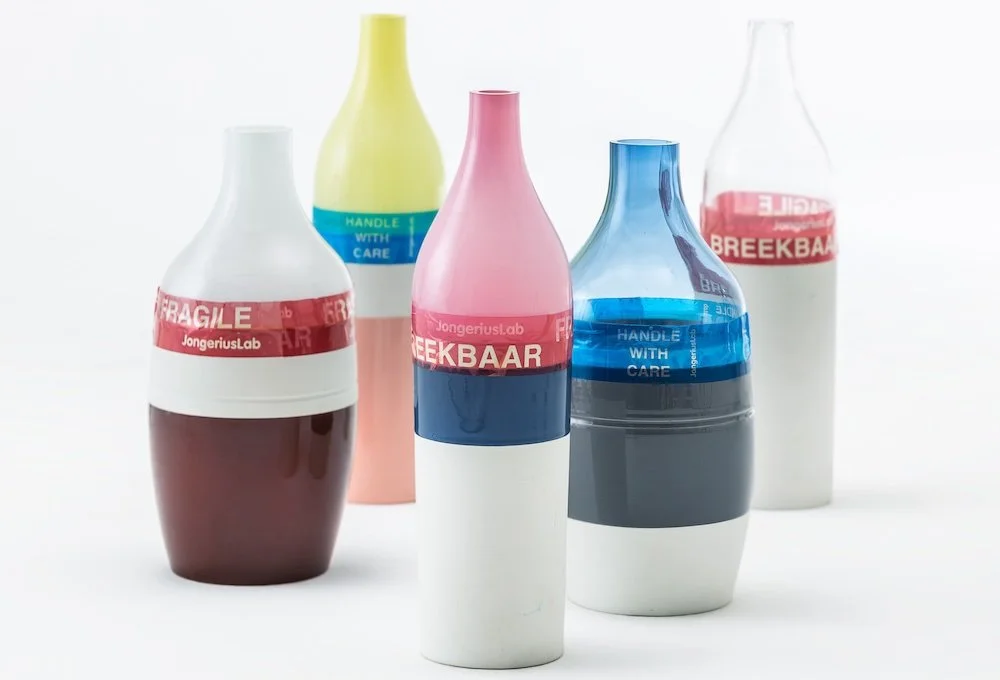
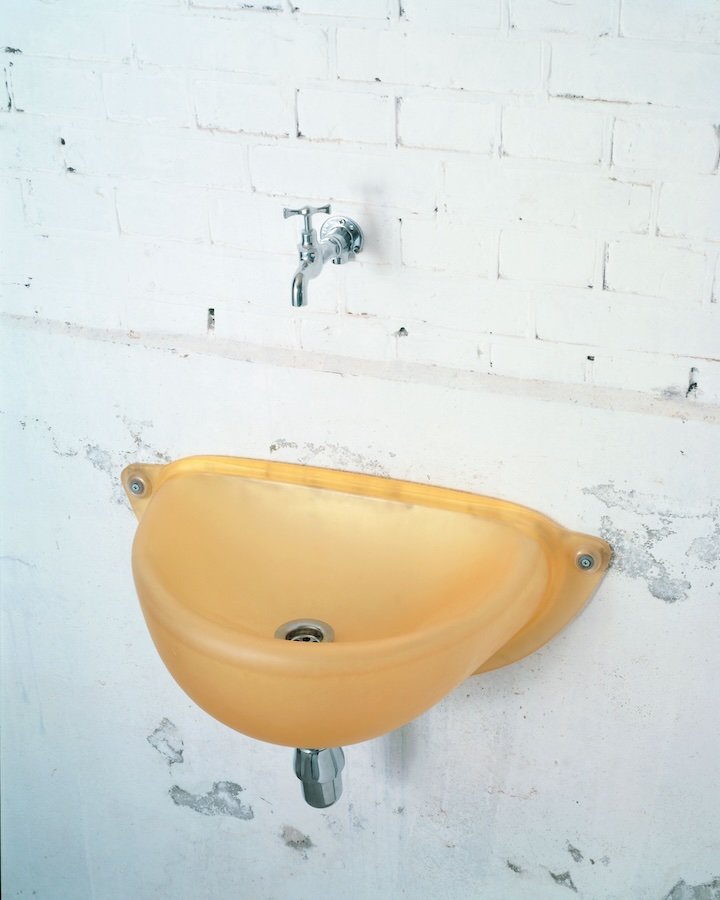
Hella Jongerius, Long Neck and Groove Bottles, 2000 © Vitra Design Museum, photo: Andreas Sütterlin
Throughout, Jongerius has developed a distinct design language marked by complexity and an aesthetic of collage and layering — one in which the diversity of materials is as essential as the expressive power of the handmade and the imperfect. Her virtuosity in handling materials and techniques is, by most accounts, unmatched in contemporary design, and it's this that gives even her most challenging work its grounding.
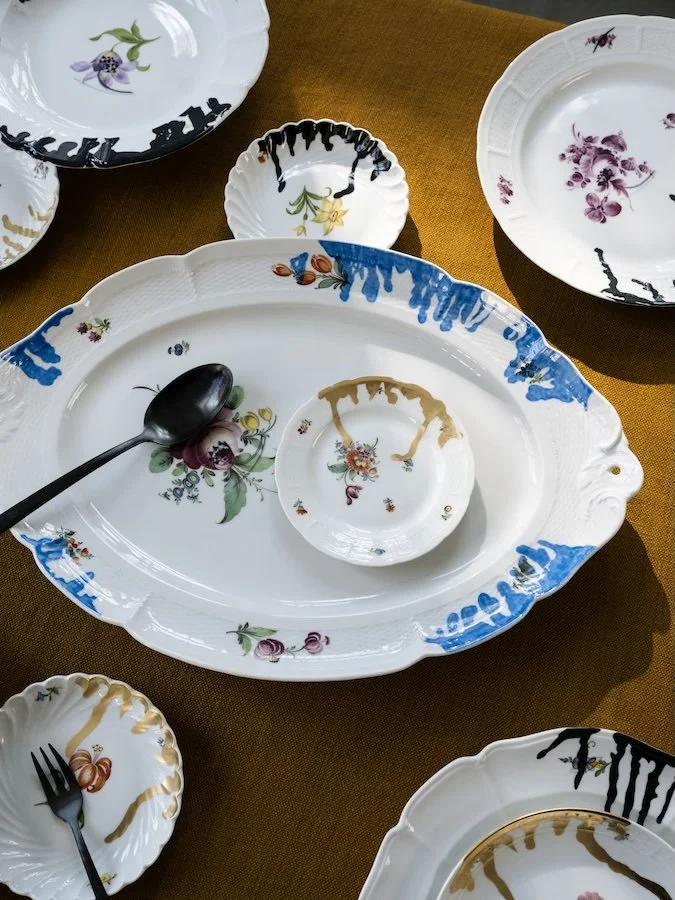
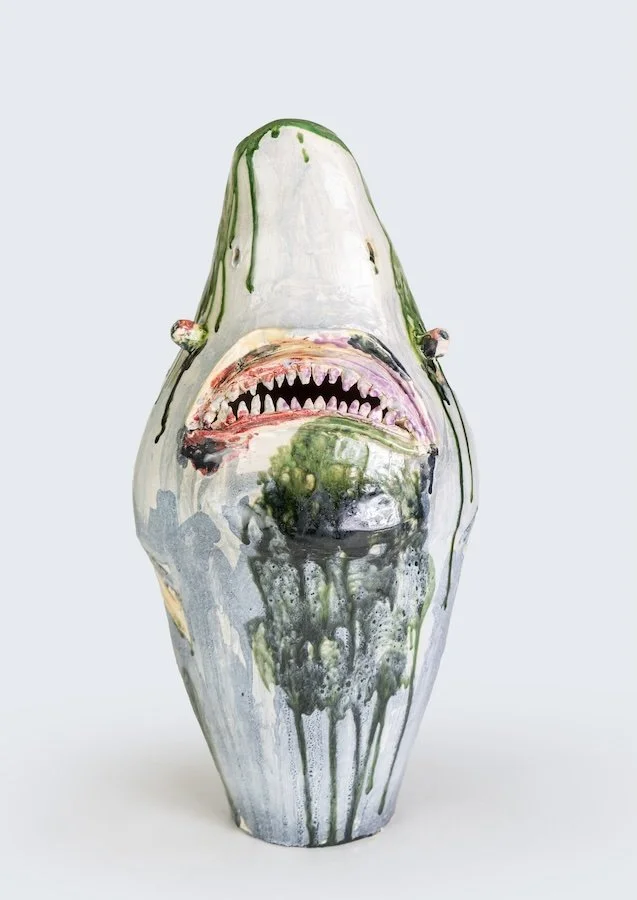
The show unfolds across four rooms, each with its own thematic focus. Dirty Hands looks back at Jongerius's formative years, when her interest in material behaviour and artisanal technique began to crystallise into a distinctive position between craft and industry. A video montage of the designer's hands at work anchors the room — a refreshing reminder that ideas, for Jongerius, are always embodied in material.
Business Class is, counterintuitively, one of the most intellectually rich sections. Rather than presenting polished commercial outcomes for collaborators like Maharam, IKEA, Nike, Camper, KLM, and Vitra, it foregrounds the process itself: sketches, samples, prototypes, correspondence. The argument, quietly but insistently made, is that commercial constraints can be sites of genuine negotiation around questions of responsibility, authorship, and material integrity — rather than simply compromise.
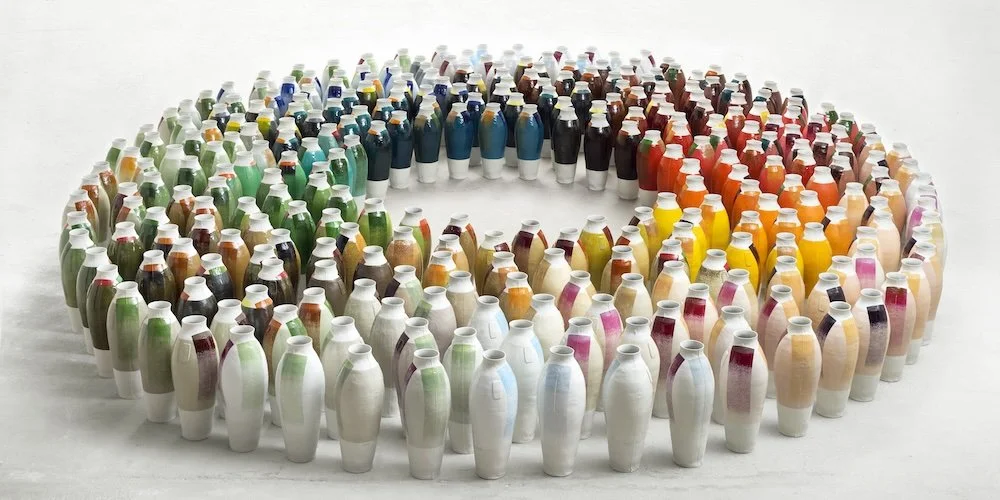
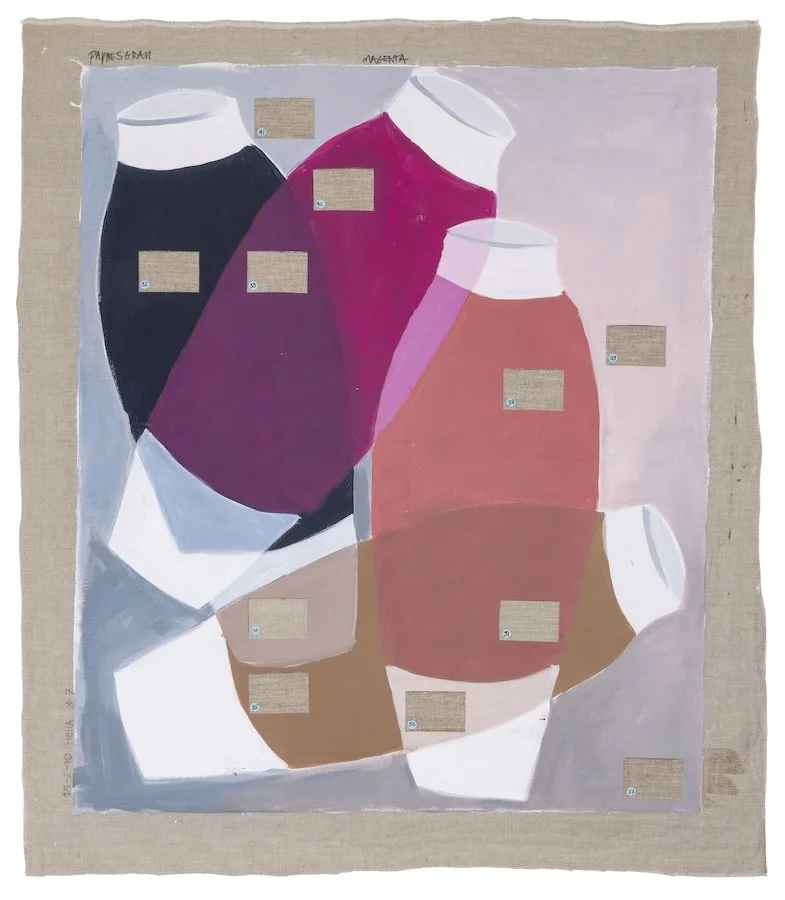
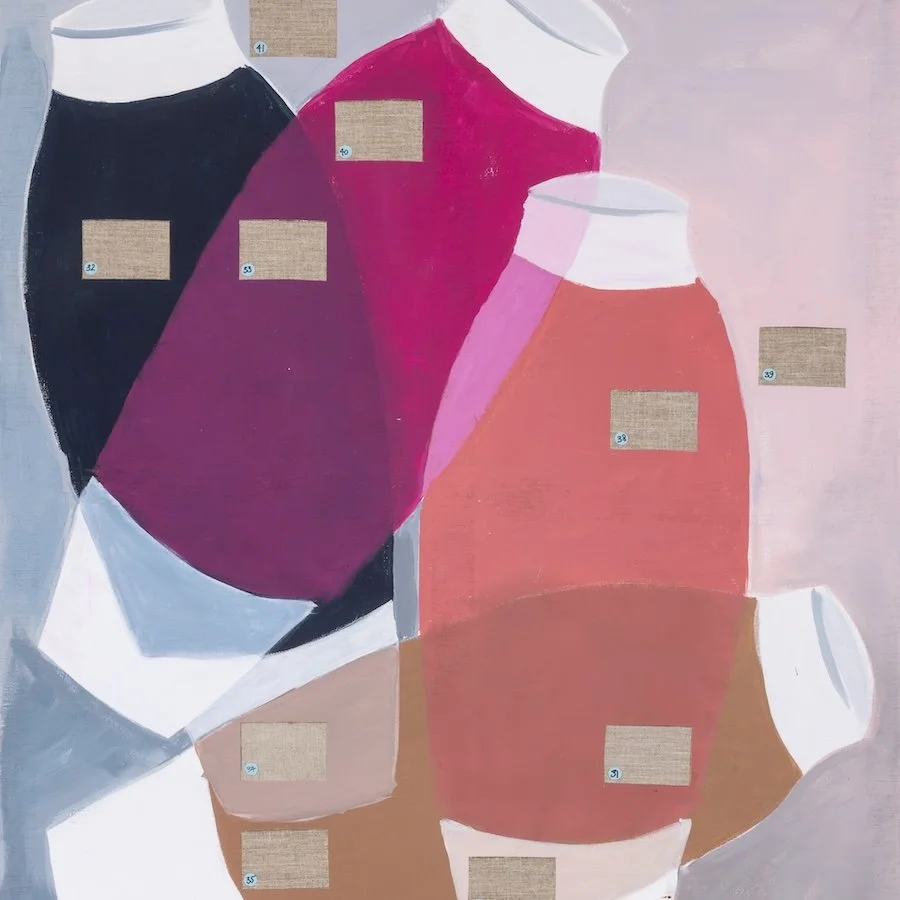
Hella Jongerius, Coloured Vases, Series 3, 2010 © Jongeriuslab, photo: Gerrit Schreurs
The third room, Feeling Eye, is where I imagine most visitors will linger. Alongside the monumental installation of around 300 Coloured Vases, the space includes constructed paper Colour Catchers and ceramic studies that together demonstrate Jongerius's ongoing investigation into colour as a situational and relational phenomenon — something that shifts depending on context, material, and light. An adjoining space features a newly produced video of Jongerius in conversation with critic Louise Schouwenberg, which sounds like essential viewing in its own right.
The final chapter, Cosmic Mind, moves into more speculative territory. Works like the Frog Table and Angry Animalsinvite reflection on coexistence and the agency of nonhuman beings, while the Space Amulets — created in the wake of the pandemic — introduce a talismanic, almost spiritual dimension. Kinetic three-dimensional weavings, the Unfoldable Cubes, animate the walls. It is an ambitious closing argument, framing the "whispering voices" of things on a broader, cosmological level — and one that feels earned given everything that precedes it.
The exhibition draws on Jongerius's extensive archive, held at the Vitra Design Museum since 2024, which comprises not only finished objects and prototypes but also experiments, material tests, sketches, and documents — offering a rare window into a working process shaped by curiosity and continuous experimentation. A catalogue designed by Joost Grootens accompanies the show, with essays by Alice Rawsthorn, Paola Antonelli, Louise Schouwenberg, and Christel Vesters.
What strikes me most, thinking about this body of work, is Jongerius's consistency of conviction over time — the way she has resisted trends without becoming hermetic, and her profound influence on a new critical generation of designers is increasingly evident. The retrospective runs at the Vitra Design Museum through 6 September 2026, before travelling to the Museum für Kunst und Gewerbe Hamburg from 16 October 2026 to 30 May 2027, with further venues in the works.
If you are anywhere near Basel or the Rhine region this season, it seems like essential viewing.
Hella Jongerius © Laura Fiorio
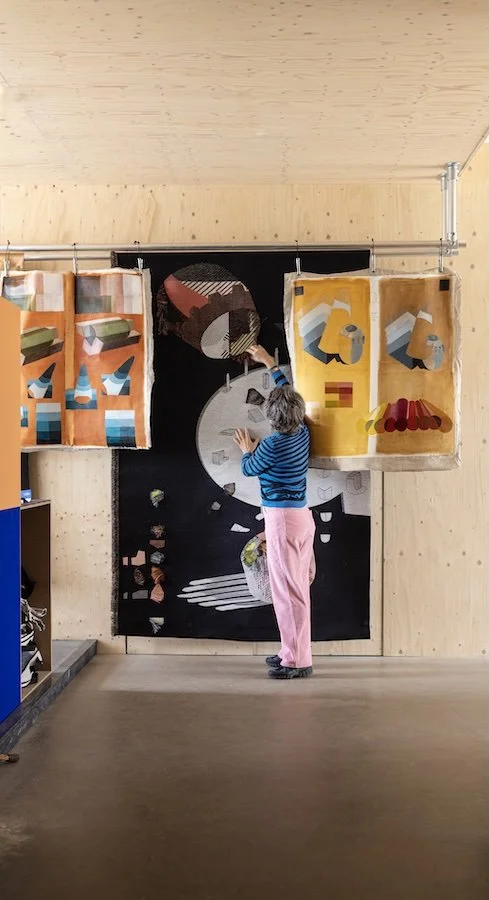
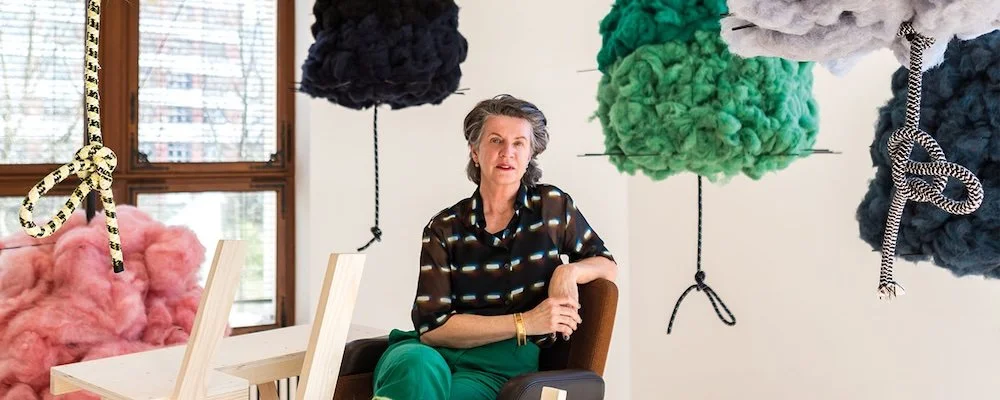
Hero picture by Mathijs Labadie: Hella Jongerius (* 1963): Whispering Things, Colour research, 2016 MK&G.