The Egg That Eats Itself
How OMA's new mushroom pavilion at Casa Wabi is turning fungi into architecture, community, and lunch?
There are places that stay with you long after you leave — not because of a single spectacular moment, but because of a feeling that settles into your bones. Casa Wabi is one of those places. When I visited in 2023, I was not entirely prepared for what I found: a stretch of Pacific coastline between mountains and sea, a foundation anchored by Tadao Ando's legendary concrete wall, open studios humming with quiet creative energy, and an atmosphere that somehow manages to be both rigorous and deeply human. It remains, without question, one of the finest artist residencies I have had the privilege of visiting. So when news broke that a new pavilion had just opened there — this one designed by OMA and dedicated entirely to mushrooms — I felt that familiar pull again.
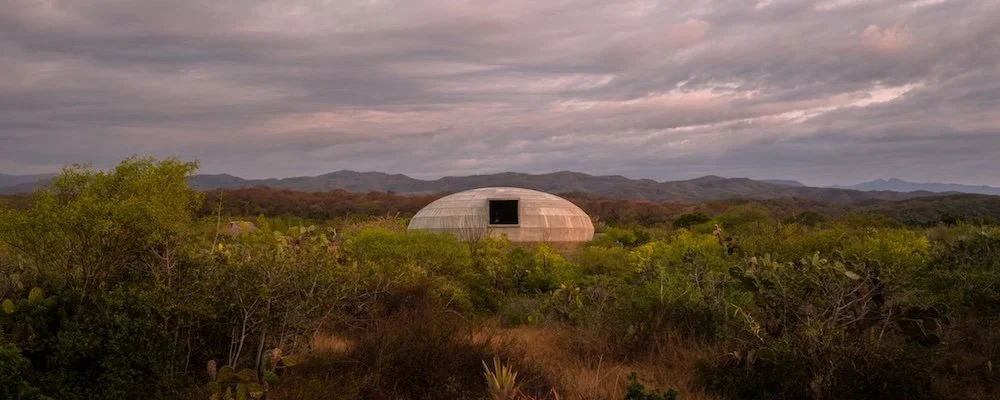
The Mushroom Pavilion officially opened on March 4, 2026, the latest addition to Casa Wabi's 25-hectare site on the Pacific coast of Oaxaca, about 30 minutes from Puerto Escondido. It was designed by Shohei Shigematsu, partner at OMA's New York office — and, rather delightfully, it marks OMA's first built work in Mexico.
The brief was elegantly simple: build a space for growing mushrooms, and make it meaningful to the local community. The result is anything but simple to look at. The 200-square-metre self-supporting ellipsoidal structure was developed to optimise the interior organisation required for cultivating mushrooms, though calling it an "optimised interior organisation" feels like describing the Sistine Chapel as a ceiling paint job. The thing looks like an egg dreamed up by a civilisation that had absorbed both Japanese spatial philosophy and Oaxacan craft traditions — which is, more or less, exactly what happened.
Inside, the domed space is divided into three chambers — a fruiting room, an incubation room, and storage — which encircle a central gathering space. The lower half steps inward like a circular amphitheatre, forming shelves lined with handmade terracotta mushroom pots crafted by local artisans. It's a panopticon of fungi: wherever you stand, the entire growing process is visible. There's something almost meditative about the idea — a space where you can watch life slowly, quietly unfurl.
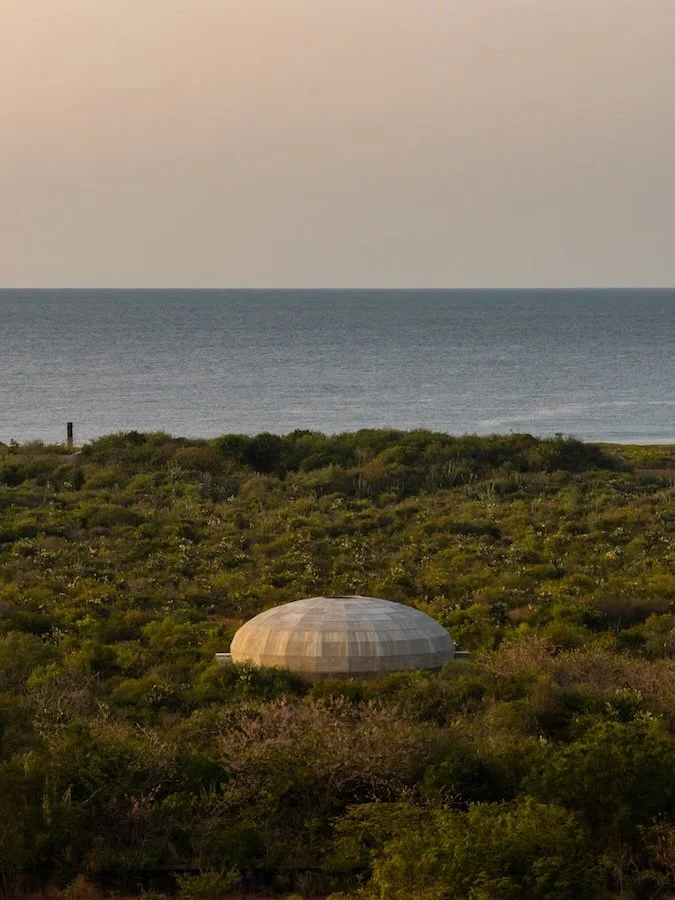
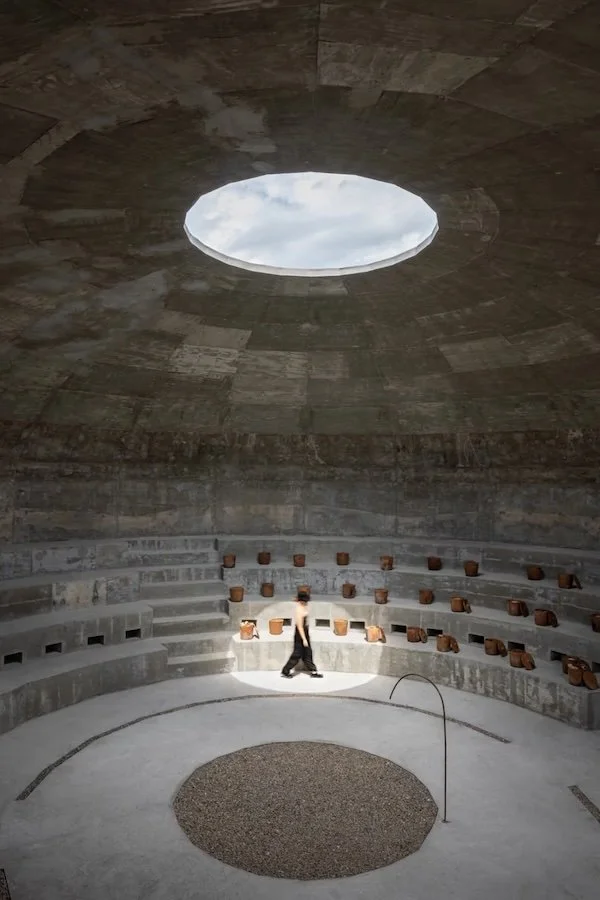
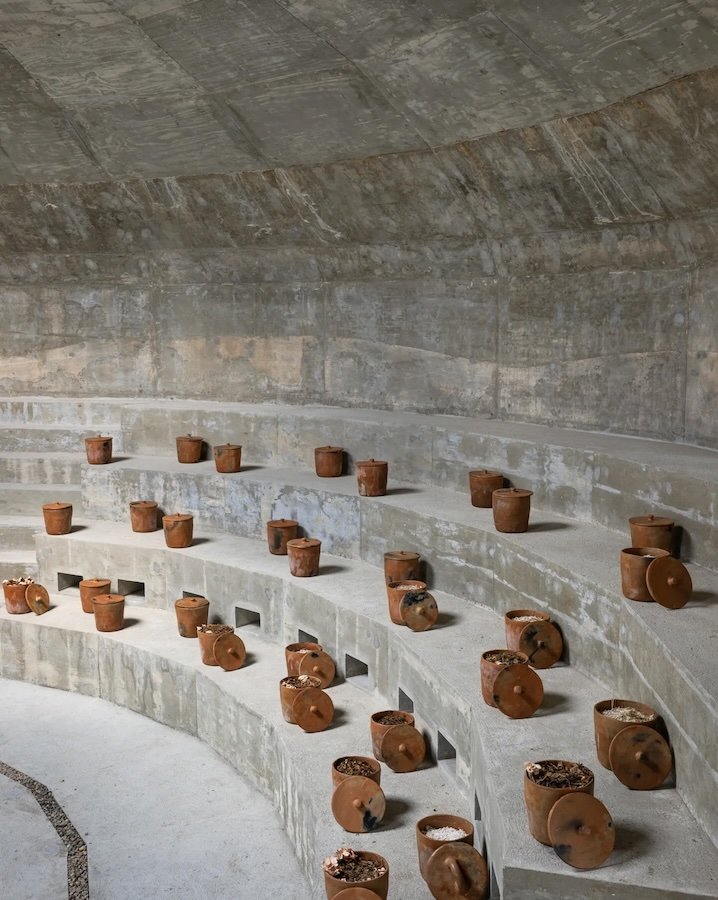
Light enters through an oculus cut into the dome, flooding the cave-like interior with a quality of illumination that recalls, fittingly, the filtered glow of a forest floor. Natural ventilation comes through openings around the lower perimeter, and a platform at the top of the stepped interior offers views out over the brush toward the ocean. Casa Wabi has always been about that relationship — between the made thing and the wild thing — and this pavilion captures it with real intelligence.
What makes this pavilion genuinely exciting, though, is not just the architecture. The fungi produced here will be harvested and returned to the local community. The pavilion will feed into both the foundation's kitchen and that of Hotel Escondido, while also teaching local communities about the cultivation process. Architecture as pedagogy. Architecture as larder. Not bad for an egg.
The material choices are equally considered. The concrete shell is stamped on the exterior with burlap, designed to retain the site's high-iron water content, meaning the exterior will rust and weather over time, reflecting its own relationship with nature. In other words, the pavilion is intended to age — to become more itself as the years pass, stained and marked by the coastal climate. Given that Casa Wabi was founded on the Japanese philosophy of wabi-sabi — the beauty found in imperfection and impermanence — it's hard to imagine a more fitting material gesture.
The Mushroom Pavilion pays homage to the eco-art of Helen Mayer and Newton Harrison, who proved that spectacle in cultural spaces could lead to genuine conversation and policy change — a lineage worth acknowledging in a place that has always taken seriously the idea that art and community are not separate concerns.
Shigematsu himself put it well: "The result is an incubator of both food and community that's spatially fit to support all types of activities for the locals, visitors, and the foundation."
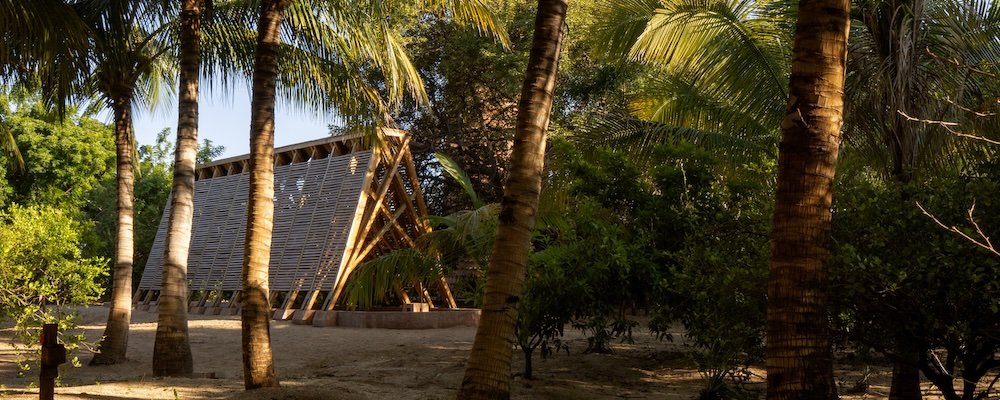
Casa Wabi has always understood something that many institutions pretend to: that the most radical thing you can do with a beautiful piece of land is share it generously. A chicken coop by Kengo Kuma, a clay pavilion by Álvaro Siza, and now a mushroom dome by OMA — each one functional, each one meaningful, each one a small argument for why architecture at its best is never just about buildings. It was true when I walked those grounds in 2023. It remains true now, with one more extraordinary structure rising from the Oaxacan earth.
Pictures by Rafael Gamo.