The Italian who made the design world uncomfortable… and then indispensable, finally gets his Tokyo moment.
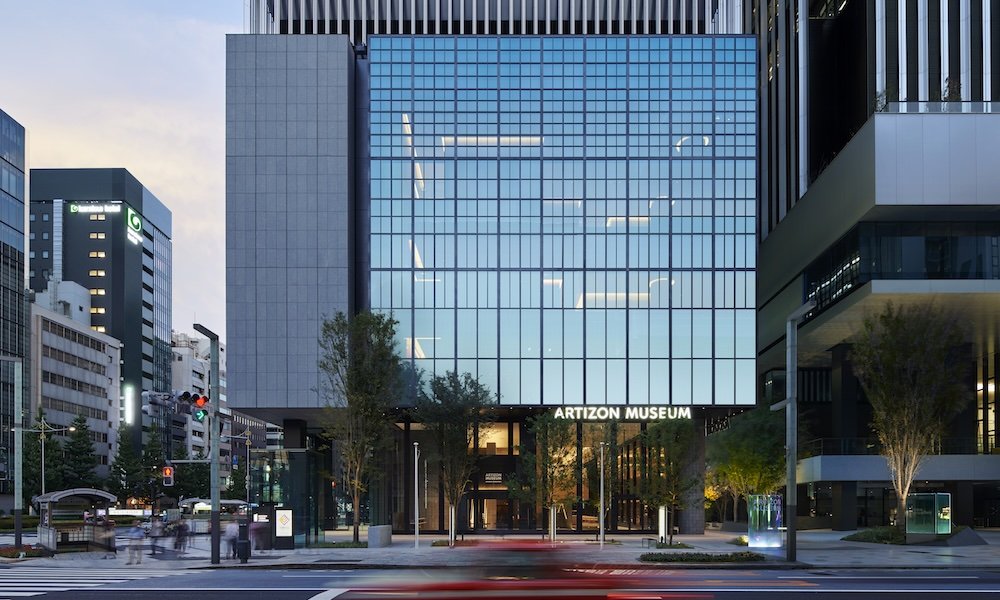
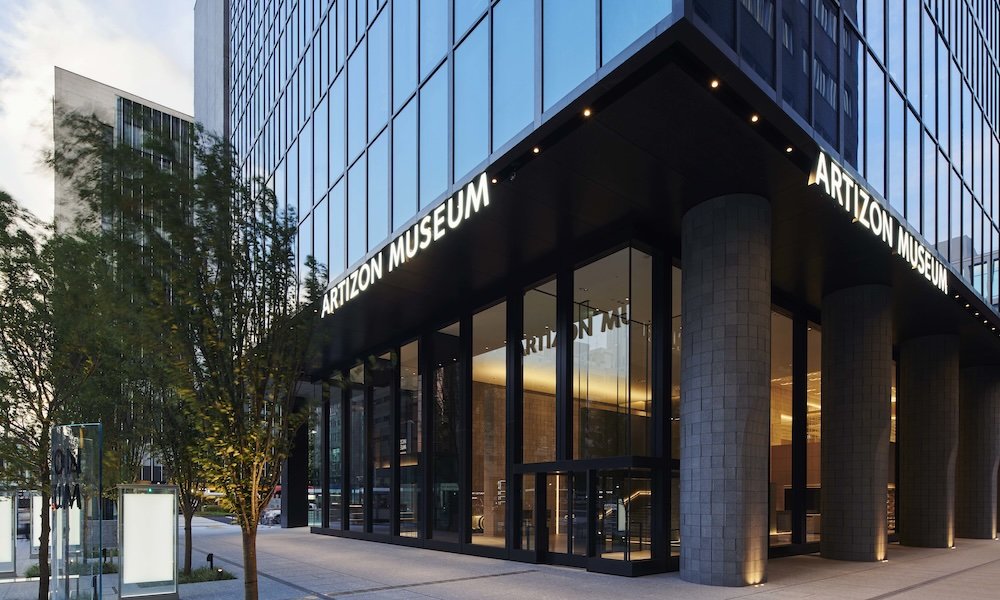
There is a particular kind of satisfaction in watching a retrospective land exactly where it should. Ettore Sottsass: Design begins where magic begins, opening at the Artizon Museum in Tokyo on June 23, is one of those occasions. Japan's first large-scale Sottsass retrospective, more than a hundred works, drawn almost entirely from the Ishibashi Foundation's own collection, arrives nearly two decades after his death and, if anything, feels overdue.
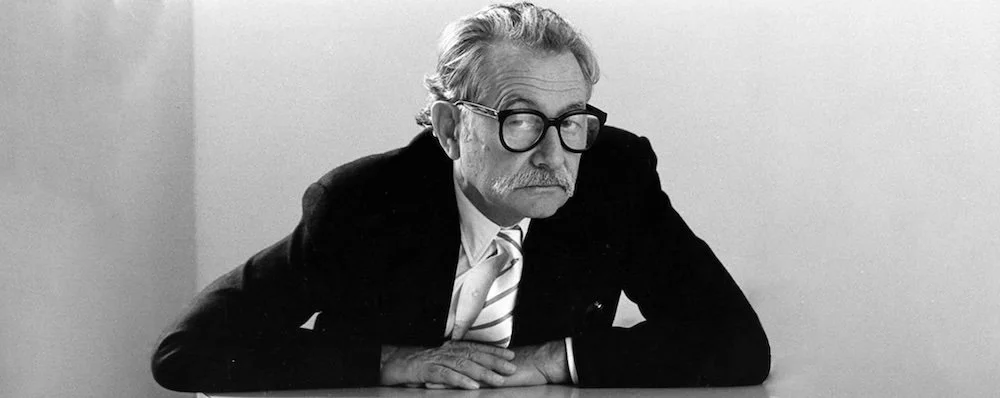
Sottsass was not a designer in the way the twentieth century liked its designers: efficient, purposeful, quietly serving the logic of production. He was something more inconvenient — a philosopher who happened to work in furniture, ceramics, office equipment, and glass. Born in Innsbruck in 1917, trained as an architect in Turin, and permanently based in Milan from the postwar years onward, he spent his career systematically dismantling the assumption that design existed to solve problems. His argument, refined over six decades, was essentially the opposite: that design, at its most alive, creates new problems — new ways of feeling, new provocations, new friction between an object and the person who lives with it.
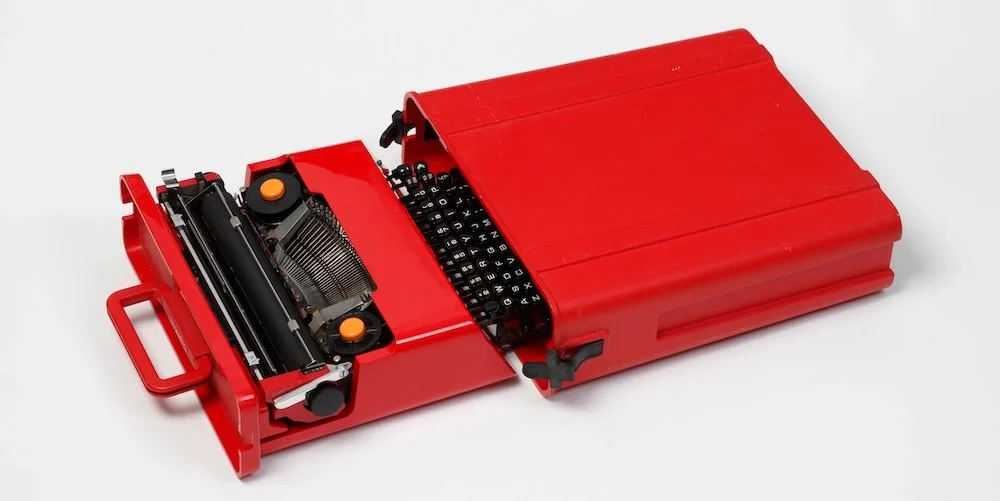
Sottsass typewriter (not presented at the exhibition)
His early work for Olivetti and Poltronova in the 1950s and 60s showed the range that would define him. The Valentine typewriter, that aggressively red, almost insolently cheerful machine designed with Perry King in 1968, became one of the most recognisable industrial objects of its era — not because it was the most efficient typewriter, but because it treated its user as someone with desires rather than merely tasks. At the same time, his furniture for Poltronova (the pieces on display at Artizon from this period) carried a formal intelligence that belonged equally to sculpture. These were not chairs and cabinets. They were proposals.
The late 1960s saw him move sharply sideways, drawn into the orbit of Radical Design and the broader countercultural ferment that was reshaping creative practice across Europe. He absorbed East Asian visual culture, Pop Art's appetite for surface, and the emerging critique of Modernism's self-confidence. His Superbox of 1966, one of the works included here, stands as a monument to that moment: a wardrobe that behaves like a totem, deadpan and electric simultaneously.
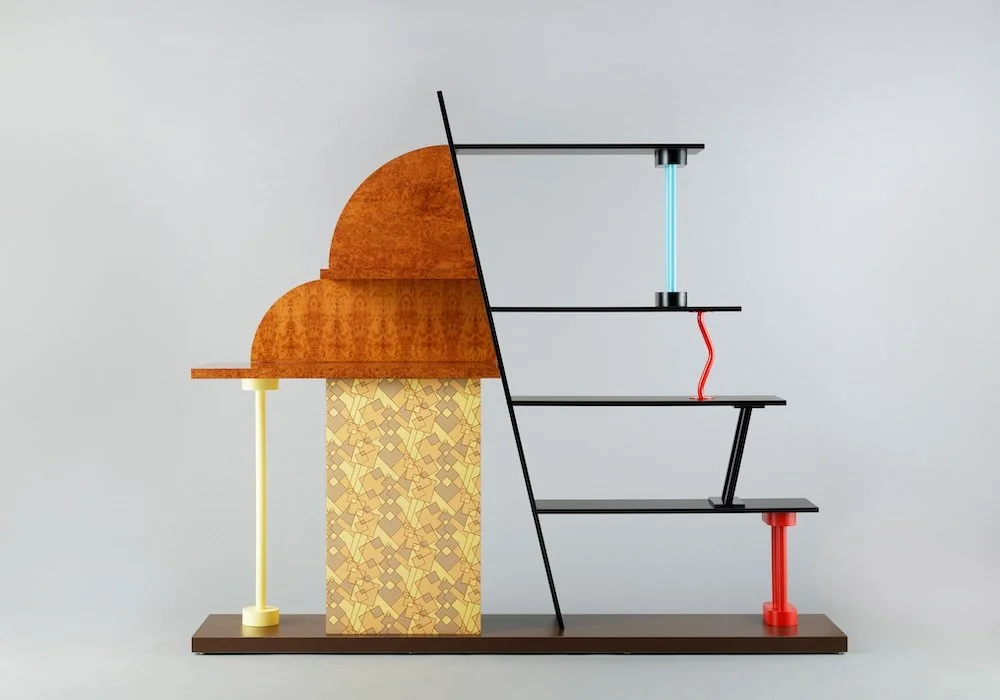
Ettore Sottsass "Malabar" 1982 (design/production), production: Memphis Milan, Bitossi. Ishibashi Foundation Artison Museum © Ettore Sottsass
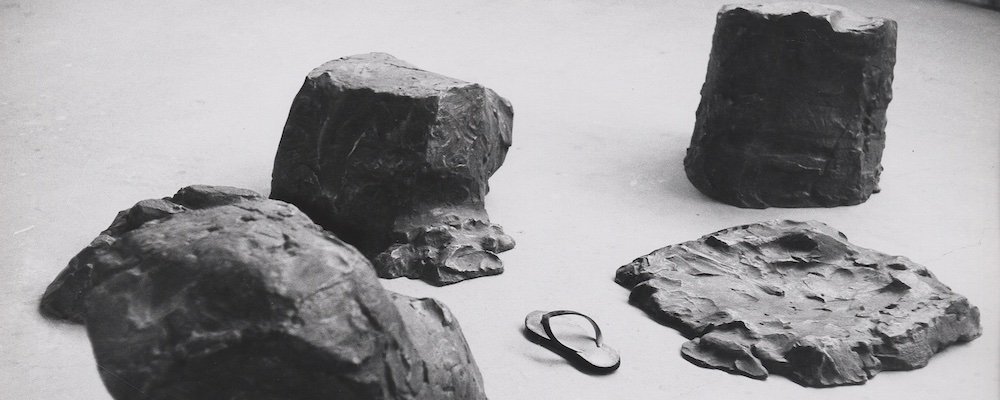
The 1970s were stranger still. He left Milan, wandered Catalonia, photographed landscapes and conceptual subjects with the seriousness of someone working out a private philosophy. The Metaphors photographs from 1973, minimalist interventions placed in rugged terrain, belong to that period of deliberate withdrawal. He was, characteristically, asking the question before anyone else thought to ask it: what is design actually for?
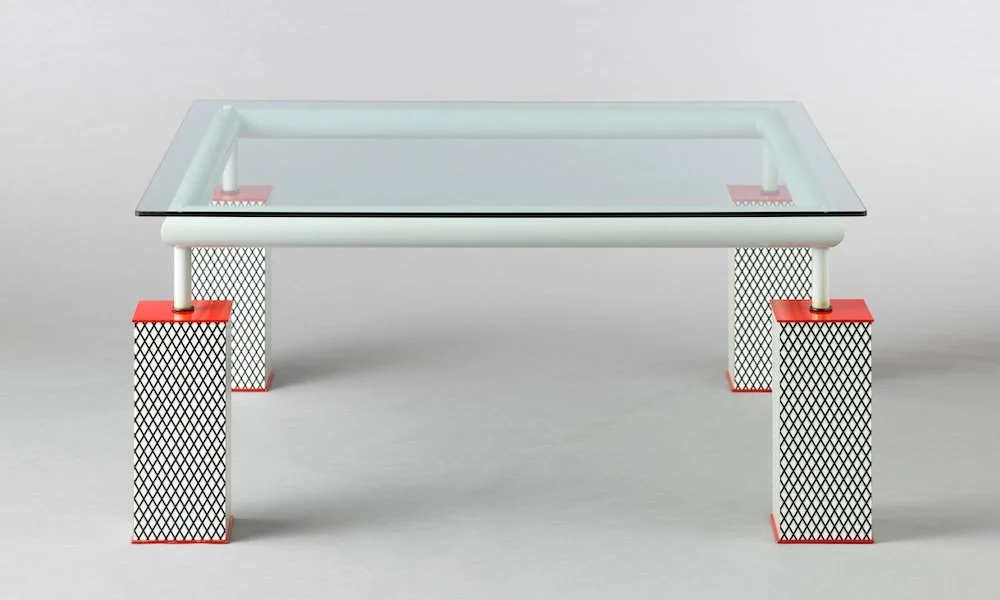
Ettore Sottsass "Mandarin" 1981 (design/production), production: Memphis Milan. Ishibashi Foundation Artison Museum © Ettore Sottsass
The answer he arrived at was Memphis. Founded in 1981 and named, according to legend, after a Bob Dylan song playing on the night the group first met, Memphis was a collective provocation dressed as furniture. Sottsass gathered around him Michele De Lucchi, Michael Graves, Nathalie Du Pasquier, and others, and they produced objects that the design establishment initially didn't know whether to dismiss or defend. The Carlton room divider (the work that opens this exhibition, all geometric aggression and laminated irreverence) became its emblem. The Casablanca bookcase, the Malabar side table, the Mandarin lamp: each one a refusal. A refusal of good taste, of restrained palette, of the idea that function and beauty occupied separate registers. Memphis said, loudly, that decoration was not a crime.
The influence was seismic and is still being felt. You see it in the postmodern commercial culture of the 1980s, obviously, but also in the graphic design of that decade, in fashion, in retail interiors. More lastingly, you see it in the permission it gave to subsequent generations to treat boldness as a value rather than a liability. Without Memphis, the particular strand of contemporary design that rejects minimalism's monopoly on sophistication is harder to imagine.
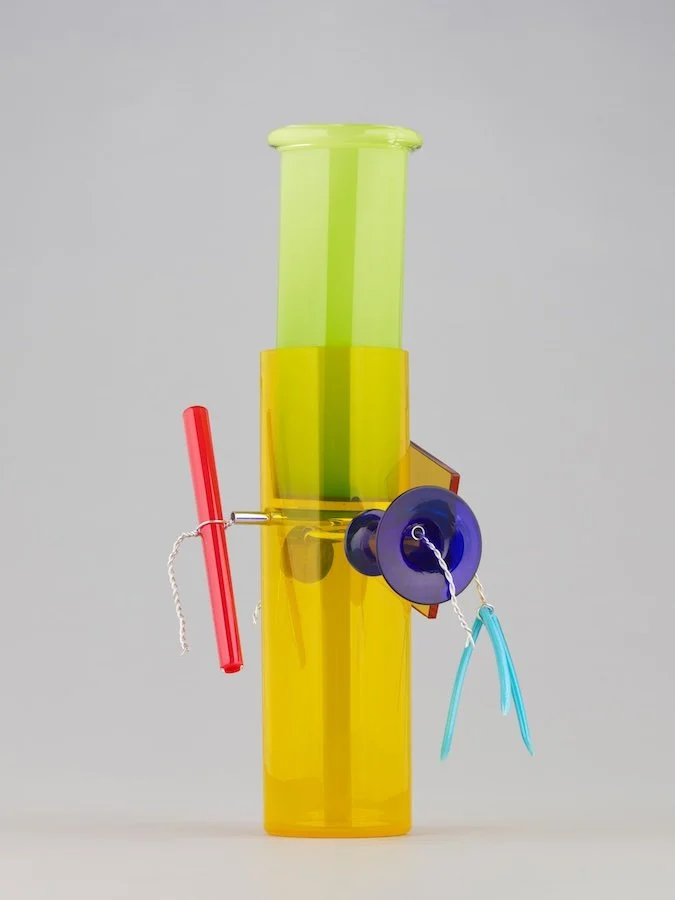
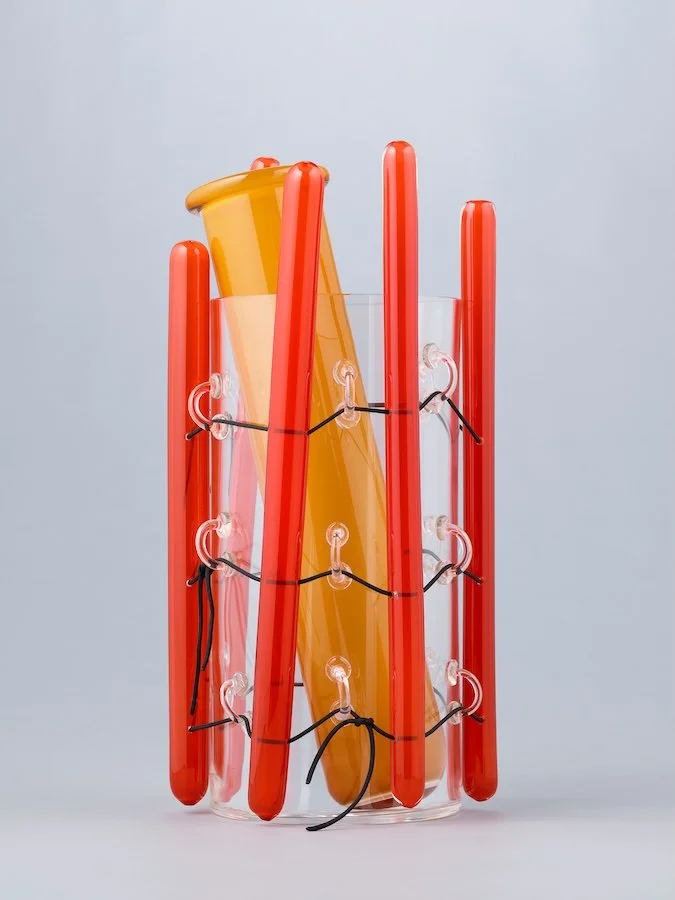
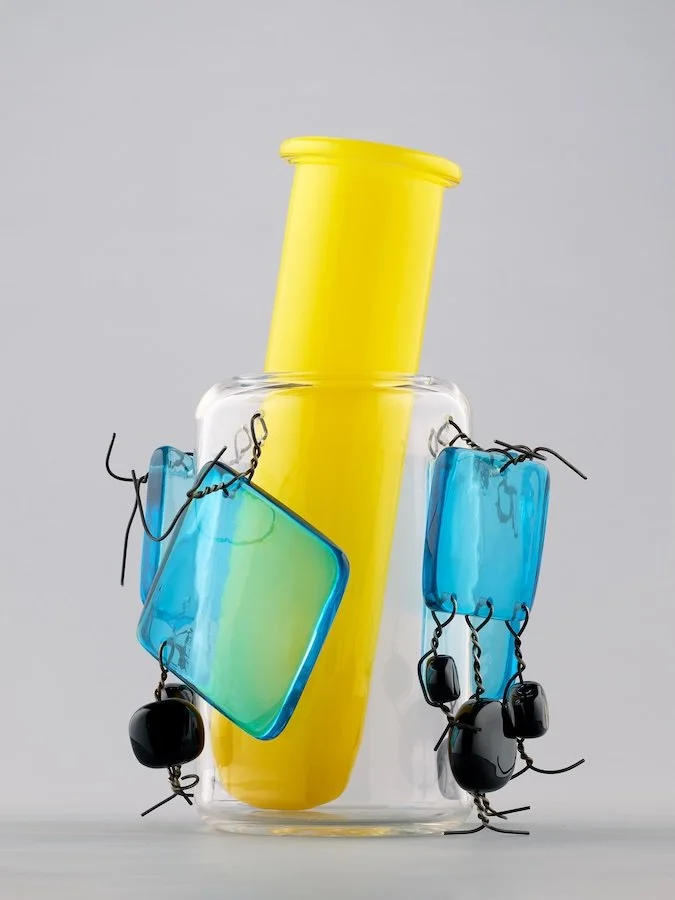
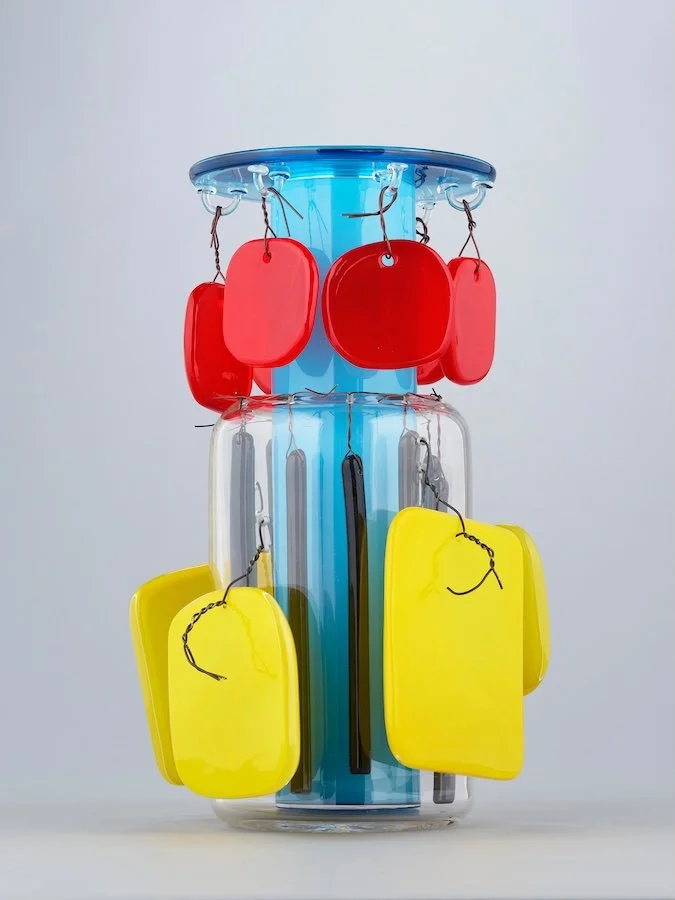
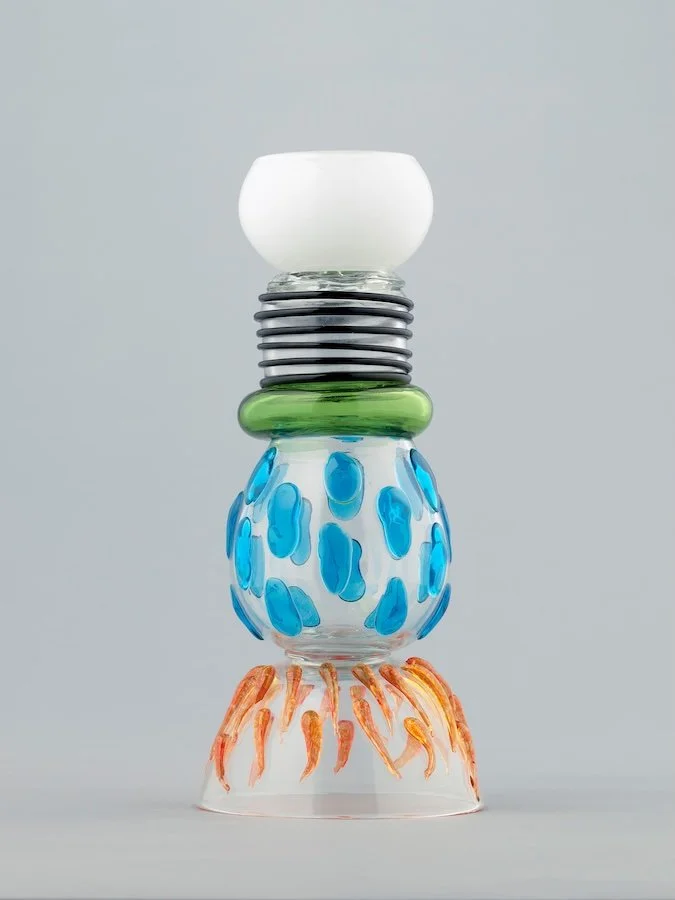
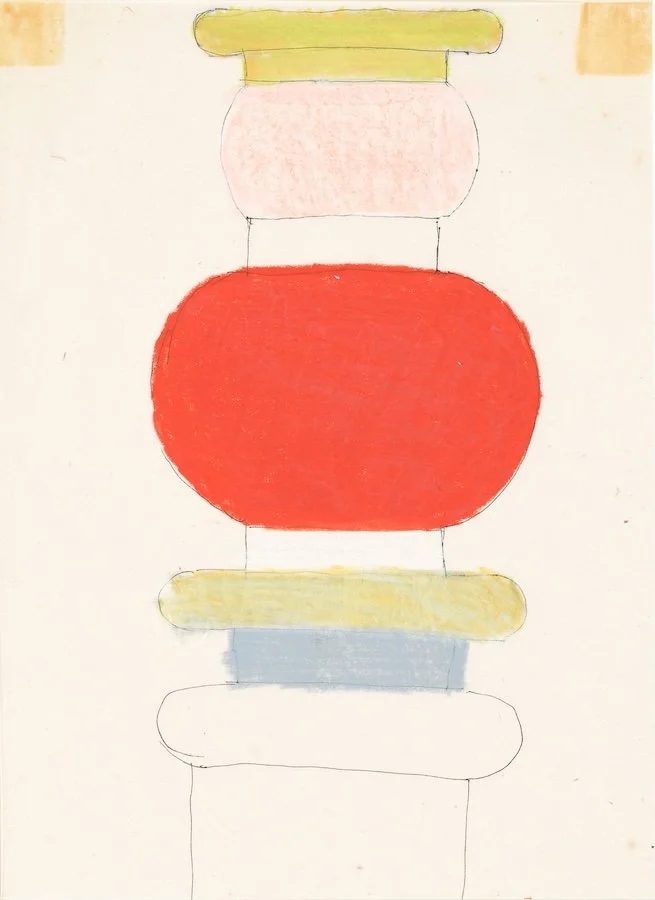
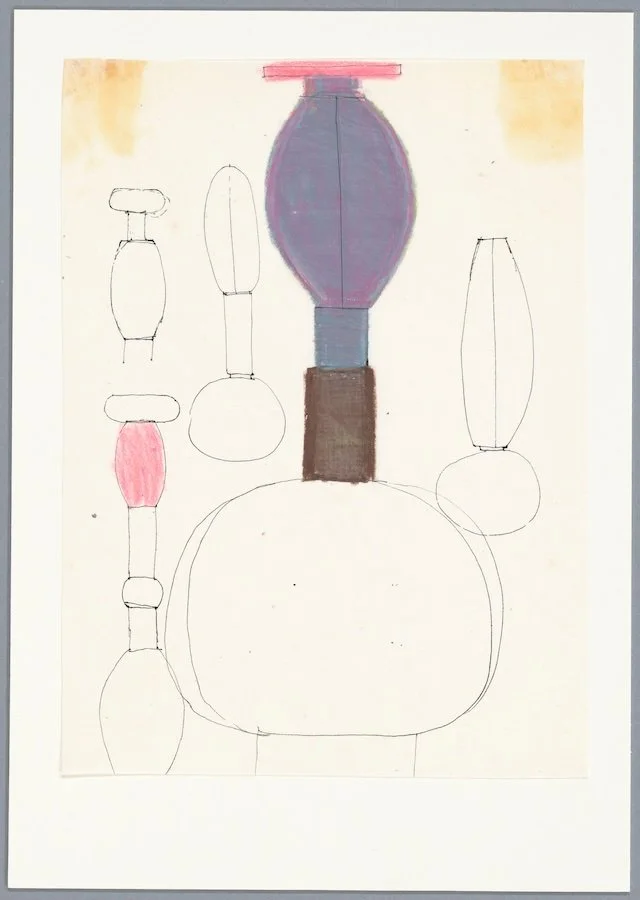
What makes this Artizon exhibition particularly interesting is the scope of its collection. The Ishibashi Foundation has been quietly assembling Sottsass works across all media, not just the Memphis pieces that tend to dominate group shows, but the ceramics, the glasswork, the conceptual photographs, the drawings. The towering ceramic column objects, some reaching three metres, belong to a body of work that is less discussed but arguably more radical: objects that function as ritual presences rather than utilitarian forms. His late glass pieces, made with Gino Cenedese e Figlio, show a craftsman's precision married to a poet's disregard for hierarchy between materials.
He died in 2007, at ninety, still working. The centenary retrospectives of 2017, held across Europe and the United States, confirmed what the design world already knew: that his was a career of exceptional coherence, built on a single animating conviction that he never abandoned, that the best design is the kind that makes you feel, however briefly, that the world could be arranged differently.
The Artizon show runs until October 4. It is accompanied by a concurrent exhibition of works by Takiguchi Shuzo, poet and art critic, whose own restless engagement with the boundaries between disciplines makes him an unexpectedly fitting companion.
Ettore Sottsass: Design begins where magic begins, Artizon Museum, Tokyo, June 23 – October 4, 2026.