Advent 2025: St Xavier’s Oratory
This Advent I am starting a tiny ritual of my own: four Sundays, four churches with architecture that caught my eye. Think of it as a short pilgrimage from the sofa — no architectural degree required, only a soft spot for good timber or a striking silhouette.
First stop: Umphang, Thailand.
To reach Umphang you leave the ordinary behind. Route 1090 is scenic in a way that feels theatrical — long curves, sudden views, and enough drama to make you hold your hat. The district itself is remote, close to the border with Myanmar, and the surrounding history is complicated; there are refugee camps nearby and a tense frontier that humbles any traveller who stops to listen.
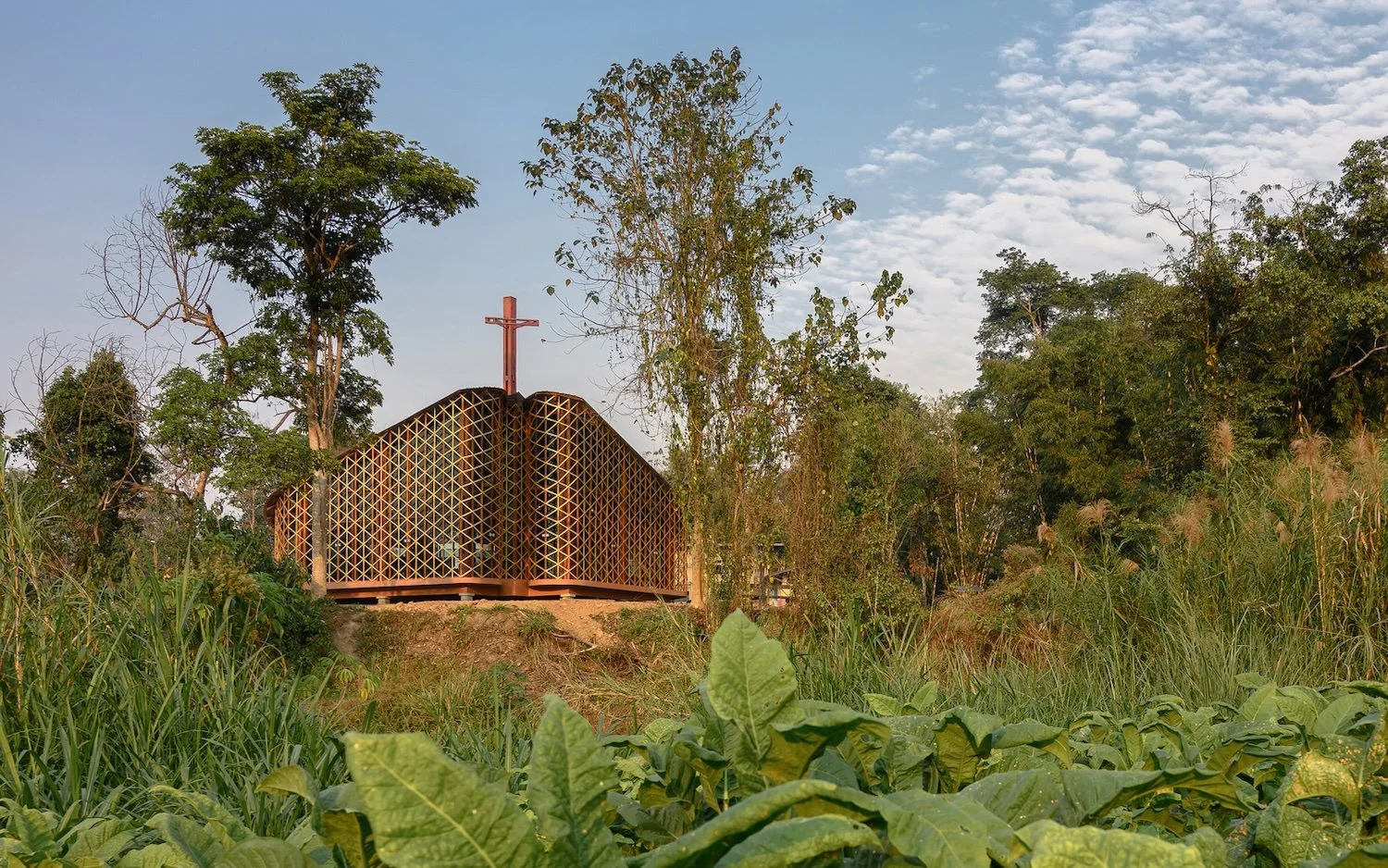
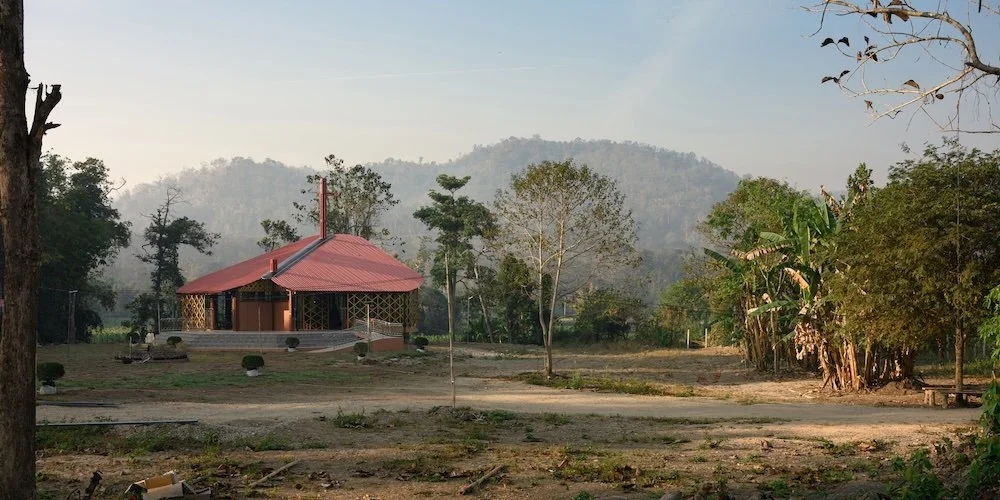
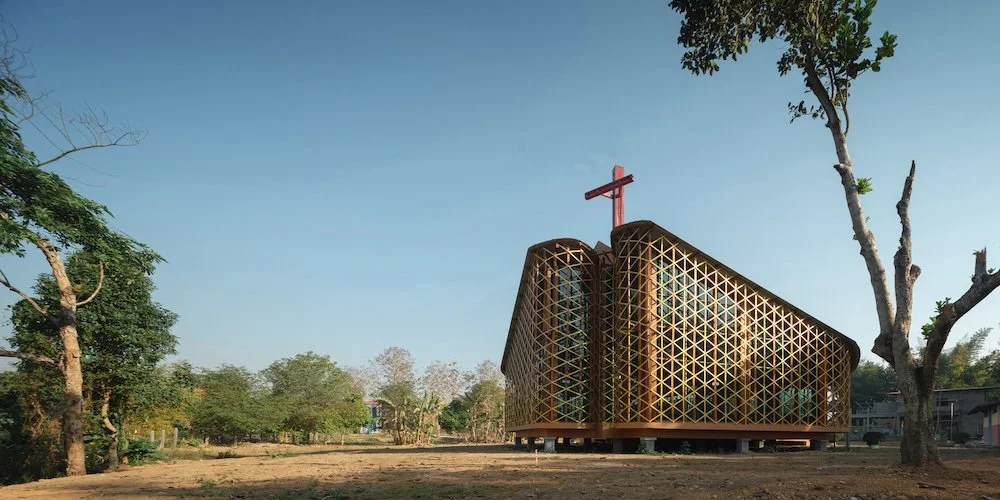
Perched beside the Umphang River, St Xavier’s Oratory by Paco García Moro is at once modest and oddly miraculous. Its outer shape hints at an old story about St Francis Xavier: during a shipwreck, a crab supposedly returned a lost crucifix to him. The building’s lines feel like that small, improbable rescue — simple, generous and quietly precise.
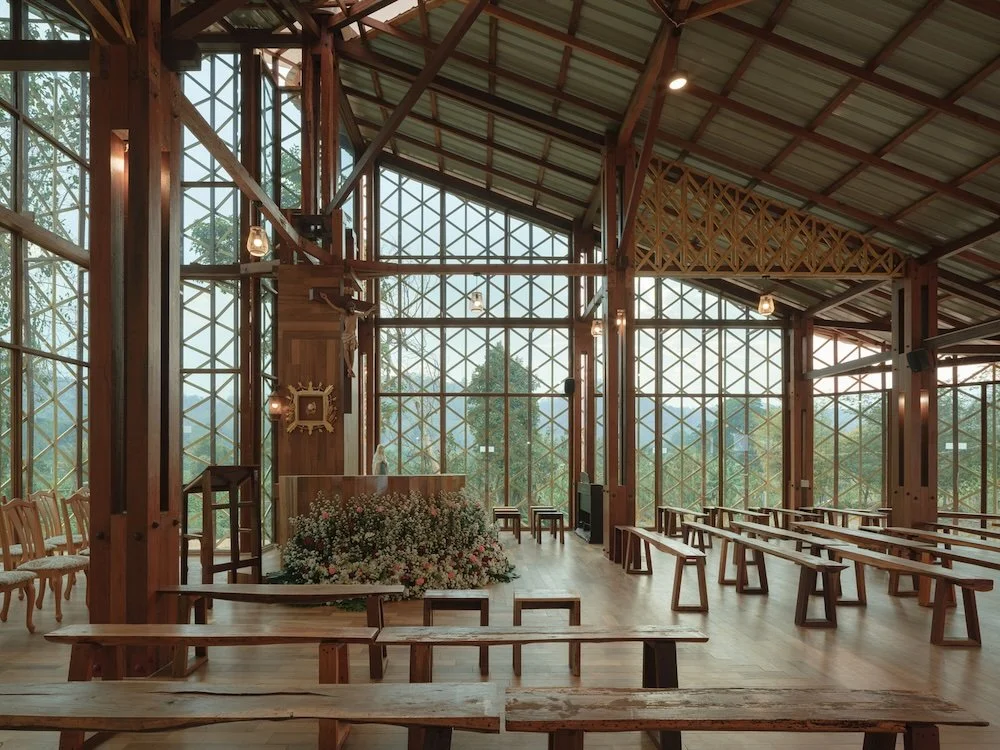

Inside, the plan draws from Karen textile motifs; the patterning is familiar without shouting. The interior is arranged so the route to the altar runs along a clear central axis, and opposite the altar the roof lowers, creating a gentle welcome for visitors. There’s no stiff pew ritual here — in keeping with local custom many people sit on the floor, and for bigger ceremonies families bring wooden benches made from reclaimed timber. It’s an intimate, homey way to worship: practical and warm.
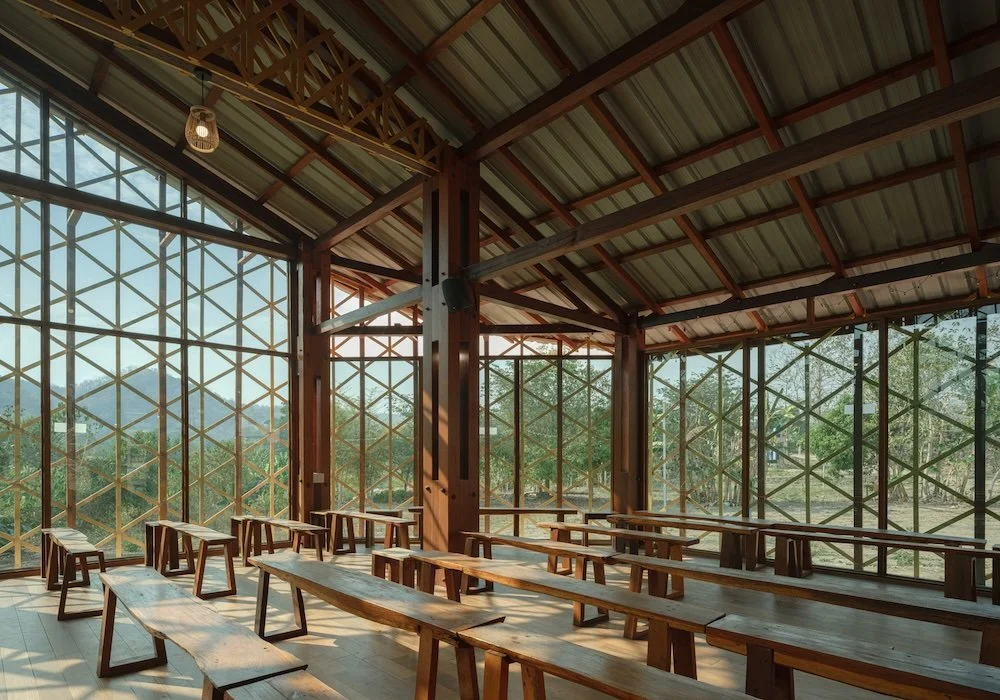
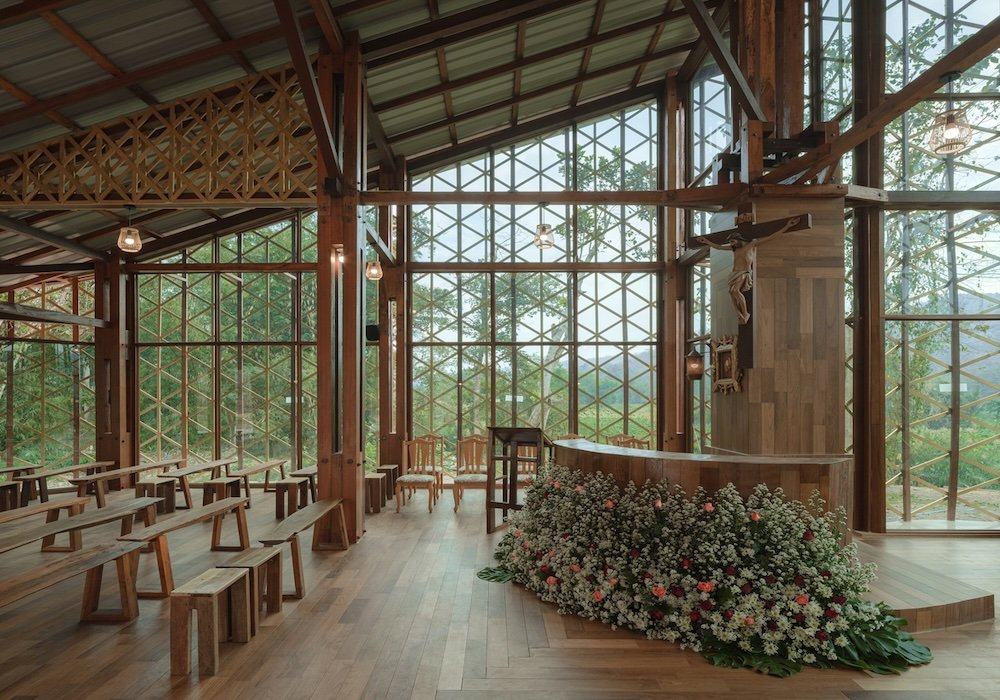
The oratory is small — about 210 sqm — and built almost entirely of thakien wood, a choice that surprised me. Thakien is often left alone by Buddhists because of old beliefs about spirits, yet here it lives on in reclaimed beams from vernacular houses and responsibly sourced timber managed through local forestry. The pillars are composite and almost see-through, so the whole place seems to breathe with the forest. Some of the outer posts act as natural ventilation shafts, drawing the valley breeze through the space. The timberwork, by master carpenter Reen Sulee, is gently astonishing: his life began in the Karen State, he learned the geometry of traditional carpentry under hard circumstances, and now he keeps those building traditions alive with real care.
There is something about this little temple that stayed with me — not showy, not dramatic, but unpretentious and attentive to people and place. It feels like architecture doing the sensible, human thing: sheltering, framing, inviting. More churches next Sunday — I’m already curious where the next doorway will open.
Photographs: Panoramic Studio