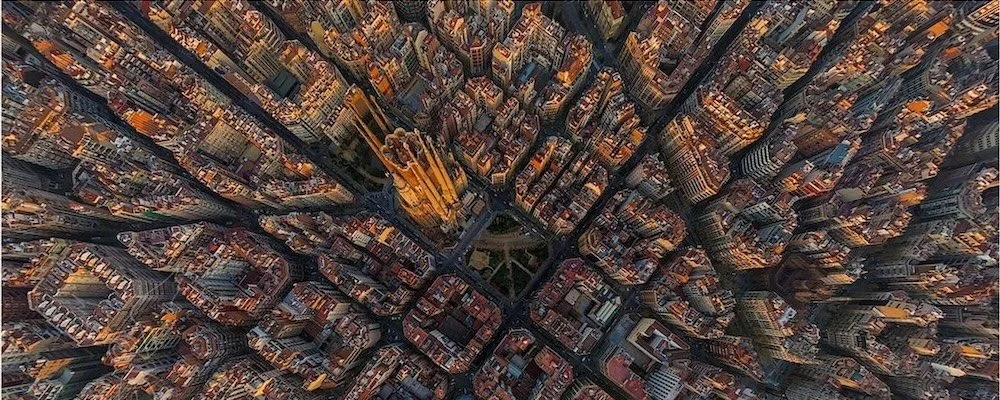
The Sagrada Família Was Never Waiting on Gaudí
Everyone blames the delay on a dead genius. The real culprit is a business model and it is one every self-funded museum should study.
There is a story architecture students like to tell each other: that the Sagrada Família took a hundred and forty-odd years* to build because Gaudí left behind a design too visionary for mortal builders to finish. It is a good story. It is also, for the most part, wrong.
The real explanation is less romantic and considerably more useful: nobody has ever been in a hurry to write a cheque for it.
Since construction began in 1882, the basilica has not received a single peseta, lira or euro of government money: not from Madrid, not from Barcelona City Council, not from the Vatican.
It has been built, floor by floor and spire by spire, on ticket sales and private giving alone: a funding model architecture writers now describe, carefully, as “unusual”, and which is, more plainly, a considerable act of institutional nerve, sustained without interruption across five generations.
A Foundation, Not a Ministry
The origins of the project are more improvised than its scale now suggests. In 1866 a Barcelona bookseller and publisher, Josep Maria Bocabella, founded the Spiritual Association of Devotees of Saint Joseph, a lay religious society that spent over a decade raising subscriptions before it could afford a site. Construction began on 19 March 1882 under the diocesan architect Francesc de Paula del Villar, whose neo-Gothic crypt was barely knee-high before he resigned, within the year, over a dispute about how economically the columns should be built. His replacement, appointed on 3 November 1883, was a little-known thirty-one-year-old named Antoni Gaudí, who inherited a half-finished crypt and a fundraising apparatus, and spent the rest of his life redesigning both, in the full knowledge that he would not live to see either finished.
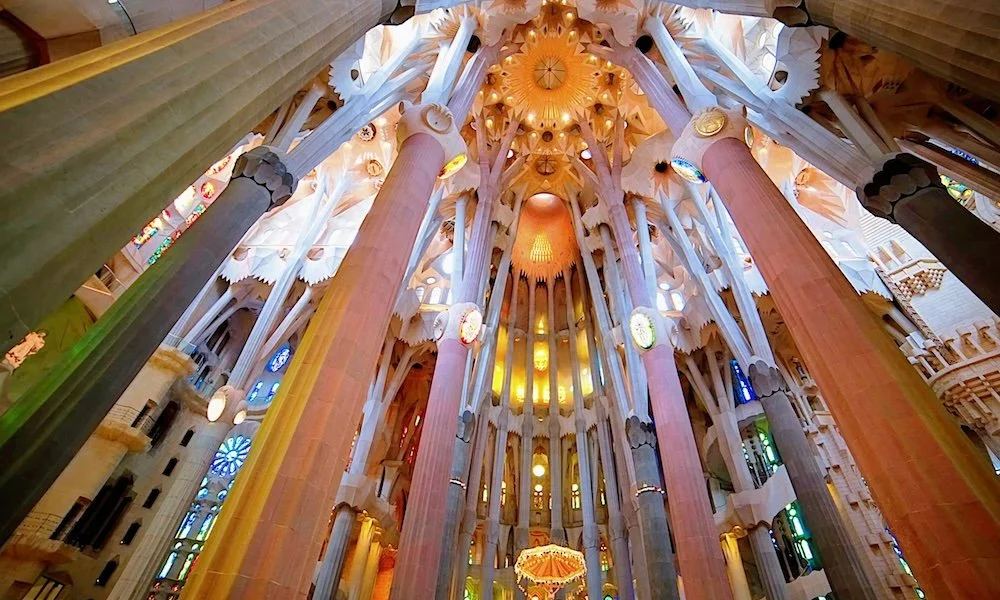
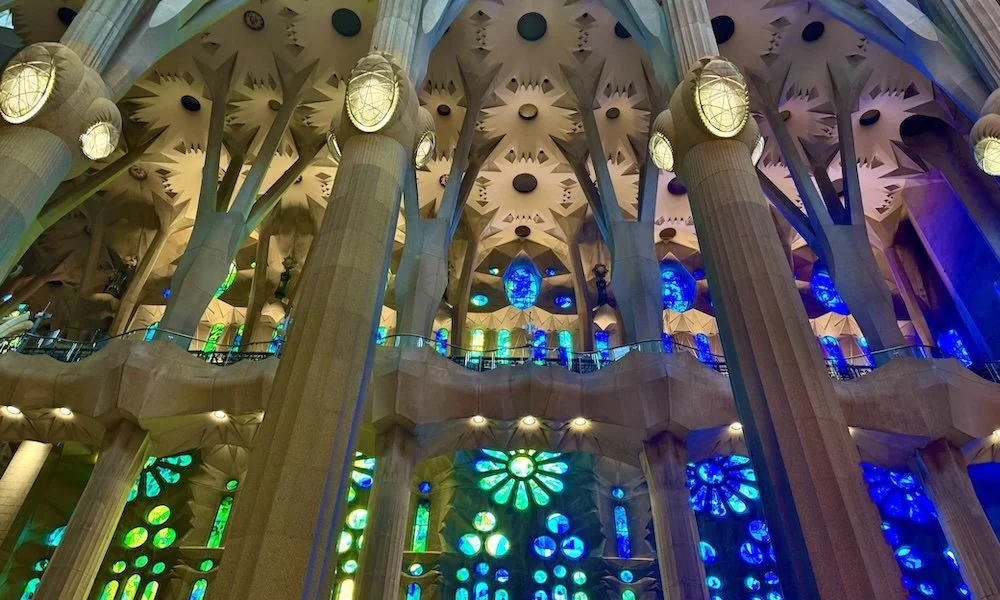
The Sagrada Família is, in law, a private non-profit foundation, established in 1895 to secure the project's continuity after Bocabella's death, and it is still governed today by its own Board of Trustees rather than any department of culture. The Archbishop of Barcelona holds a purely honorary role; the substantive decisions, what gets built next, at what pace, funded by what, rest with the Junta Constructora, the church's own construction board, much as they did in Gaudí's lifetime. In 2024 the basilica generated roughly €134 million in revenue, all of it private. Ticket sales, at somewhere between €20 and €40 a head for close to five million visitors a year, account for the bulk of it; membership schemes, individual donations and Spain's tax relief for religious and cultural giving make up the rest.
The model has survived considerably worse than a slow fundraising quarter. In 1936, at the outbreak of the Spanish Civil War, anarchist militia broke into Gaudí's on-site workshop and destroyed most of his remaining plaster models and drawings, the closest thing that existed to a finished design for the towers still unbuilt. Reconstructing his intentions from the surviving fragments took decades and depended as much on engineers reverse-engineering his geometry as on any rediscovered plan. For much of the twentieth century it was not obvious the building would ever be finished at all. It continued to rise anyway, a few metres a year, funded exactly as it always had been.
Here is the detail that captures the arrangement better than any balance sheet. In 2018: 136 years into construction, the Sagrada Família did not, technically, have a building permit. Barcelona City Council pointed out, reasonably enough, that the largest construction site in the city had never actually applied for planning permission, because in 1882 the site had stood just outside the city boundary and nobody had thought to formalise the matter since. The church settled by agreeing to pay the council roughly $41 million over ten years, a payment that, notably, flows from the church to the state rather than the reverse. It may be the only major monument in Europe whose relationship with government is that of taxpayer rather than beneficiary.
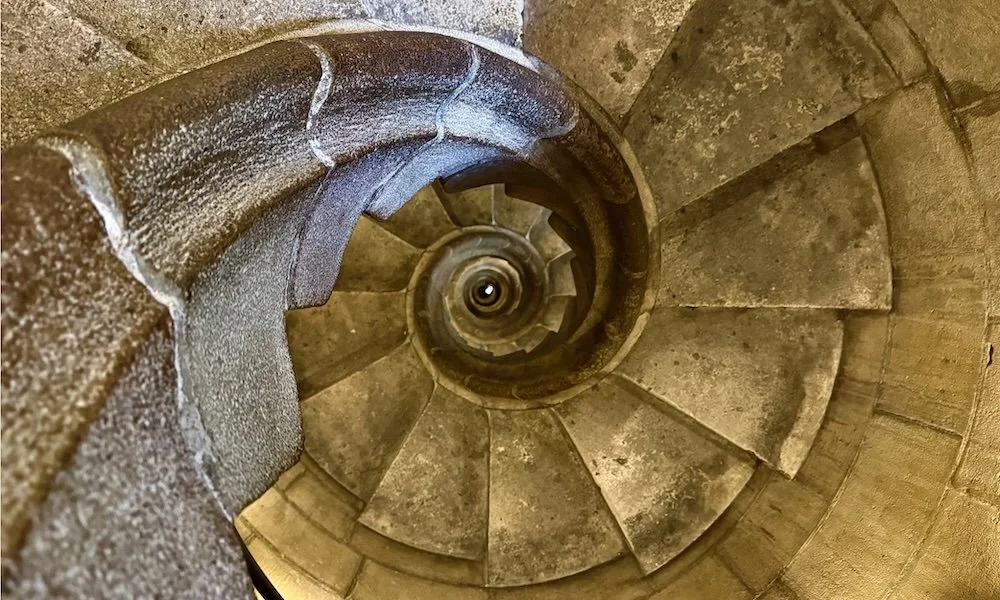
It is worth adding that the building's pace was never only a function of money. For most of the twentieth century, construction crawled because nobody could be entirely certain how to translate Gaudí's ruled-surface geometry, the hyperboloids and helicoids that give the towers their unnerving, organic twist, into stone without him there to adjudicate. That changed from 1989, when the New Zealand architect Mark Burry, who had joined the project a decade earlier, began applying computer-aided design borrowed from aeronautical engineering to reconstruct the mathematics behind Gaudí's forms; it changed again in the 2000s, as CNC stone-cutting and 3D printing let the workshop produce components in months rather than years. The acceleration of the last three decades was as much an engineering achievement as a fundraising one. But it was the fundraising that made the engineering worth doing.
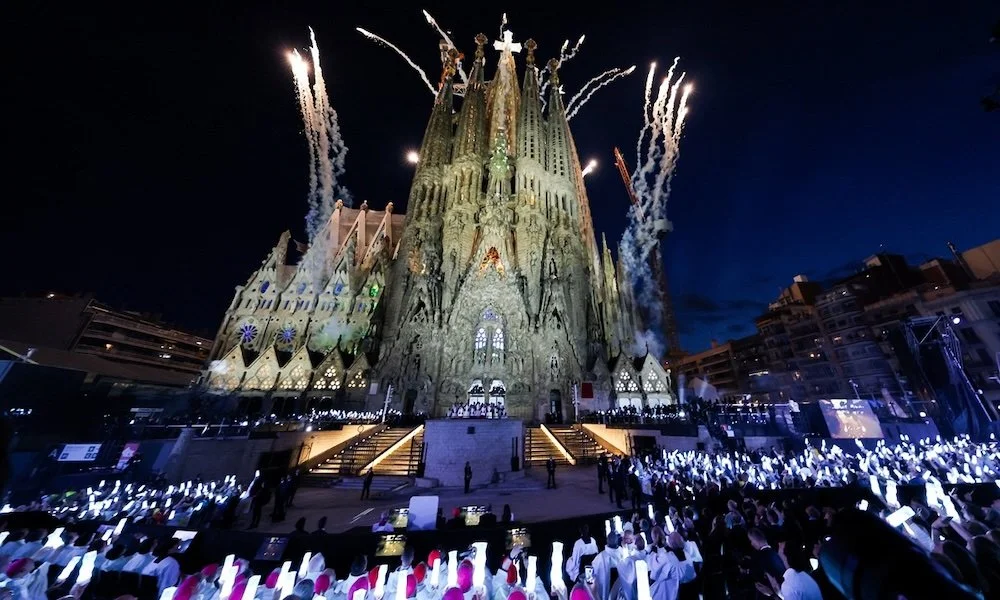
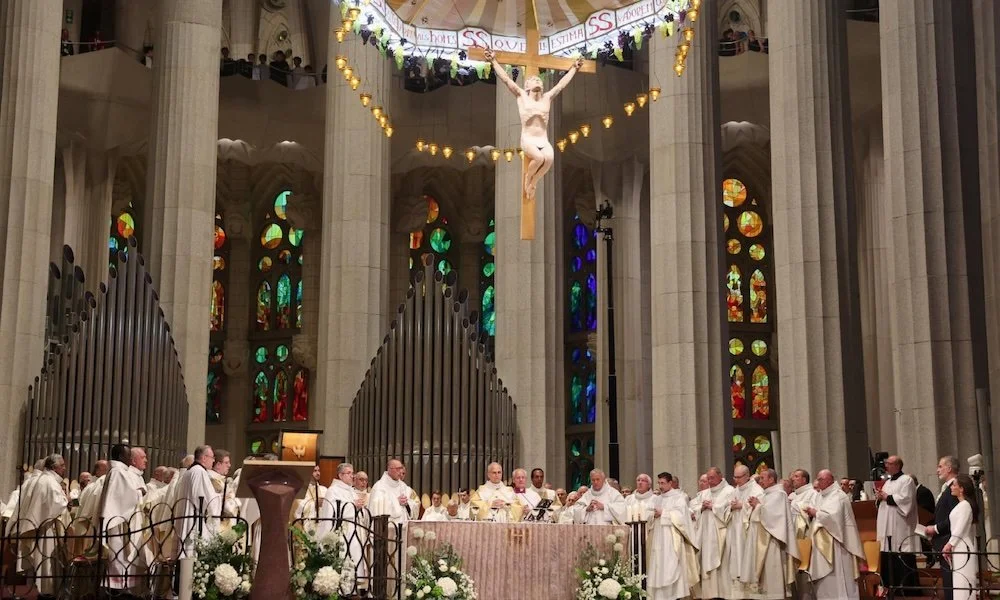
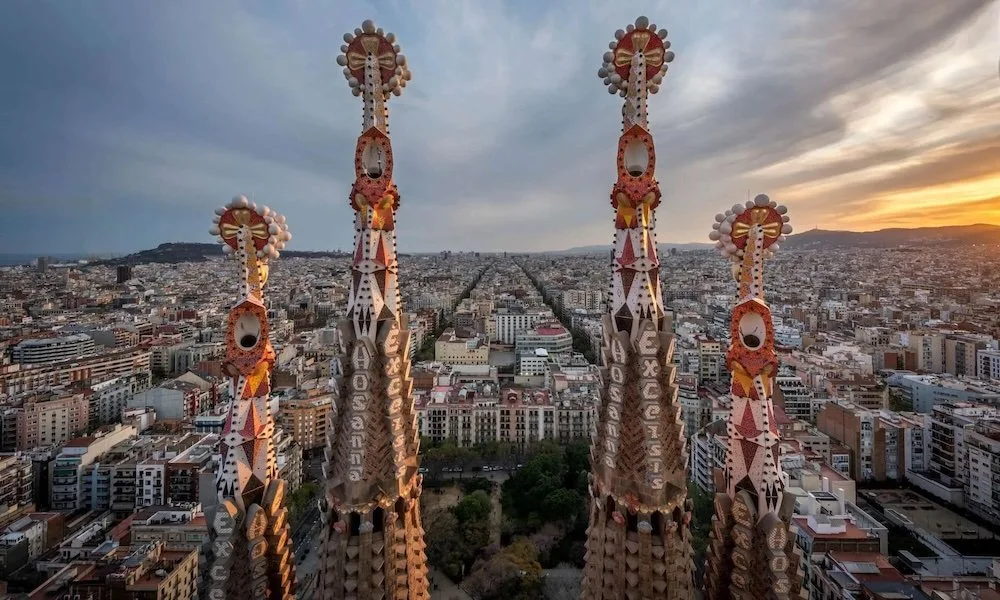
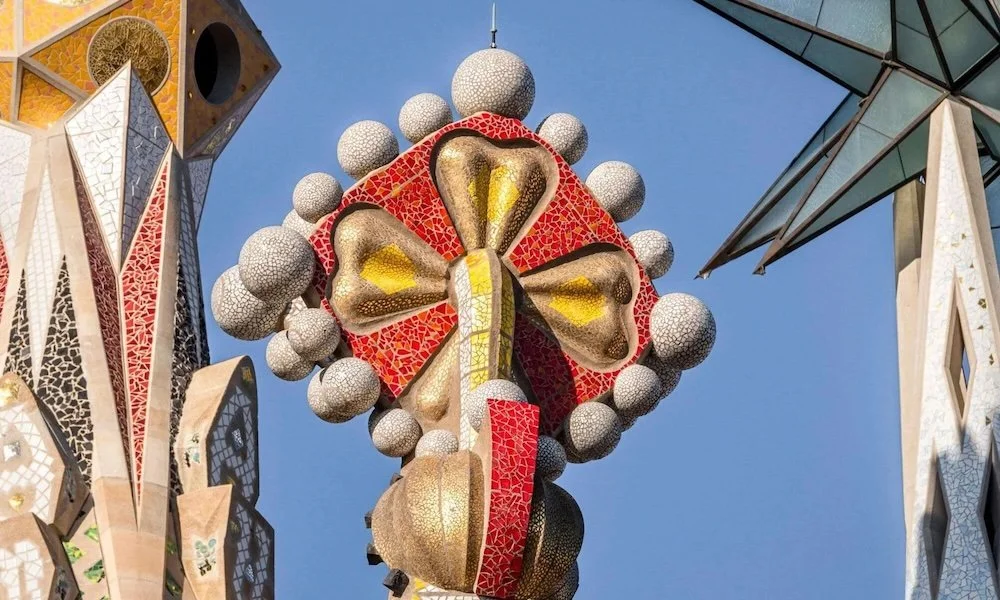
So when the final segment of the cross atop the Tower of Jesus Christ was winched into place in February 2026, completing Gaudí's deliberately modest 172.5-metre summit, half a metre short of the hill of Montjuïc, because he held that no human construction should surpass the work of God and Pope Leo XIV arrived that June to bless it on the centenary of the architect's death, the moment being marked was not simply “a vision, at last realised.” It was the conclusion of a fundraising campaign that had outlasted two world wars, a civil war that destroyed the architect's own plans, a pandemic, and roughly four generations of Barcelona councillors, and had never once asked a minister for a euro.
Why This Should Matter to a Museum
It would be easy to file the Sagrada Família under “charming European eccentricity” and move on. But the model it represents, ambition financed by the people who choose to show up, and by the people who choose to give, is not a quirk of nineteenth-century Catalan piety. It is a governance philosophy, and it travels rather further than Barcelona.
It is not, to be clear, a free lunch. A foundation with no government backing carries a risk a state institution does not: a bad decade for tourism, a scandal, a shift in donor sentiment, and the money simply stops, with no ministry obliged to make up the shortfall. Patron-funded institutions can also drift toward answering to their donors' tastes rather than their public mission: a tension the Sagrada Família has mostly avoided only because its donor base is, in effect, the general public, close to five million ticket-buyers a year, rather than a handful of large benefactors with particular opinions. The model is not a guarantee of integrity. It is, at best, a different set of incentives, and arguably a more honest one.
A state-funded museum answers, structurally, to a budget cycle and a ministry: money it did not raise, under conditions it did not set. A museum funded by patrons and public answers to something closer to conviction, people who put their name and money behind a project because they believe it worth finishing, not because a line item survived this year's allocation round. That is a slower, harder, occasionally more precarious way to build. It is also, as Barcelona has spent a century and a half proving, a way to build something nobody can quietly deprioritise, because no single office's budget cut can stop it.
This is the story a Patrons Programme tries to tell, whether the institution is a Gothic basilica or a new contemporary art centre. The pitch is not "help us hit a target," but "your name enters the same ledger as everyone else who decided this was worth existing" — a, ledger that, in the Sagrada Família's case, now runs over a century and is now unfinished. Patrons do not fund monuments because they are guaranteed to be built. They fund them because they are not guaranteed, and their support tips the balance.
Gaudí seemed to understand this better than anyone. Asked about the church's slow progress, he reportedly shrugged that his client, God, or perhaps the public, it is never entirely clear, was in no hurry. Worth remembering, next time an institution asks you to become a founding patron rather than wait for government: some of the world's greatest buildings were never waiting on the state. They were waiting on someone saying yes, first.
* Some benchmarks about Cathedral building duration:
Chartres Cathedral: one of the fastest: the main body was rebuilt in about 26 years (1194–1220) after a fire, which is considered remarkably quick and is often credited for its unusual stylistic unity.
Salisbury Cathedral — around 38 years (1220–1258) for the core structure, also unusually fast and coherent because it was built largely to a single plan.
Notre-Dame de Paris — roughly 100–200 years (started 1163, largely complete by the 1250s, with later additions).
Cologne Cathedral — construction began in 1248 but stalled for centuries; it wasn't finished until 1880 — a total span of over 600 years.
Milan Cathedral — nearly 600 years, started 1386, with the façade only completed in the early 19th century (some finishing touches even in the 20th).
Florence Cathedral (Duomo) — about 140 years for the main building (1296–1436), with Brunelleschi's dome as the final, defining achievement.