The Uncommon Beauty of Common Things
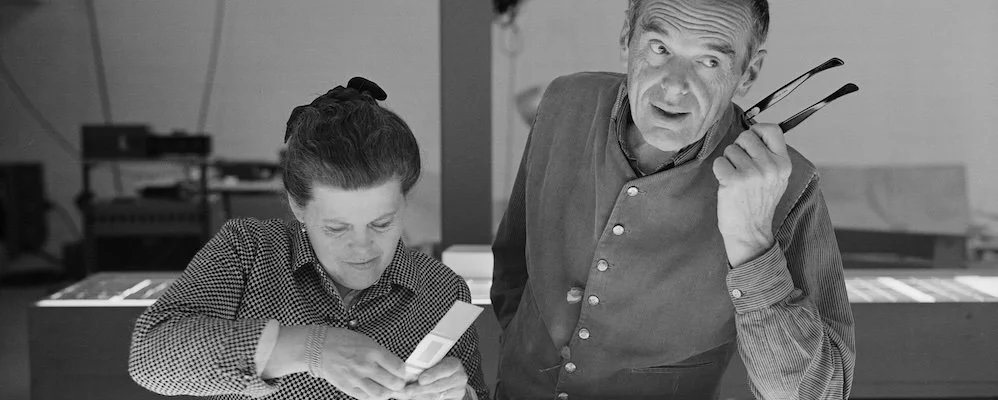
Charles Eames drove through Nuevo León nine years before he ever met Ray, a footnote so small he barely mentioned it for decades. Now it's the opening scene of Mexico's first-ever Eames retrospective.
Here is a fact that took me embarrassingly long to learn: Charles Eames set foot in Mexico nine years before he ever met Ray. In 1933, a young, not-yet-famous architect drove through Nuevo León, Coahuila and San Luis Potosí, no thesis in mind, no commission waiting, just a road trip that happened to pass through the exact state where, ninety-three years later, the first Eames retrospective on Mexican soil would open. Design history loves a tidy circle. This one is almost too neat to believe, and yet there it is, documented and framed, in a gallery in Monterrey.
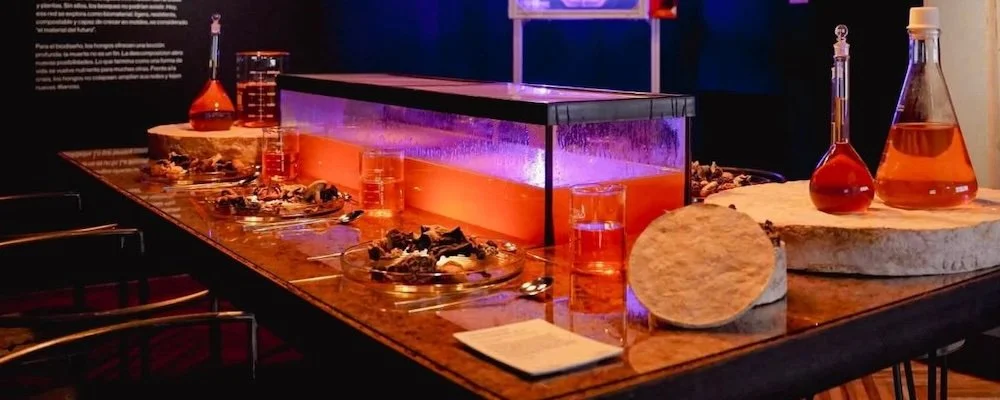
The exhibition is called ‘La inusual belleza de las cosas comunes’ (The Uncommon Beauty of Common Things) and it is currently on view at MARCO, the Museo de Arte Contemporáneo de Monterrey, through 7 February 2027. It is, remarkably, the first monographic show Mexico has ever dedicated to Charles and Ray. Which is its own small scandal, when you think about it: a country with one of the richest design and craft traditions on the continent had never formally hosted the two Americans who spent a career arguing that "design" and "craft" were never separate categories to begin with.
Two hundred and twelve reasons to reconsider what a chair is
The numbers alone are worth sitting with: 212 works, 152 photographs, 26 design objects, 21 pieces of archival material, 13 films, drawn from a partnership that, across thirty-seven years, produced 125 films in total. Visitors will not just look at Eames furniture behind velvet rope; they will sit in it, while those films play around them. It is a curatorial decision that gets closer than most museum shows to what Charles and Ray actually believed, which is that you were never supposed to admire their work from a respectful distance. You were supposed to use it.
Curator Brenda Fernández Villanueva has organised the show into eight thematic axes rather than a simple chronology: "Urgency and System," "Decomposition of the Gaze," "Model and Abstraction," "Discipline and Ritual," "Economy and Transition," "Life as Archive," "Infrastructure of Perception," and "Echoes", and the structure itself makes an argument. A retrospective organised by decade tells you what the Eameses made. One organised by ‘idea’ tells you how they thought, which is the far more interesting question, and the one their furniture alone cannot answer.
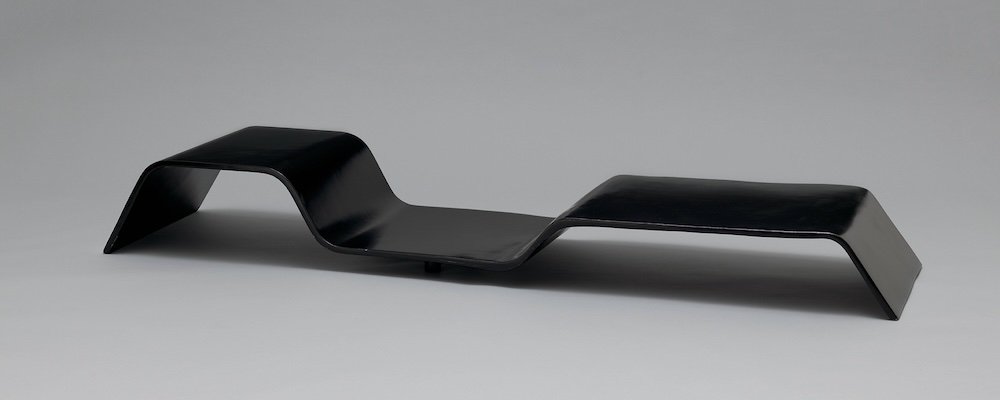
Take "Urgency and System," built around the ‘Leg Splints’ of 1942, plywood splints commissioned by the U.S. Navy to treat wounded soldiers, moulded using techniques the couple would spend the next three decades refining into lounge chairs. It is a strange, slightly uncomfortable origin story for some of the most desired furniture of the twentieth century: the same bent-plywood technology that shaped a battlefield medical device also shaped the chair currently sitting in half the architecture magazines you own. Function first, always, the beauty, as their own philosophy insisted, was never decoration bolted on afterward. It was what happened when you solved the actual problem correctly.
Elsewhere, "Decomposition of the Gaze" pairs that pragmatism with something closer to pure play: ‘Blacktop’ (1952), an eleven-minute film of soap bubbles moving across wet asphalt, shot with no purpose beyond curiosity about how light and motion could be studied on their own terms. And in "Model and Abstraction," a 1973 animation made with UCLA mathematician Ray Redheffer explains algebra through moving shapes, design, once again, refusing to stay in its assigned lane.
The Mexico thread
The show's final axis, "Echoes," closes the loop the first gallery opens: Charles's 1933 journey through Nuevo León, Coahuila and San Luis Potosí, on view as documentation rather than footnote. It is a smart curatorial choice, because it resists the easy, flattering narrative, "the great American designer discovers Mexico", in favour of something closer to the truth, which is that the trip barely registered in his own account of his career for decades. MARCO isn't claiming Mexico shaped Eames. It is simply refusing to let the connection stay invisible any longer, which feels like the more honest form of tribute.
It sits alongside a genuinely lovely inclusion: ‘Day of the Dead’ (1957), the Eameses' own film on the holiday's objects and rituals, filed under "Life as Archive", proof that their curiosity about how a culture organizes meaning around everyday objects extended well past their own studio walls.
Why this matters more than another furniture show
I shall admit a bias here: I think the Eameses are the most quoted and least understood designers of the last century. Everyone can identify the lounge chair. Fewer people know that Charles once wrote, "recognising the need is the primary condition for design", a sentence that sounds simple until you try to apply it honestly to your own work, and realize how rarely need and desire actually line up. Ray, for her part, believed design's real seriousness showed up in play, that curiosity itself was a discipline, not a break from one.
What MARCO has done, essentially, is take the two most famous furniture designers in the popular imagination and insist that the furniture was never really the point. It was the visible evidence of a much larger argument: that architecture, film, mathematics, toys, and grief rituals were all, in the Eameses' hands, the same discipline wearing different clothes.
That argument travels well. It is fitting that it is finally landed in a country that never needed convincing that everyday objects carry meaning, it just needed the introduction.
Charles & Ray Eames: La inusual belleza de las cosas comunes is on view at MARCO, Museo de Arte Contemporáneo de Monterrey, through 7 February 2027. Galleries 9–11, Second Floor. Free admission Sundays.