The Volcan: Oscar Niemeyer's Artistic Emergence in Le Havre
How a Brazilian modernist dropped two white volcanoes into the middle of France's most rigorously rebuilt city… and won!
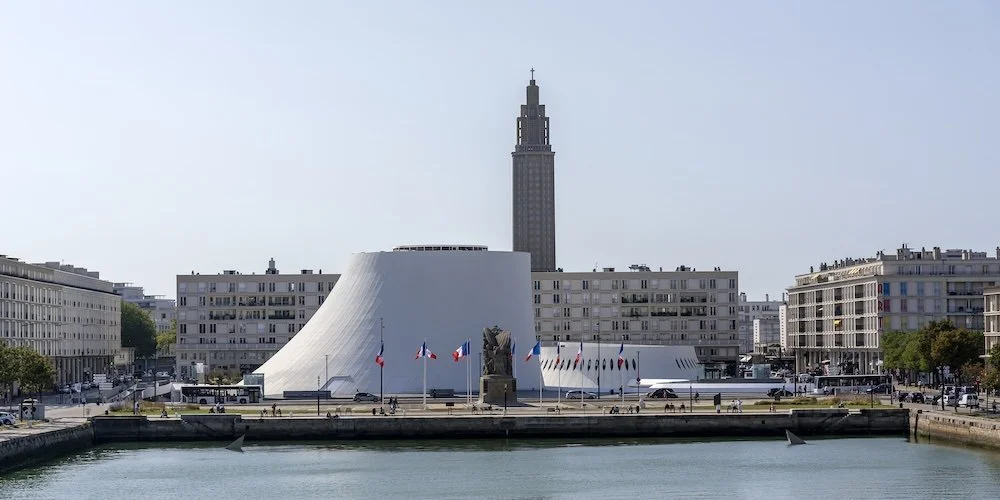
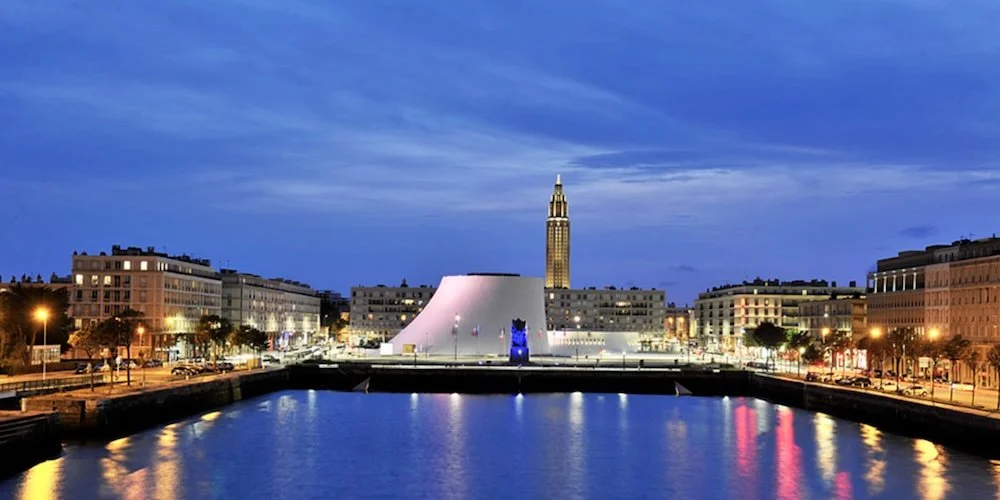
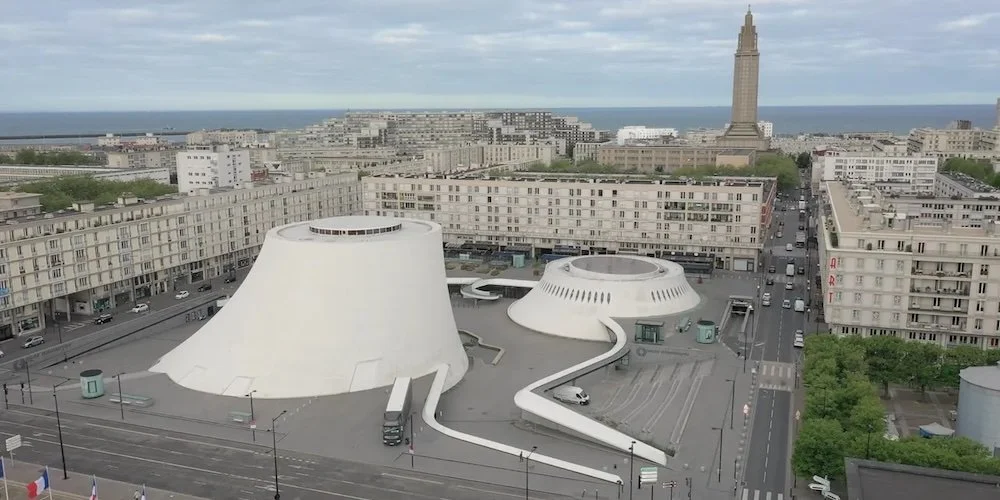
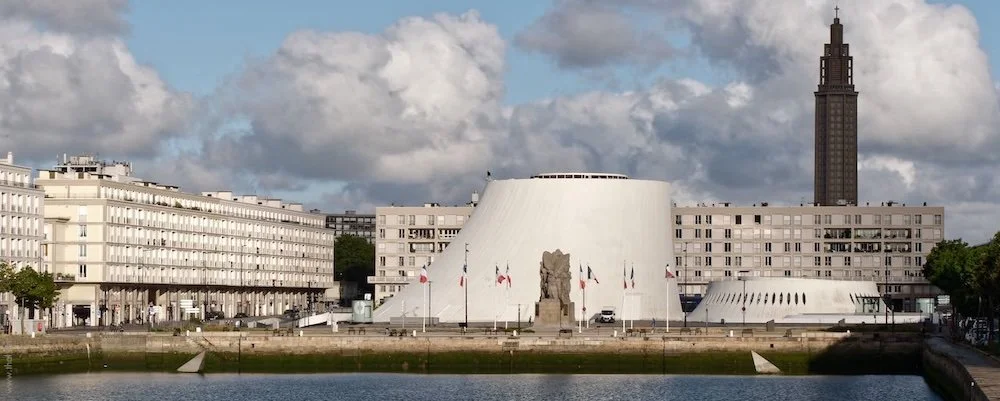
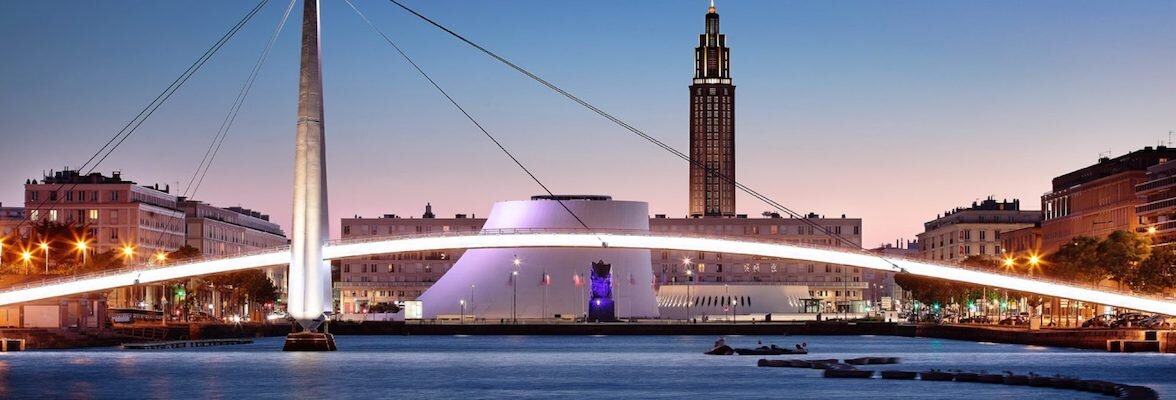
Observing two architectural personalities coexisting in close proximity yet never fully aligning brings a unique sense of satisfaction. In Le Havre, this dynamic is embodied by The Volcan, a cultural complex designed by Oscar Niemeyer, situated prominently within a city reconstructed by a starkly contrasting individual.
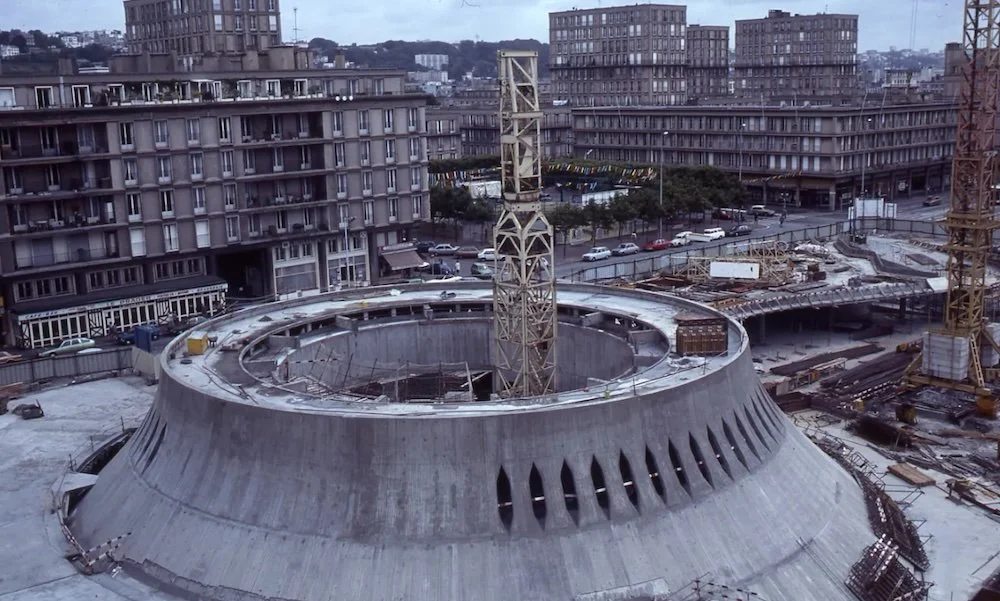
picture by Philippe Devaux
Following the devastation caused by Allied bombings during World War II, the task of rebuilding Le Havre was entrusted to Auguste Perret, a staunch rationalist, who meticulously reshaped the city centre around Place Gambetta with precise grids of concrete and sharp angles. Although a theatre was initially planned for the area, Perret's passing delayed its construction, leaving the plot vacant for thirty years. When André Malraux eventually resurrected the project in the 1960s as part of the Maisons de la Culture initiative, the unexpected choice of Niemeyer, a Brazilian communist renowned for his work on Brasília, to lead the project added an intriguing twist to the narrative.
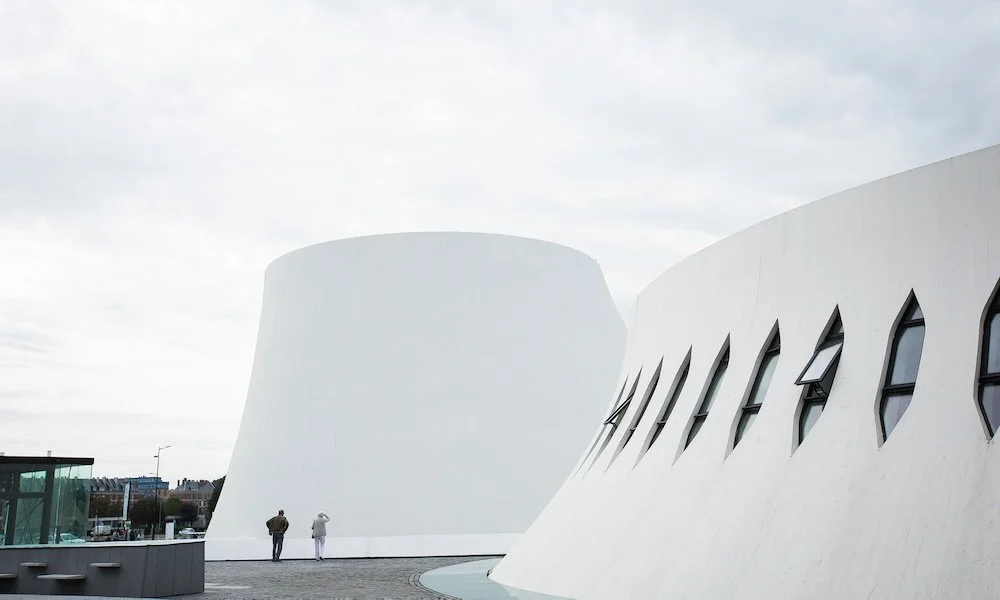
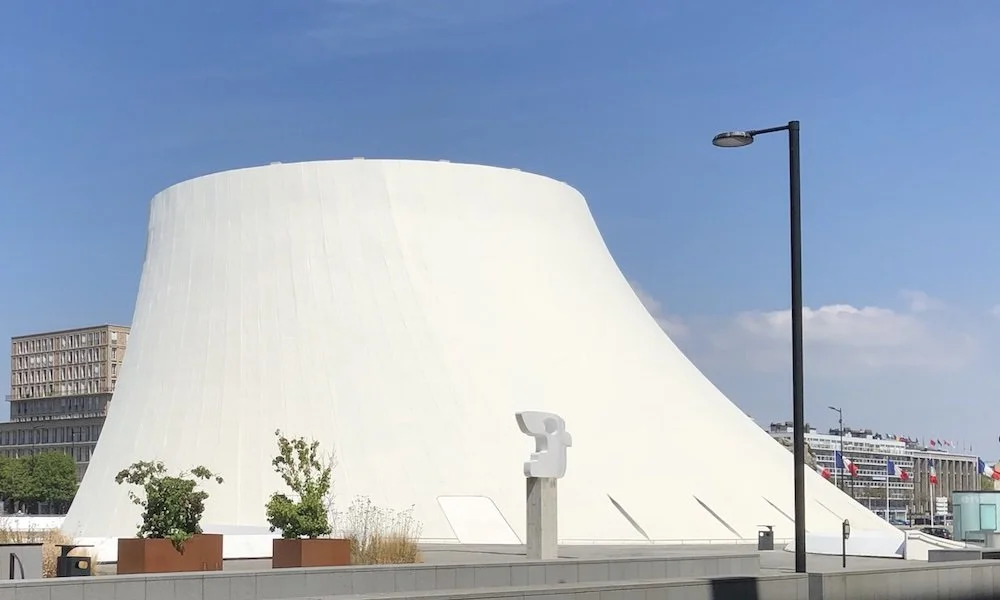
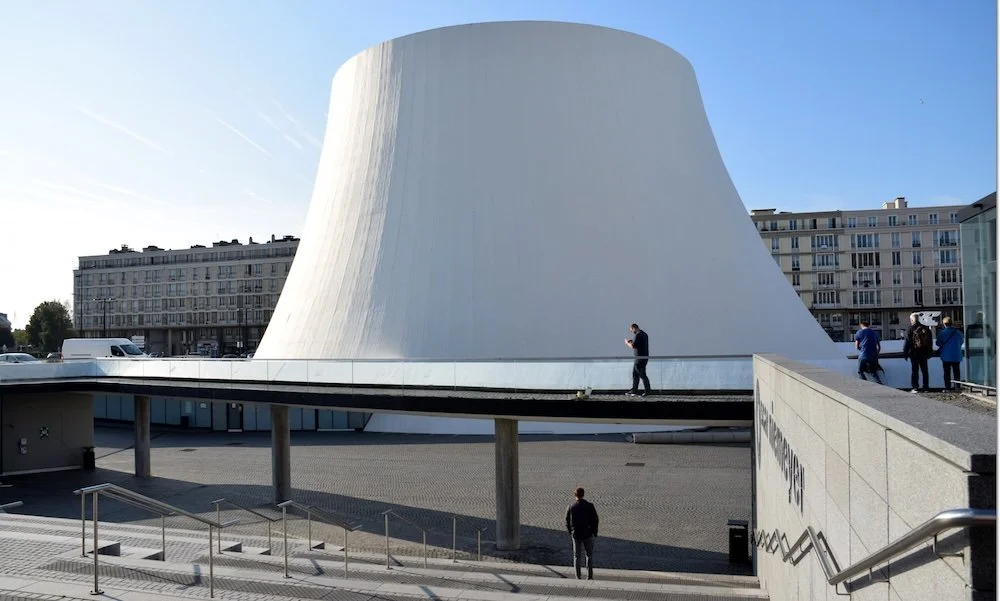
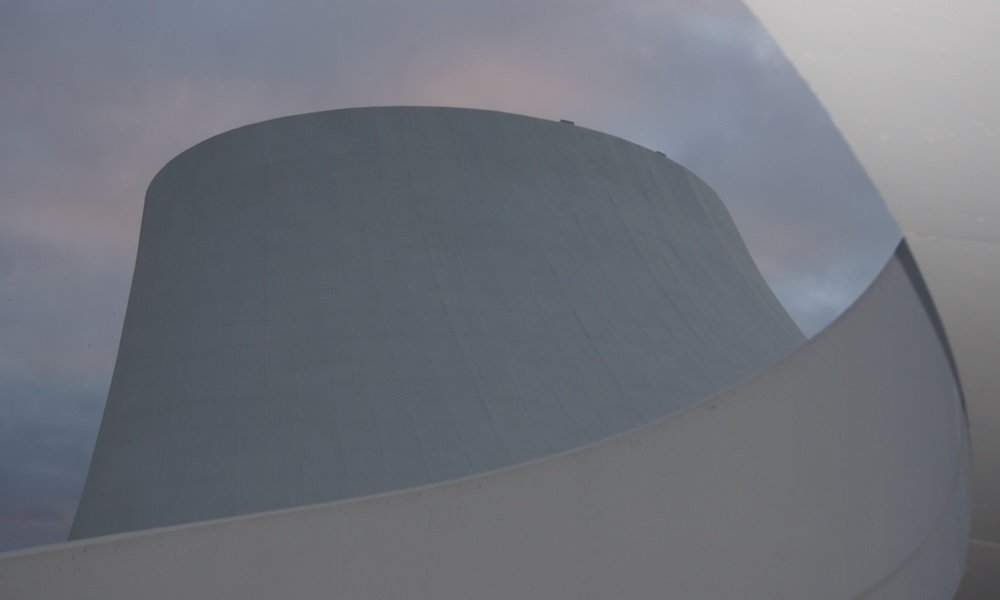
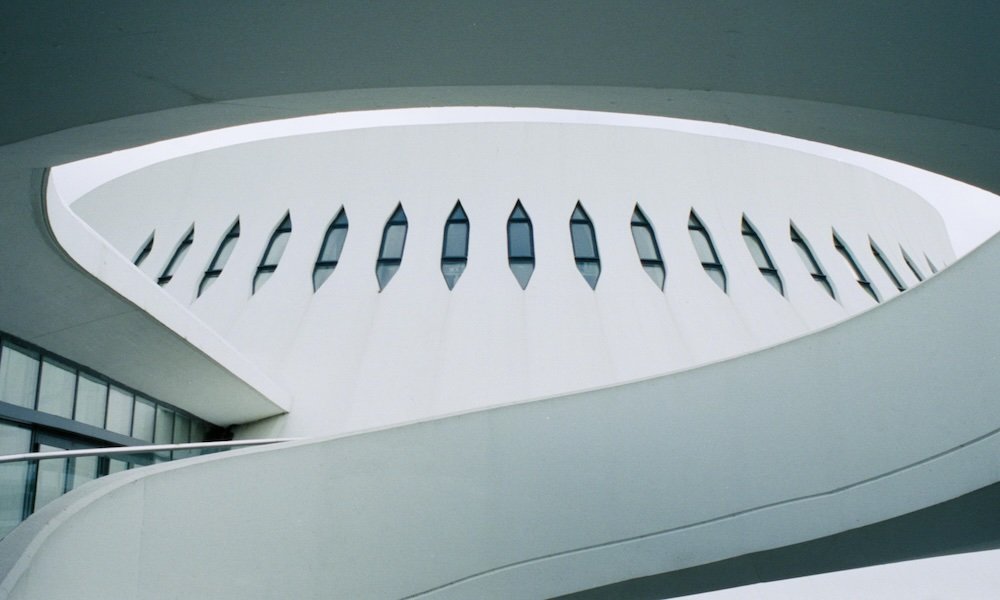
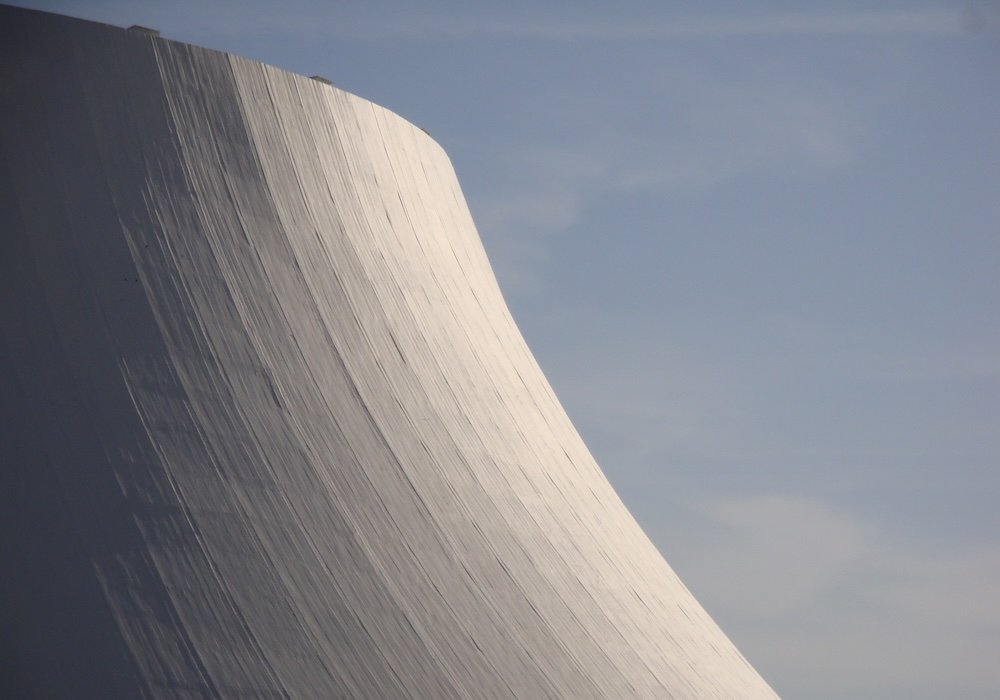
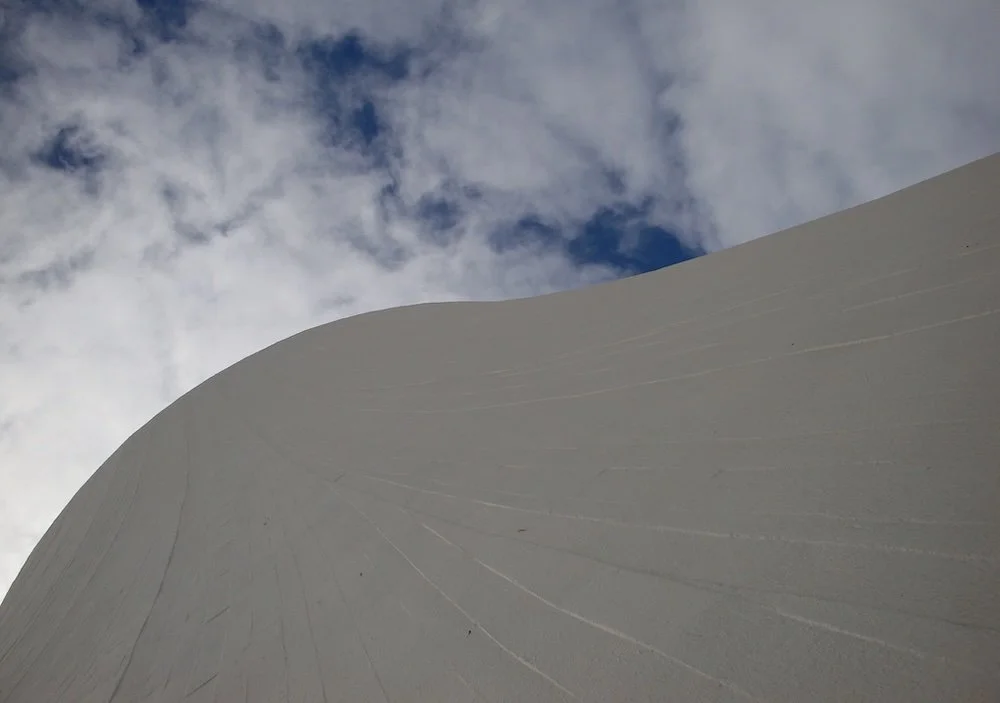
Niemeyer diverged from the conventional approach. Rather than simply erecting a theatre facing a square, he reimagined the entire space, creating a sunken plaza 125 metres long and positioned 4.5 metres below street level, providing a sheltered and enduring environment shielded from coastal winds. Within this sunken arena, two distinctive structures emerged: a large hyperbolic volume and a smaller cylindrical form, both characterised by their windowless white facades, evoking a resemblance to ship funnels rather than conventional buildings, a subtle homage by Niemeyer to the maritime heritage that once defined Le Havre's skyline. Initially dubbed the "elephant's foot" or the "yogurt pot" by sceptical locals, the complex eventually earned its more fitting name, The Volcan, eight years after its completion in 1982.
Despite its whimsical moniker, the engineering behind The Volcan is far more sophisticated than one might assume. The larger structure follows a hyperbolic paraboloid design, employing the same mathematical principles seen in Niemeyer's work on the Cathedral of Brasília and Gaudí's Sagrada Família vault. The construction process involved pouring concrete in one-meter sections against sandblasted timber moulds, culminating in a uniform white finish to enhance cohesion and durability. Beneath the sculptural exterior lies a highly functional edifice, supported by a 20-metre diaphragm wall and resting on 239 foundation piles.
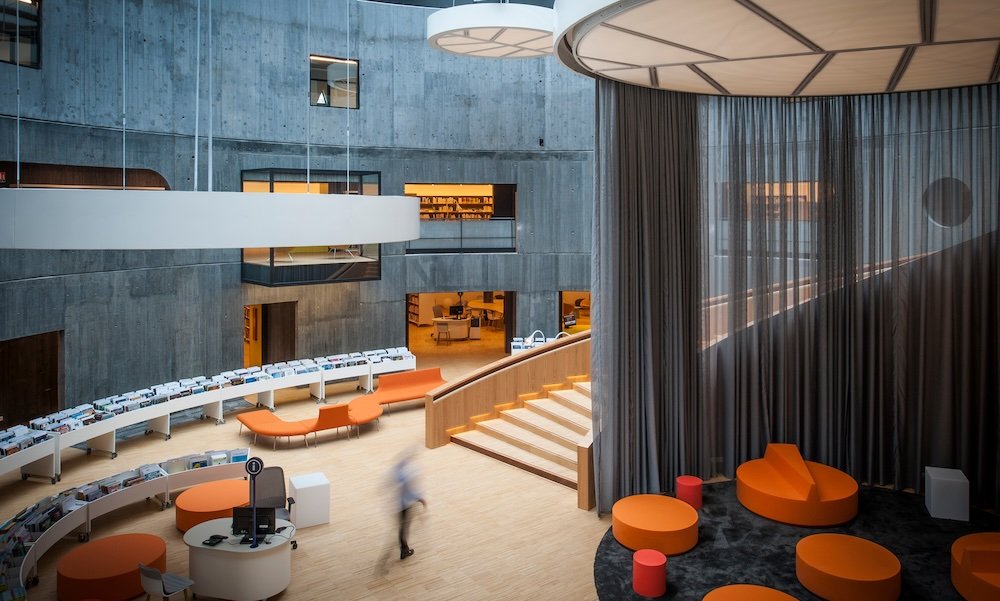
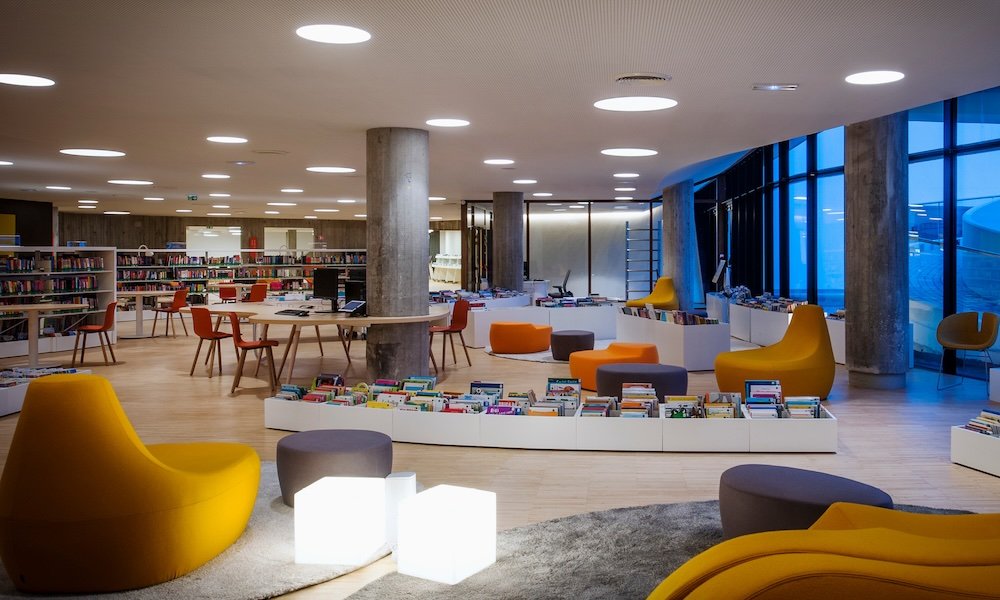
Over the course of three decades, The Volcan weathered the typical trajectory of many Brutalist landmarks: aesthetically captivating from afar, yet largely overlooked by the local community. The challenge, as articulated by director Jean-François Driant, lay not in the architecture itself, but in the accessibility issues, with elevators bypassing the sunken plaza, embodying a peculiar instance of disjointed urban planning.
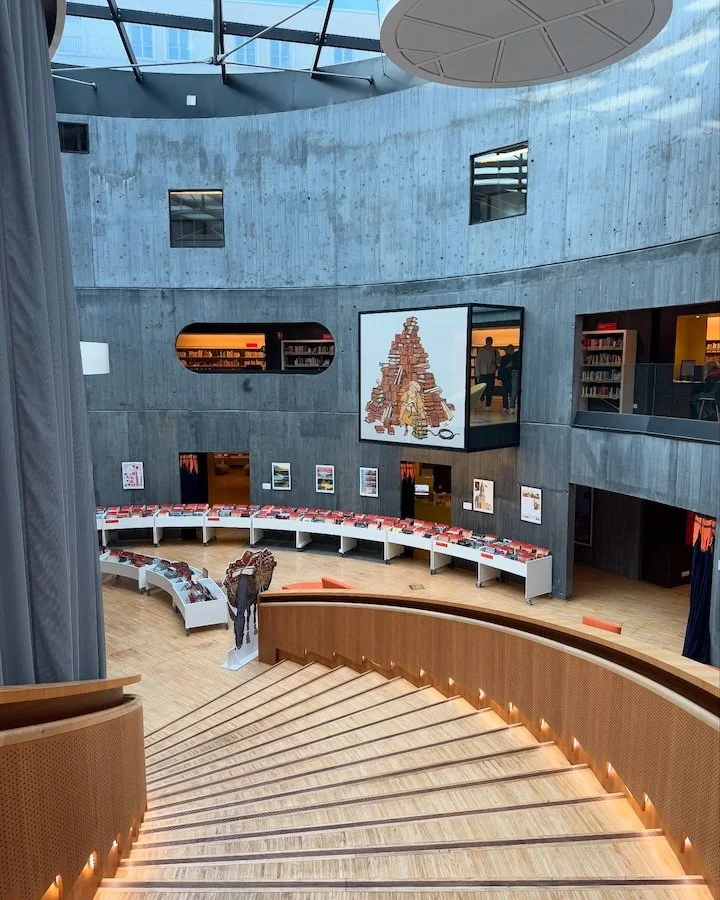
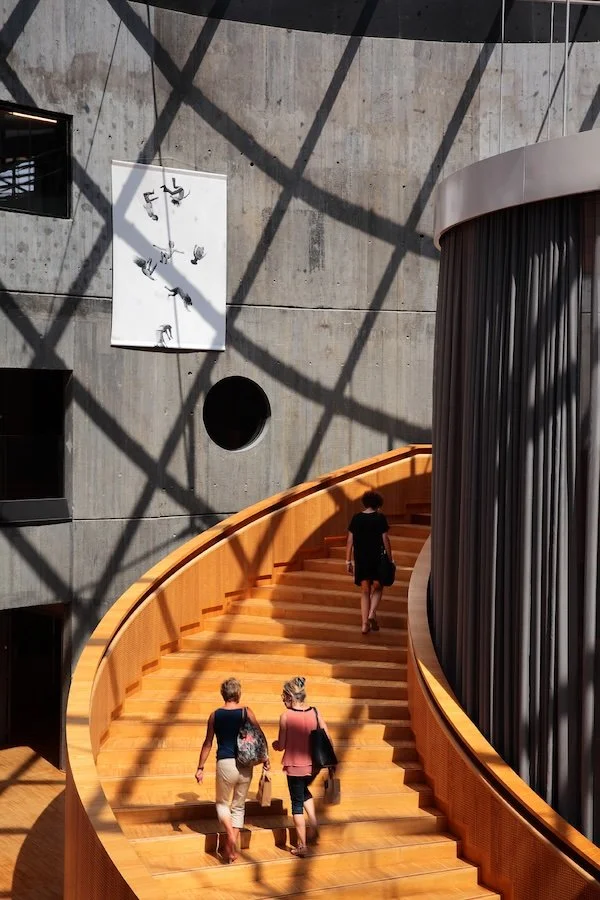
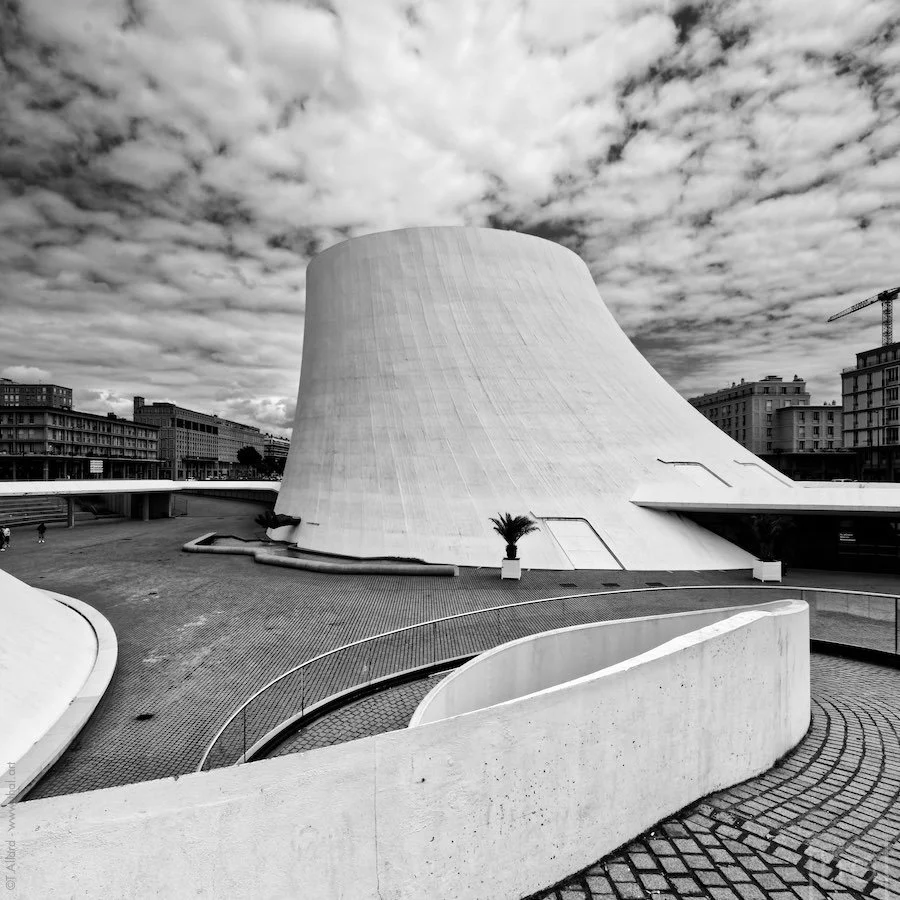
Between 2010 and 2015, architects Deshoulières Jeanneau and Sogno Architectes spearheaded a renovation project overseen remotely by Niemeyer until his passing in 2012 at the remarkable age of 104. Enhancements included a new staircase providing direct access to the street, the transformation of the smaller volcanic structure into a media library beneath a modern glazed roof, and the adaptation of the larger volume to house three distinct performance venues instead of the original single hall and cinema.
While not all alterations have resonated with architectural purists, such as the substitution of granite pavers for the original concrete flooring or the introduction of wood accents to soften the interior ambiance, the essence of Niemeyer's original vision endures. The courtyard's layout forms a stylised dove when viewed from above, symbolic bird sculptures adorn the forecourt, and a fountain crafted by Niemeyer himself, engraved with a poignant reflection on water, land, and universal belonging, embellishes the larger volcanic structure. Despite potential scepticism towards such poetic elements, standing within the sunken plaza, shielded from the wind, with the striking white shells looming overhead, it becomes challenging not to be captivated by the essence of Niemeyer's artistic legacy.