The Extravagance Factory: Meissen and Chantilly Porcelain
Soft power is nothing new… In the 18th-century, two powerful personalities pushed the boundaries of creativity and techniques of their respective houses to conquer the best tables of Europe. Now, and for the first time, Meissen and Chantilly are presented side-by-side, in an exceptional exhibition staged by Peter Marino. Magnifique ! Wunderbar !
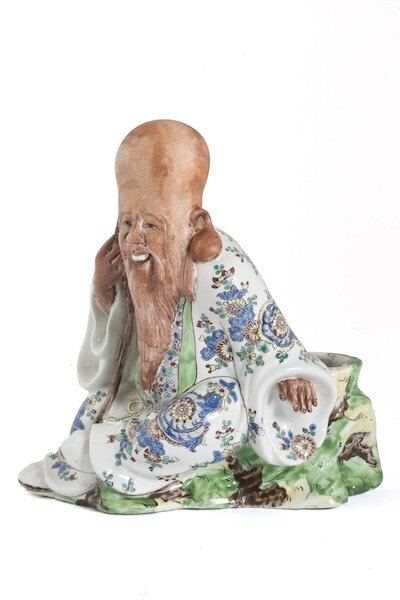
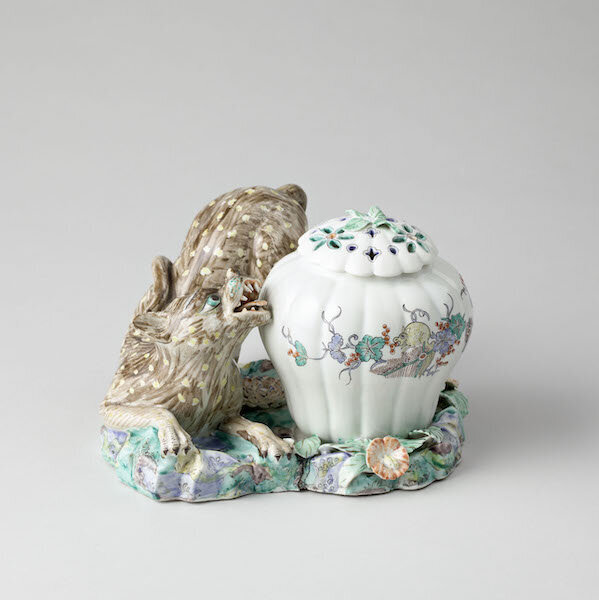
The 18th-century was marked by the race for porcelain, then considered as a form of “white gold”. Two princes, Augustus the Strong, Elector of Saxony and King of Poland, and Louis-Henri de Bourbon, Prince of Condé and prime minister to Louis XV were great admirers of ceramics imported at great expense from the Far East. They, in turn, wanted to create their own manufactories in order to compete with productions from Asia and hence affirm their prestige, while also satisfying their passion.
This is the little-known story of two of the most important porcelain manufactories of the first half of the 18th-century, those of Meissen and Chantilly, that will be told at the Domaine de Chantilly from 5 September 2020 to 3 January 2021.
My visit to Meissen
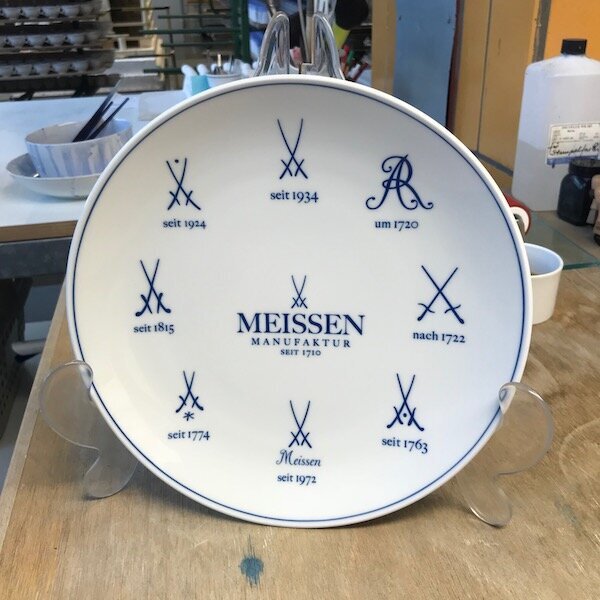
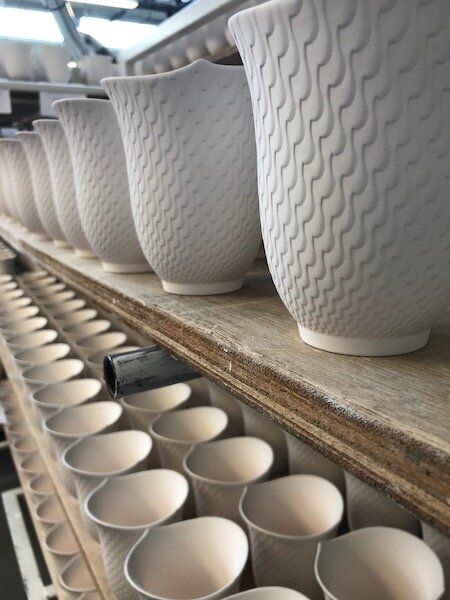
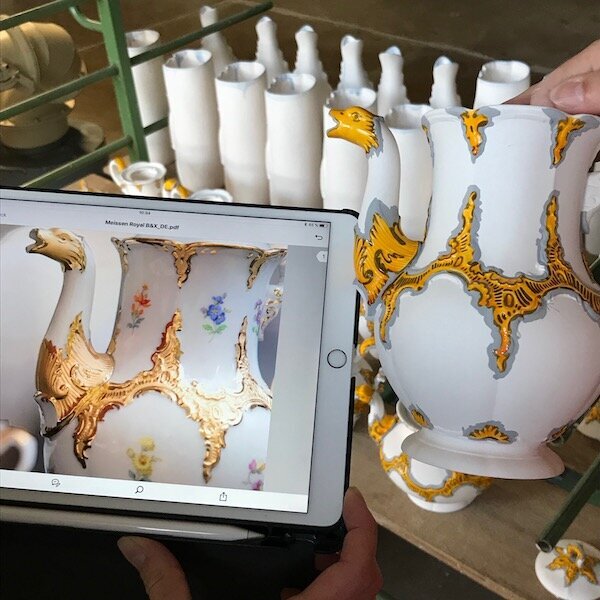
In April 2018, at the end of Salone del Mobile, I had the chance to visit the Meissen Manufactur. An exceptional private visit to meet the artisans, follow their meticulously precise works and learn more about the history of Meissen.
Domaine de Chantilly
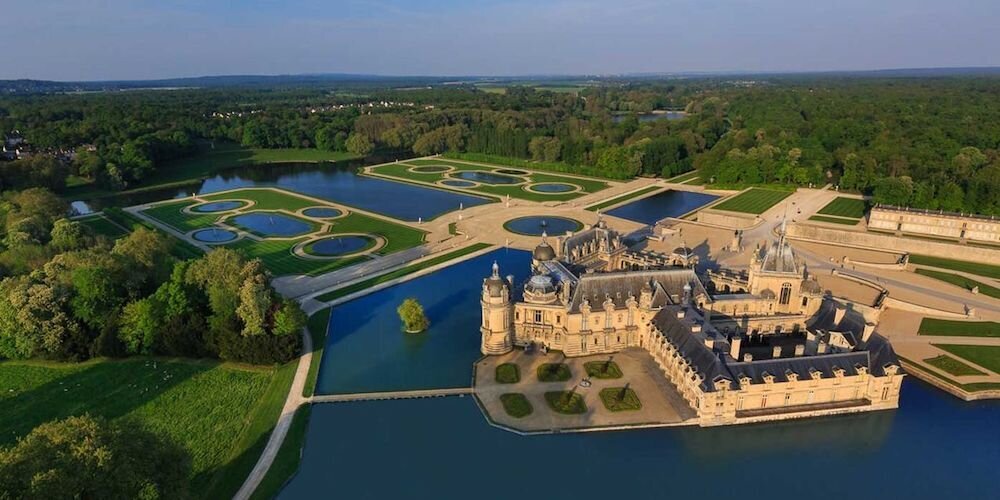
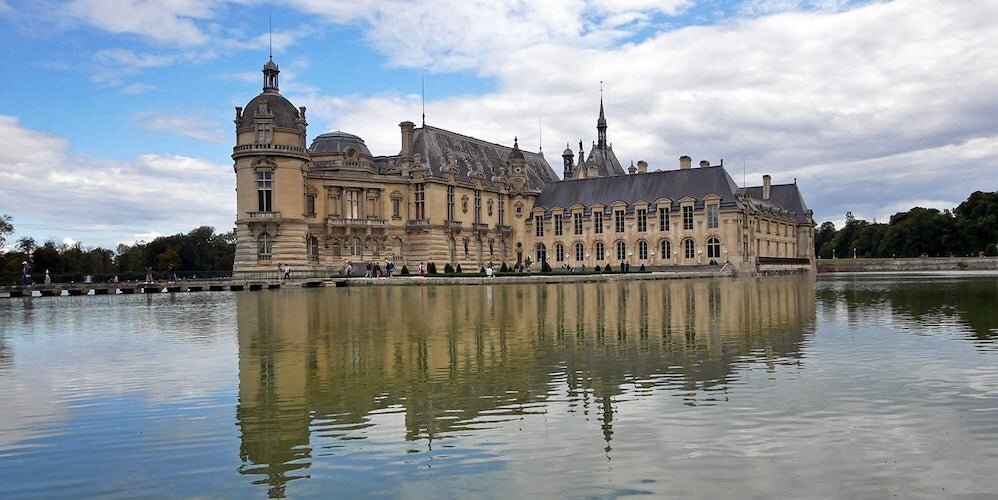
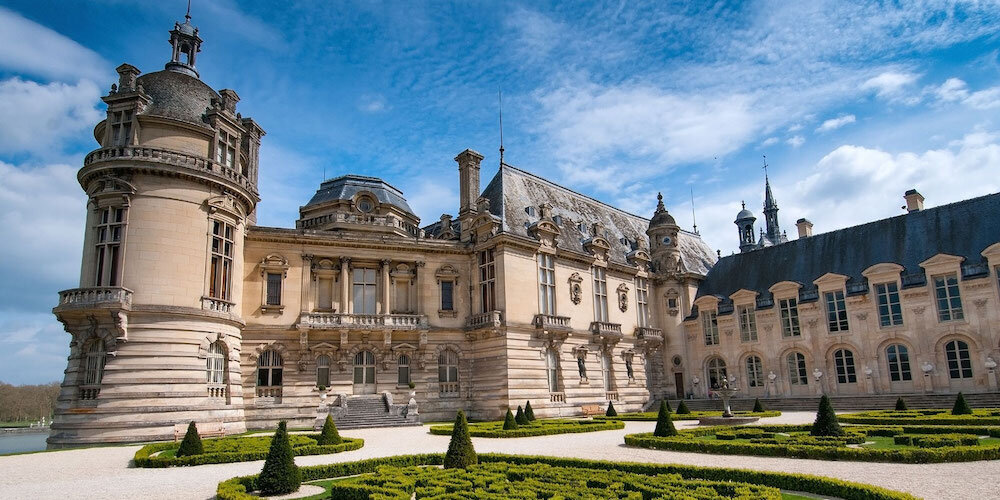
The Château de Chantilly is one of the finest jewels of France's cultural heritage. It is the work of a man with an extraordinary destiny: Henri d’Orléans, Duke of Aumale, son of the last King of France, Louis-Philippe. This prince, who is considered to be the greatest collector of his time, made Chantilly the showcase for his countless masterpieces and precious manuscripts. It is the second largest collection of antique paintings after the Louvre.
The Extravagance Factory exhibition
For the first time, a large-scale exhibition creates a dialogue between productions that marked the decorative arts of the Age of Enlightenment. Organised within the prestigious Grand Apartments of the castle, themselves dating from the 18th century, and served by a spectacular scenography by Peter Marino, it allows you to admire pieces of rarely achieved technical virtuosity and sumptuousness matching the lightness of the century of the art of living.
The rarity, the exoticism of their forms and their decorations, the translucency and the purity of their whiteness ranked porcelains among the most sought-after objects of amateurs of the first half of the 18th century. The exhibition will showcase some of the finest examples of Asian porcelain collected by Augustus the Strong, still preserved in Dresden. Likewise, for the first time, the most beautiful Chinese and Japanese porcelain present in Chantilly until the French Revolution will return to the castle, in the very places where the prince tastefully arranged them!
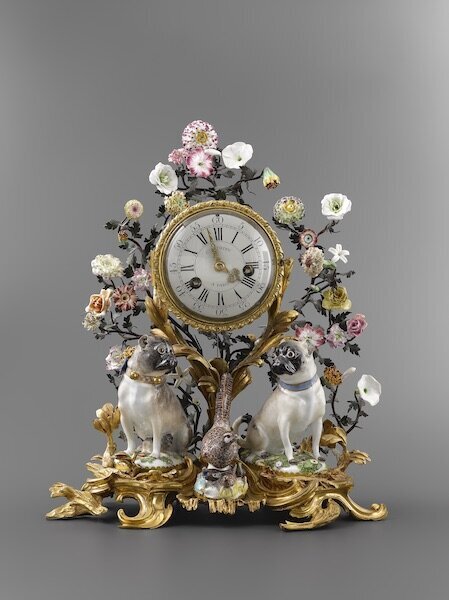
The two collector princes did not stop there and in turn wanted to create their own factory. Meissen was thus the first factory to produce hard paste porcelain outside of China and Japan, as early as 1710; Chantilly soft porcelain factory was created in 1730.
The aesthetic developed by Meissen and Chantilly was resolutely turned towards the Far East: these manufactures played a leading role in promoting the development of chinoiserie in the decorative arts. Porcelain, an exotic material par excellence, was one of its main vectors. In Chantilly as in Meissen, it was particularly to Japanese productions in the so-called Kakiemon style that should be referred to, with stylized Japanese motifs, arranged without symmetry or perspective, highlighting the whiteness of the porcelain.
A spectacular scenography
Scénographie du Cabinet d'Angle
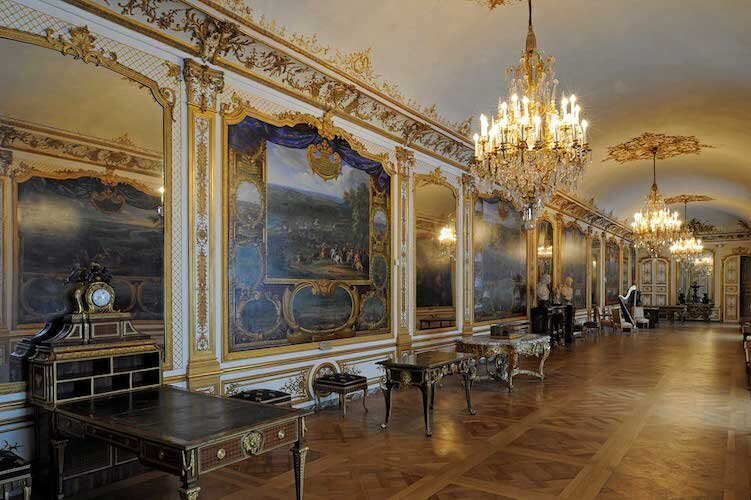
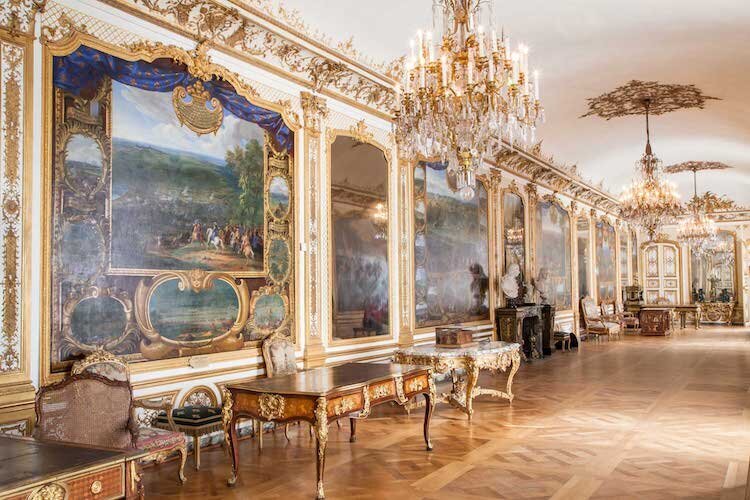
The Château de Chantilly retains the unique decor in France of the apartments of the Prince de Condé who created the Chantilly factory.
It is in these rococo rooms, with white and gold woodwork, that the porcelain will be exhibited, on first-rate period furniture, as in the days of the princes.
Visitors will be invited to an immersive visit experience, to discover, or even learn to appreciate, pieces that take on their full meaning in their original presentation environment.
The great New York architect Peter Marino put all his creativity to serve this ambition by imagining an extravagant scenography, inspired by period presentation devices. Throughout his prolific career, he commissioned over 300 ceramic pieces. He is the scenographer of the Zwinger Porcelain Museum in Dresden and also collects porcelain and ceramics.
Scénographie Salle des Batailles
Thanks to loans from national and international museums, and a large number of exceptional pieces from private collections, the exhibition, moreover one of the few ever devoted in France to the extraordinary production of the German manufacture in Meissen, will allow you to rediscover treasures of art and technique, and to immerse yourself in a world as extravagant as it is refined.
The Extravagance Factory: Meissen and Chantilly porcelain at the Domaine de Chantilly from 5 September 2020 to 3 January 2021.
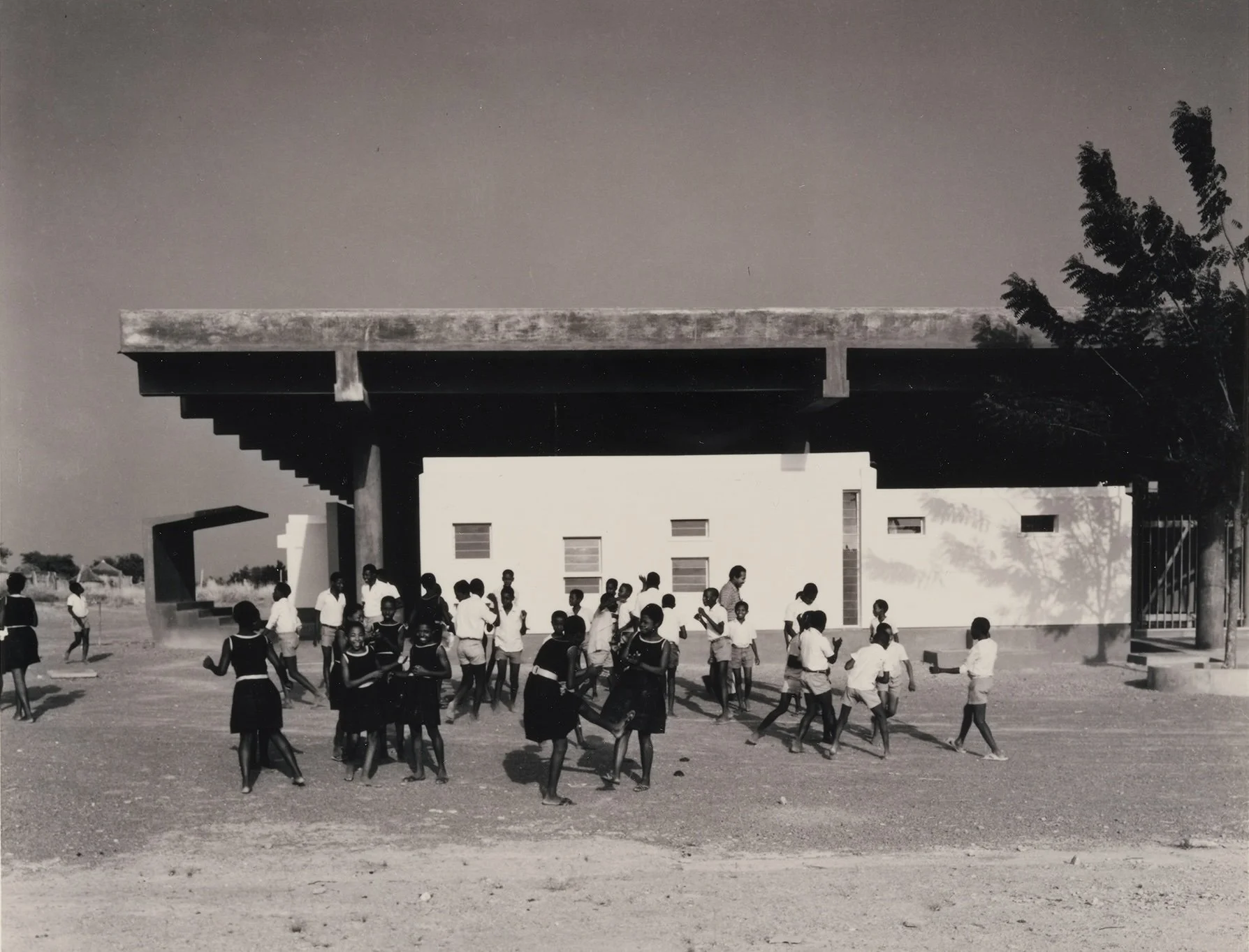
Concrete convictions: how seven newly independent nations built their identity in glass and reinforced concrete — and why MoMA's latest show could not have landed at a more Instagram-ready moment.
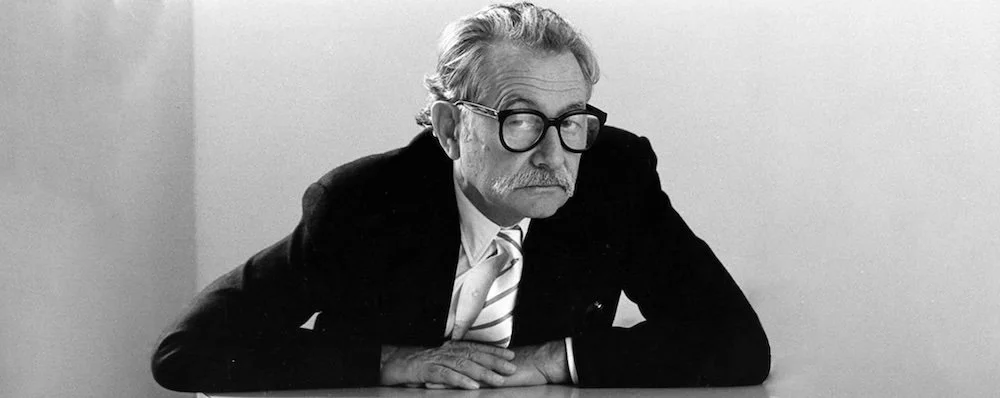
The Italian who made the design world uncomfortable… and then indispensable, finally gets his Tokyo moment.
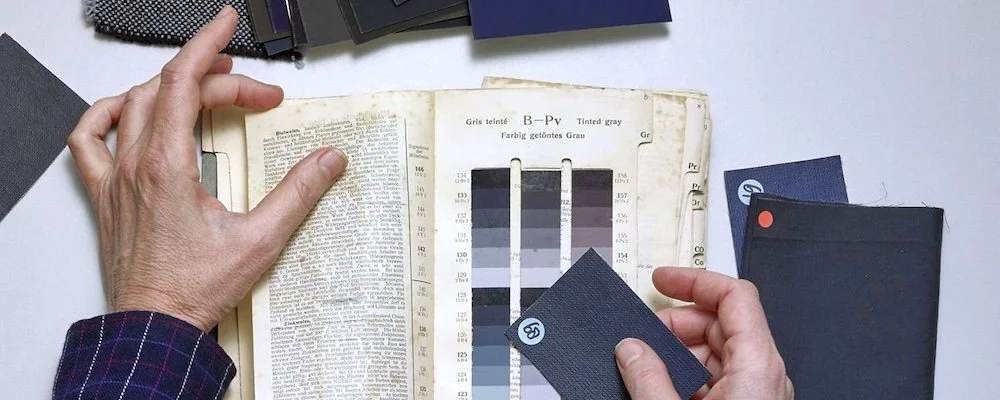
Hella Jongerius doesn’t just make beautiful things—she makes you think differently about them. This spring, the Vitra Design Museum argues for her as one of the most influential design minds of our era.
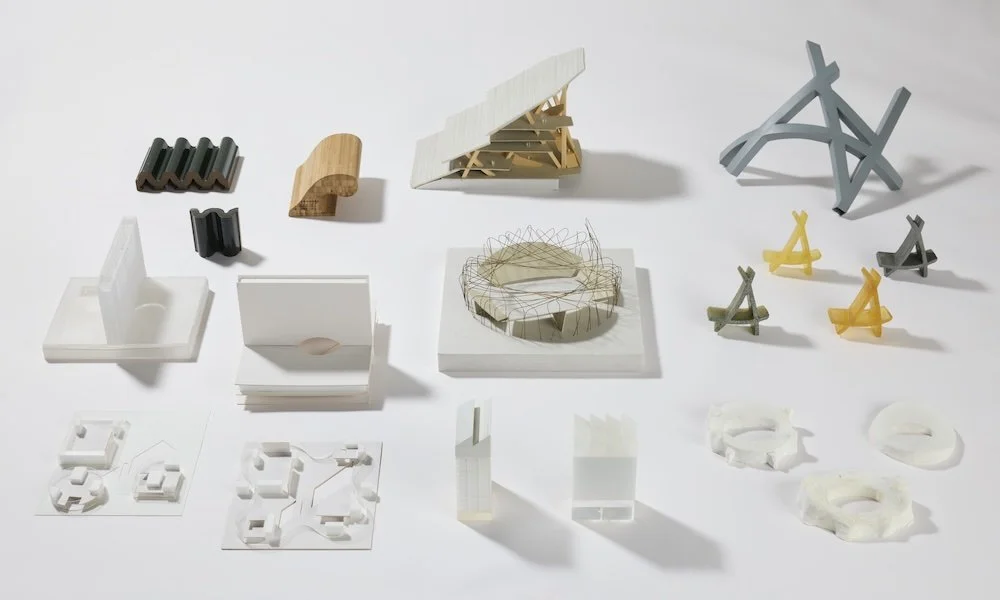
Patricia Urquiola’s exhibition at the Centre for Innovation and Design at Grand-Hornu arrives at a moment when design can no longer ignore its own implications.
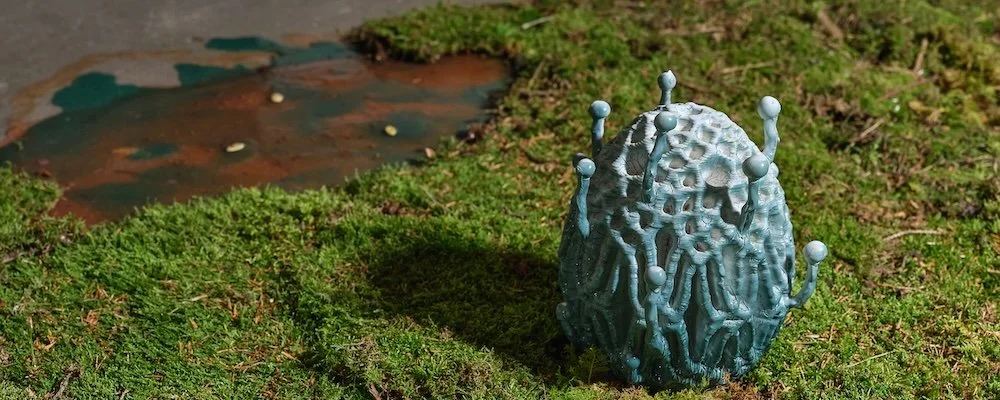
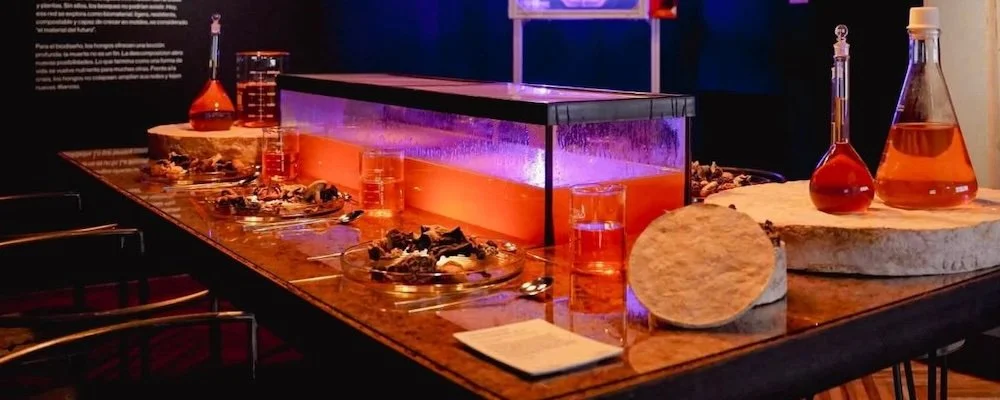
Fungi: Anarchist Designers. A refreshing exhibition that casts fungi not as trendy materials but as autonomous designers with their own unruly logic, far beyond our control at the Nieuwe Instituut, Rotterdam.
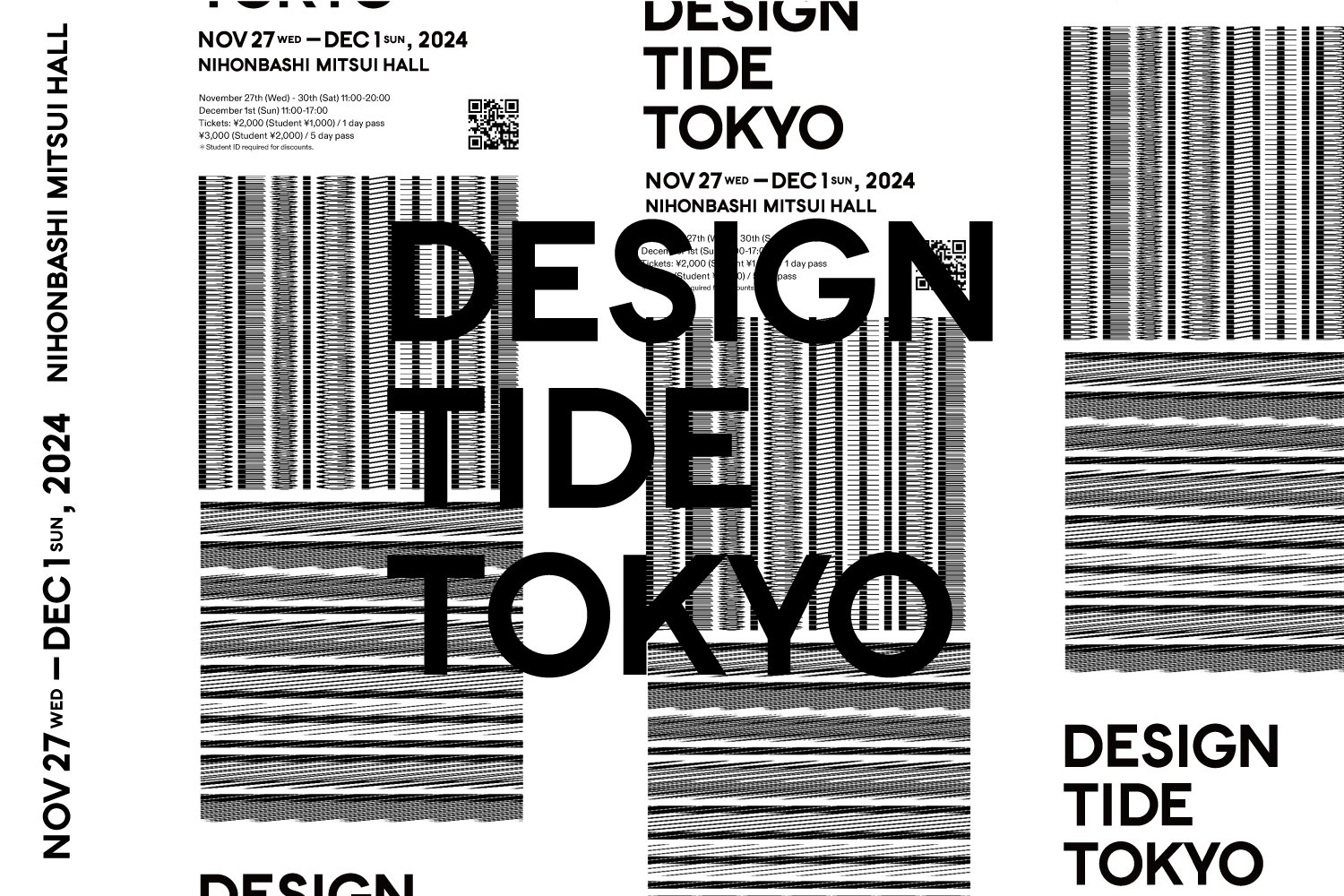
After a hiatus of twelve years, Designtide Tokyo is making its much-anticipated return to the Japanese capital on November 27th, marking an exciting new chapter for design enthusiasts worldwide.
Since its launch in October 2015, Dubai Design Week is set to celebrate a decade next month with one of its largest editions yet. More than 500 designers from 40 countries will gather in the city, showcasing Dubai as the design capital of the Middle East.
The sixth edition of EDIT Napoli is hosting over 100 exhibitors and featuring seven CULT shows at the Archivio di Stato di Napoli.
The Museum of Modern Art presents Crafting Modernity: Design in Latin America, 1940–1980, the first exhibition by a major American museum to examine modern design in the region on a broad scale.
Ever faster, stronger, more beautiful, more intelligent, the cult of individual performance has taken hold in a technological society where the body seems increasingly to be seen as an improvable tool. Can design turn us into superheroes? That is the topic of the brand new exhibition at CID - Le Grand Hornu.
The exhibition at Vitra Design Museum focuses on the transformation of the energy sector from the perspective of design.
On the occasion of the inaugural Design Doha Biennial, an immersive showcase blending Uzbekistan's rich craft tradition with contemporary creativity is on display at M7.
The International African American Museum opens this weekend in Charleston at the waterfront site that served as the port of arrival for nearly half of all enslaved Africans brought to North America in the eighteenth and nineteenth centuries.
On the occasion of the Melbourne Design Week, Tom Fereday and Charlie White present ‘Versa’, an exhibition showcasing a collection of unique furniture and architecture elements.
Few weeks prior to Melbourne Design Week, ‘Export’ is an exhibition focusing on talents from Tasmania, showing the diversity and wealth of the island.
Beside the extensive design offer in town, Tashkent Modernism. Index is an architectural exhibition at Triennale on Soviet Modernist layer of Tashkent, Uzbekistan.
With the ongoing challenges in Lebanon, creating and producing design is a constant struggle. During Salone del Mobile 2023, ‘Under Design Lebanon’ exhibition will present a realistic mapping and projection on the currently still functioning entities.
After its unveiling at the Grand Hornu (Belgium), the Beirut. The Eras of Design exhibition opens at the mudac in Lausanne. A unique and rare chance to learn about the history of design from a country leading in creativity despite its political instability.
In Lille, the first comprehensive retrospective dedicated to Isamu Noguchi offers a rare opportunity to (re)discover the artist’s creations building an intangible bridge between arts and cultures, sculpture and design and also East and West.
#SummerDesignExhibition 2022
Cooper Hewitt - Smithsonian Design Museum presents ‘Designing Peace’, an exhibition exploring the unique role design can play in pursuing peace.
#SummerDesignExhibition 2022
Finland is known for being in the front line of equality, and many of the most iconic Finnish design products were created to increase equality in our daily lives. Helsinki Design Museum’s exhibition takes us on a journey through the ideals of equality in different decades.
#SummerDesignExhibition 2022
Architecture, art and design, Nanda Vigo did it all. With an original scenography in a former prison, the Museum of Decorative Arts and Design of Bordeaux, pays a homage to the unique Italian free spirit.
#SummerDesignExhibition 2022
To mark the 50th anniversary of the 1972 Olympic Games in Munich, Die Neue Sammlung – The Design Museum is highlighting design trends at the Olympics and Paralympics.
Following an invitation from the Vitra Design Museum, Sabine Marcelis has transformed the Schaudepot in one simple, sweeping gesture by sorting its roughly four hundred exhibits by colour.
Despite all possible challenges, Lebanon’s design scene has flourished with a diverse palette of talents. ‘Beirut – Eras of Design’ exhibition portraits the dynamic evolution and growth from 1950s.
On the occasion of the Taiwan Design Expo in Chiayi, six design teams were asked to re-envision public spaces based on water landscapes.
Six Swiss design studios design a room and furnish it with pieces from the Zurich Design Museum collection. Jörg Boner, Connie Hüsser, Kueng Caputo, Sebastian Marbacher, Panter&Tourron and Adrien Rovero showcase their favourite objects and convey a sense of how they work and what drives them.
Italian born in Austria, architect, writer, designer, Ettore Sottsass opposed his work to rationalism and never ceased to lay claim to an emotional experience of objects. The Centre Pompidou keeps alive his ritual punctuation of a cosmic whole.
The Musée des Arts Décoratifs in Paris presents an exceptional display of over 500 jewellery and objects, masterpieces of Islamic art as well as photographs, books and rare archives that inspired creations from the French Maison Cartier.
Women have contributed crucially to the development of modern design but books often fail to mention them.
Vitra Design Museum seeks to help redress the balance and pays tribute to eighty women in design in a brand new exhibition opening by the end of September.