The Centre Pompidou-Metz opens its Shigeru Ban retrospective on 5 December, curated and staged by the architect himself. A good excuse to revisit the two of his buildings I know from the inside: a cathedral in Christchurch and a small hotel in Karuizawa.
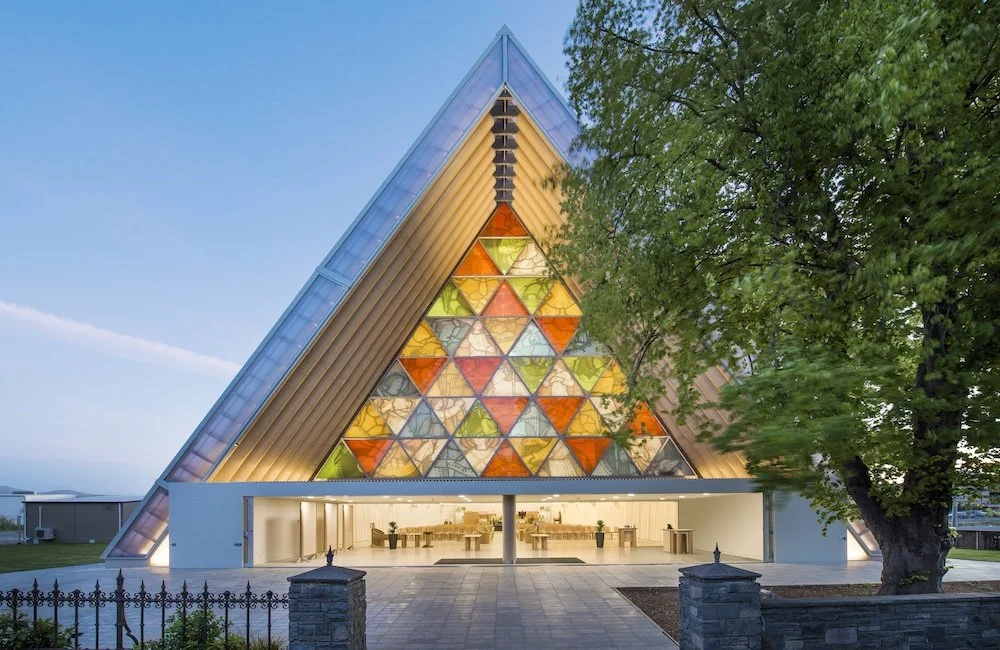
Photo : © Stephen Goodenough
Christchurch, August 2017. The middle of the austral winter, dark by half past five, and a city still patching itself up six years after the February 2011 earthquake. Much of the centre was car parks and gravel, and the old Gothic Revival cathedral stood behind fencing in the square. A few streets away its temporary replacement was lit from inside, so I went in.
From the outside, the building is an exercise in disarming simplicity: two long slopes of cardboard tubes leaning into one another, raised on shipping containers, the triangular front filled with panes of coloured glass that carry fragments of the lost cathedral’s rose window. It looks less built than folded.
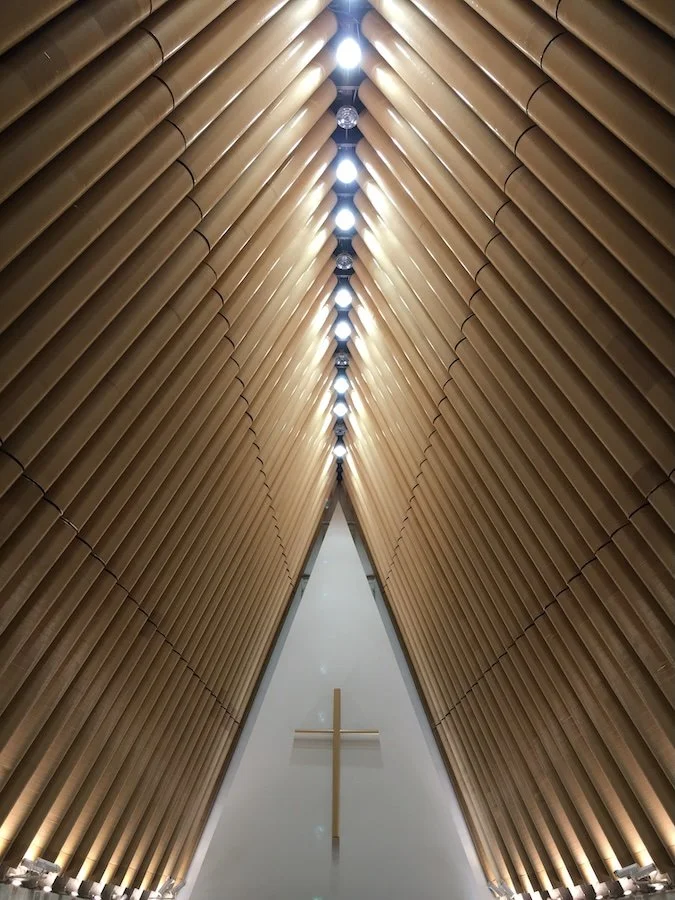
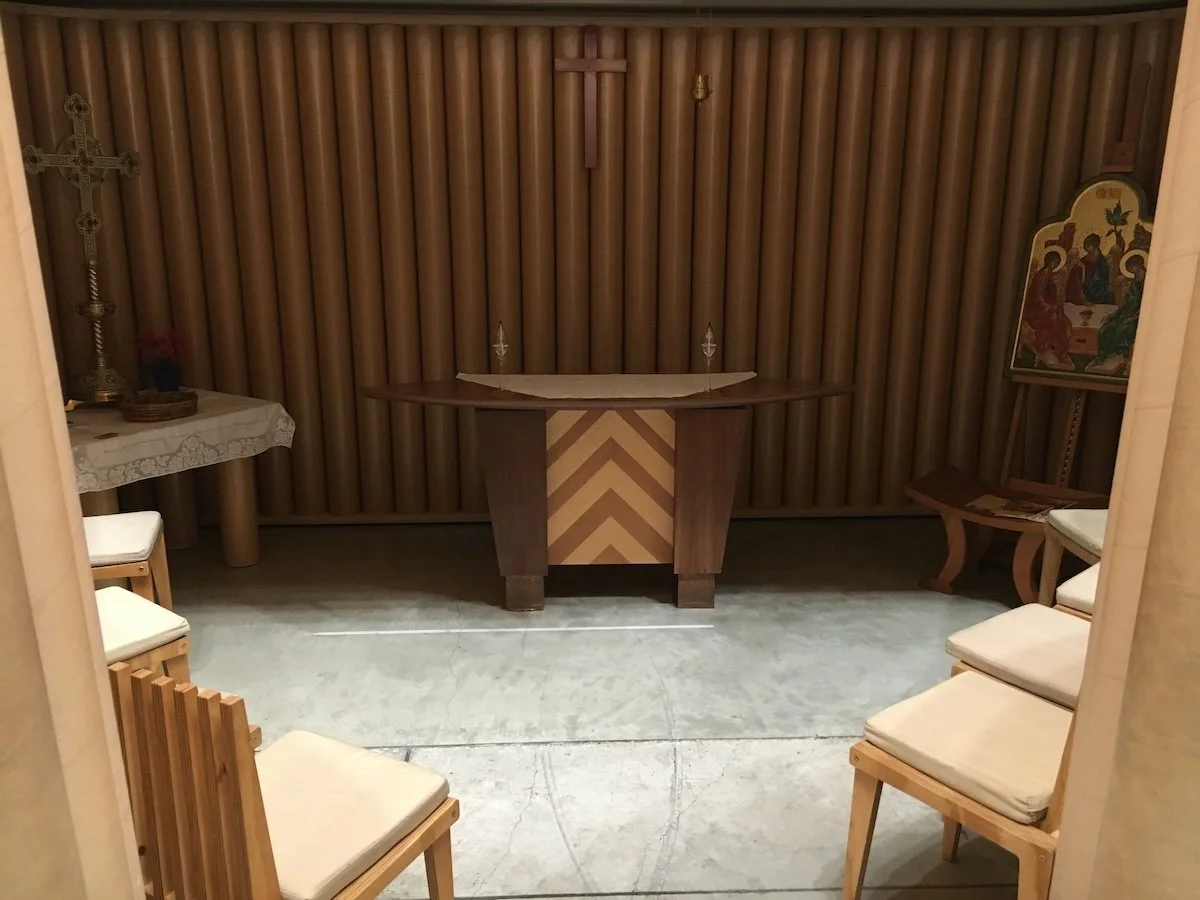
Inside, the local choir was rehearsing. Not a concert, a rehearsal, which is better. There were the false starts, the conductor’s patient corrections, a phrase taken again from the top, and then, quite without warning, the moment when everything aligned and the voices rose into the ribs of the roof. Cardboard, it turns out, is a generous acoustic companion. I stood at the back with my coat still on and understood something no monograph had quite managed to tell me: this was emergency architecture, yet nothing about it felt provisional. It felt, simply, kind.
A stubborn affection for paper
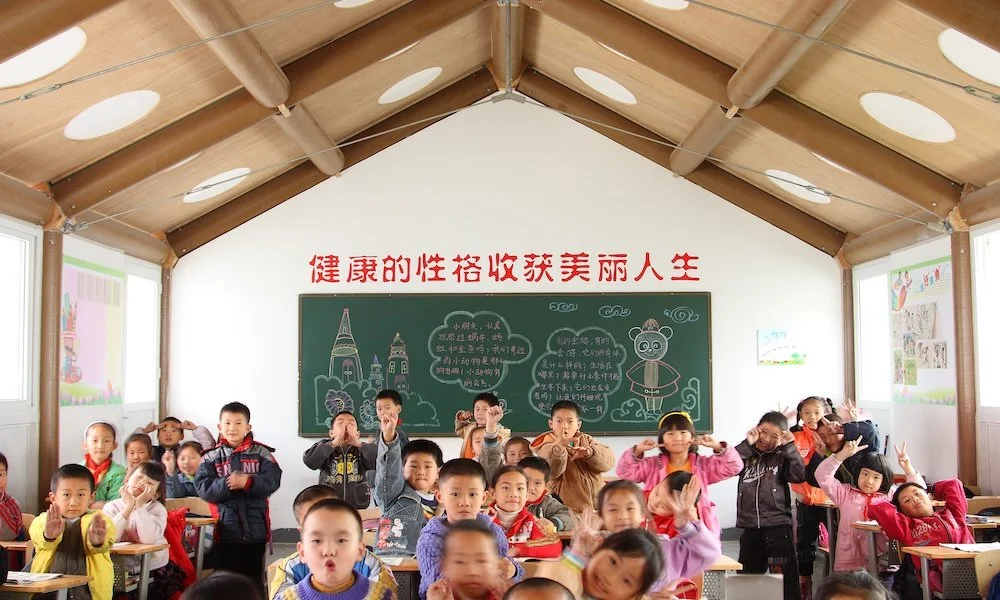
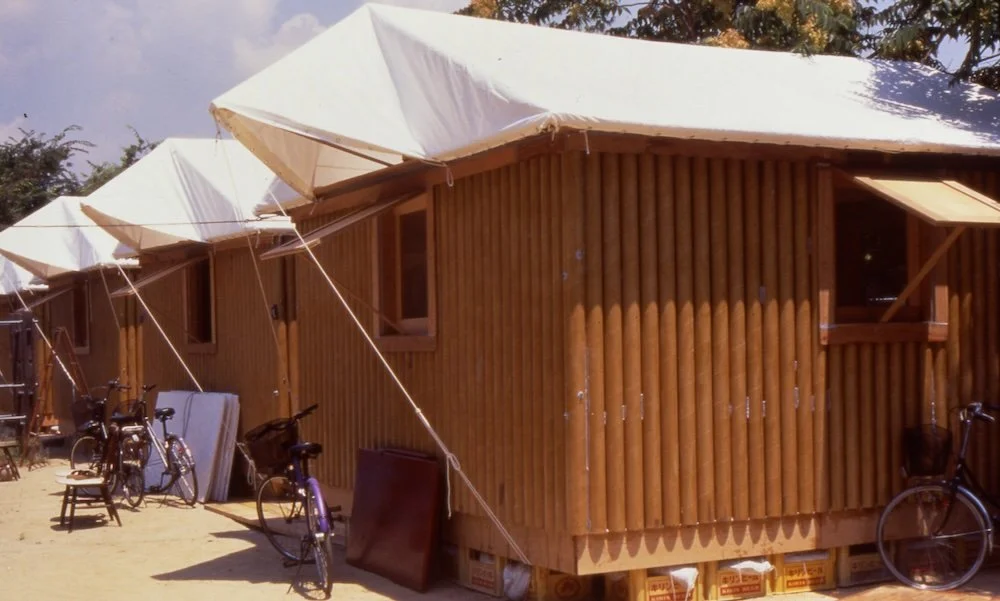
Shigeru Ban has spent four decades persuading the world to take a humble material seriously. When he began working with cardboard tubes in the mid-1980s, no country recognised them as a structural material. With the engineer Gengo Matsui he tested their strength and modes of assembly until, in 1995, they were certified for permanent construction. That same year, after the Kobe earthquake, he built his first Paper Log Houses: cardboard walls resting on beer crates weighed down with sandbags. Elegance, it seems, has never required a large budget, only a clear mind.
The Christchurch cathedral was conceived as a transitional building. It is still there, still used, still loved, which brings me to the one line of his that I keep returning to:

Photo : © Centre Pompidou-Metz / Romain Gamba / 2025
“Even a building made of paper can be permanent if people love it. That’s my definition of permanent and temporary.”
On that winter evening, with a choir filling a room made of tubes, the proposition did not sound like a theory. It sounded like a description.
Karuizawa, nine years on
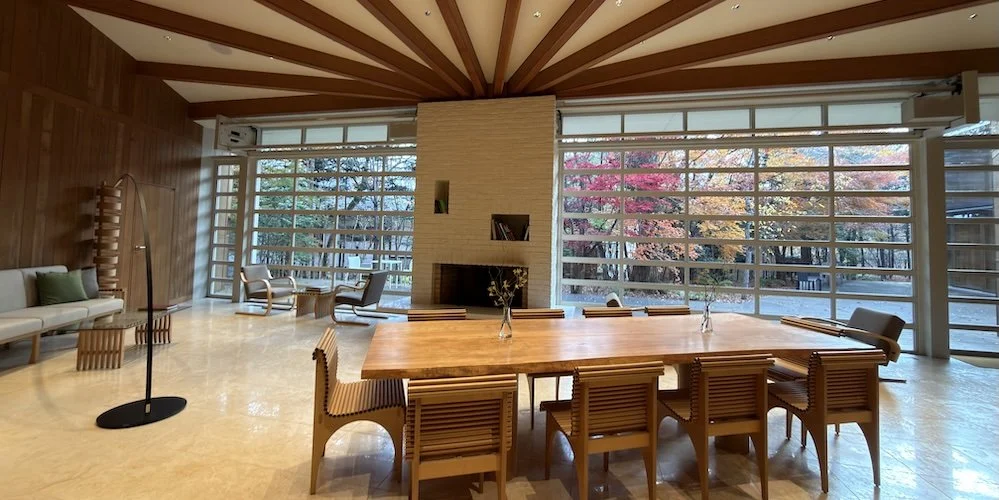
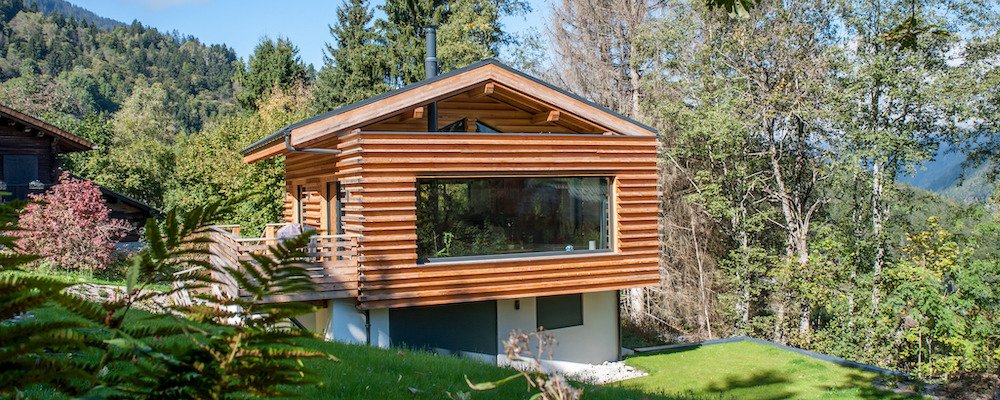
This autumn I found myself in Karuizawa, the highland resort where Tokyo has gone to escape its summers for well over a century, and stayed at Shishi-Iwa House, a small hotel designed by Ban in the forest. If Christchurch was paper, Karuizawa is timber, and the shift tells you a great deal about where his research has travelled since.
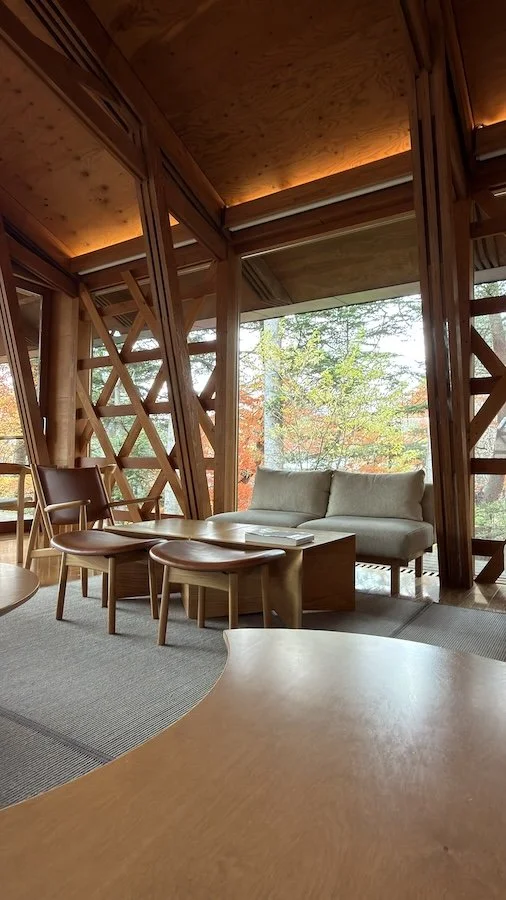
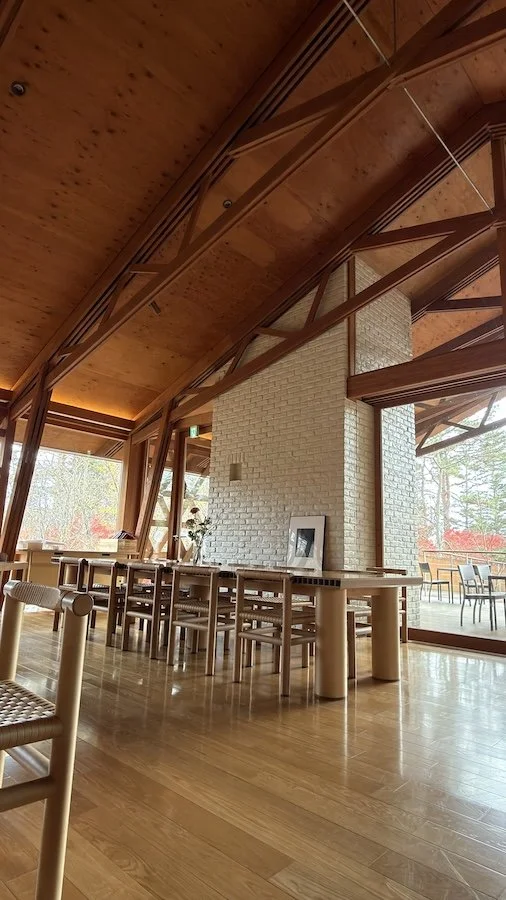
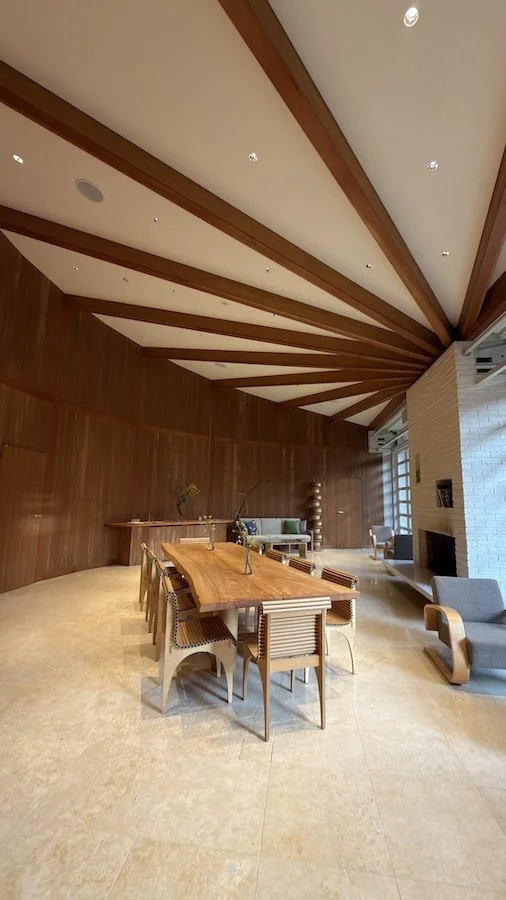
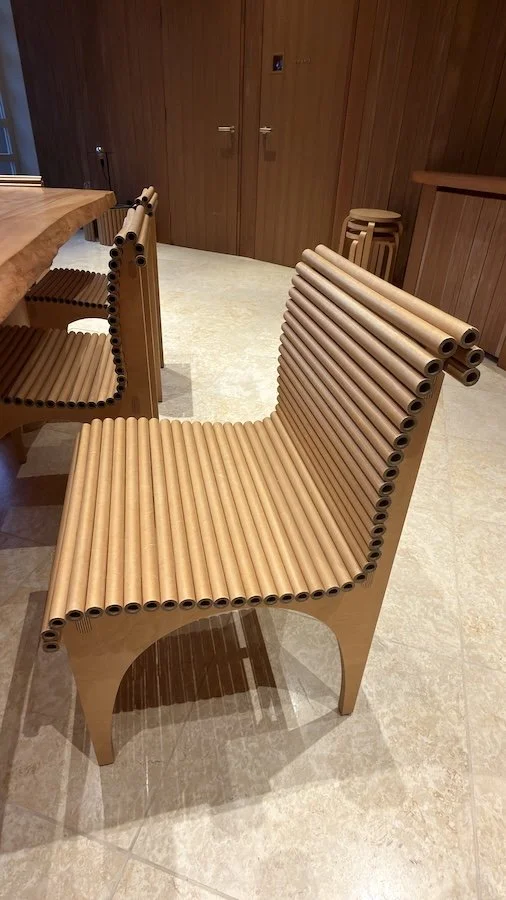
The building does not so much sit in the woods as negotiate with them. Its long, low wooden roof bends and ripples between the trees, as though the architect had asked each one politely whether it minded being kept, and every one had said yes. The rooms are few, the windows generous, and the forest is treated less as a view than as a fellow guest. Breakfast arrives with the unhurried precision Japan does better than anywhere, and one leaves with the faintly embarrassing sense of having been looked after by a building.
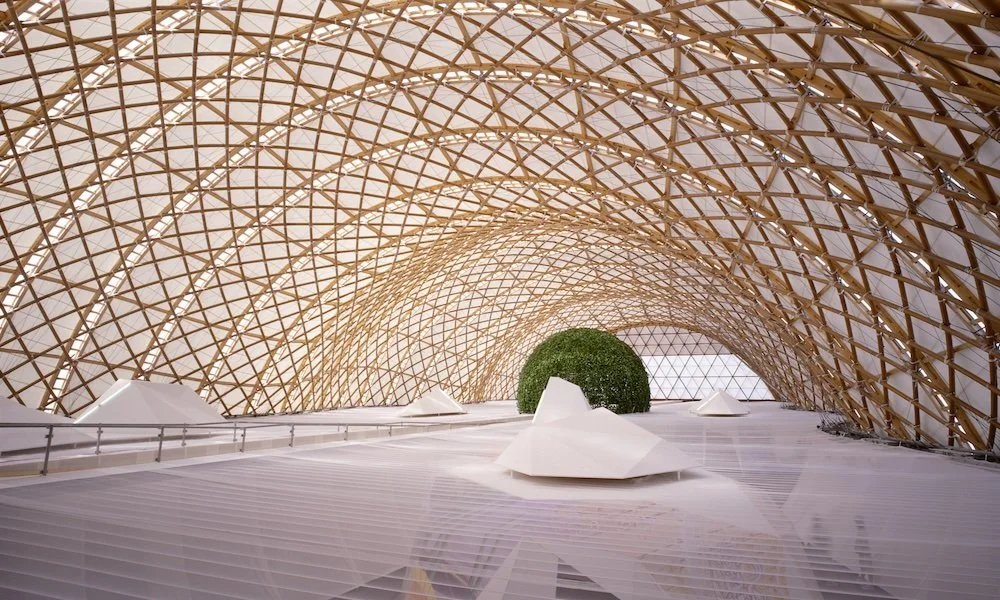
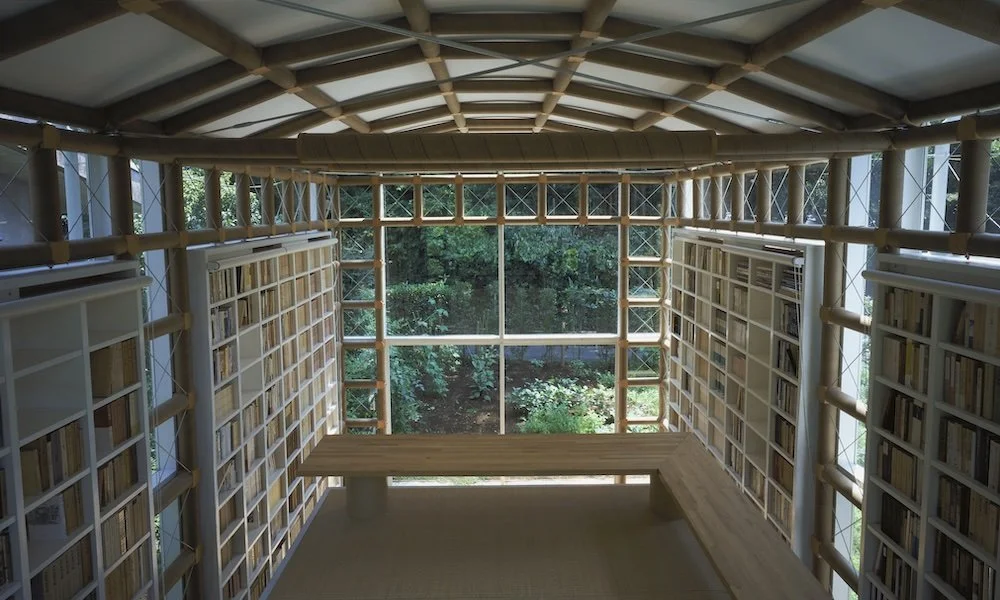
What links the two experiences, beyond their author, is restraint. Neither building raises its voice. Both rely on a single, well-understood material, used with intelligence rather than bravado, and both assume that the people inside them deserve dignity and calm, whether they are parishioners who have lost their cathedral or travellers who have simply lost their appetite for noise.
Metz, in his own hands
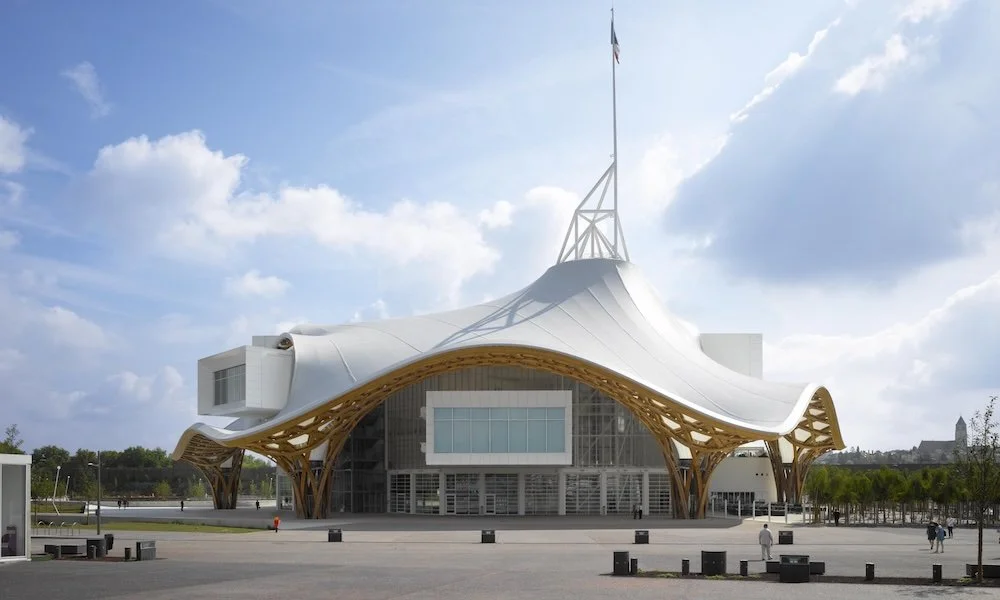
Photo : © Roland Halbe
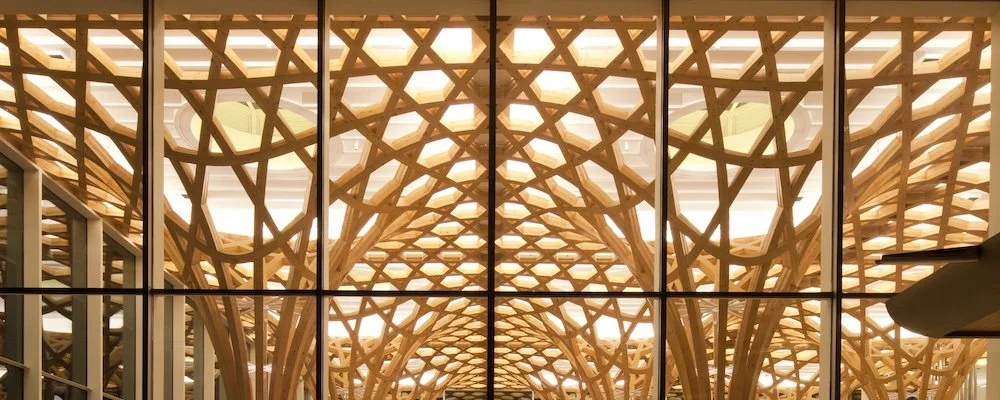
All of which makes Shigeru Ban. Building a Better World, at the Centre Pompidou-Metz from 5 December 2026 to 30 August 2027, a particularly welcome occasion. Sixteen years after the museum he designed with Jean de Gastines opened beneath its woven, bamboo-hat-inspired timber roof, Ban returns as both curator and scenographer of his first retrospective in France. The building becomes venue, subject and exhibit at once, which is either the height of modesty or a very Japanese form of wit, and possibly both.
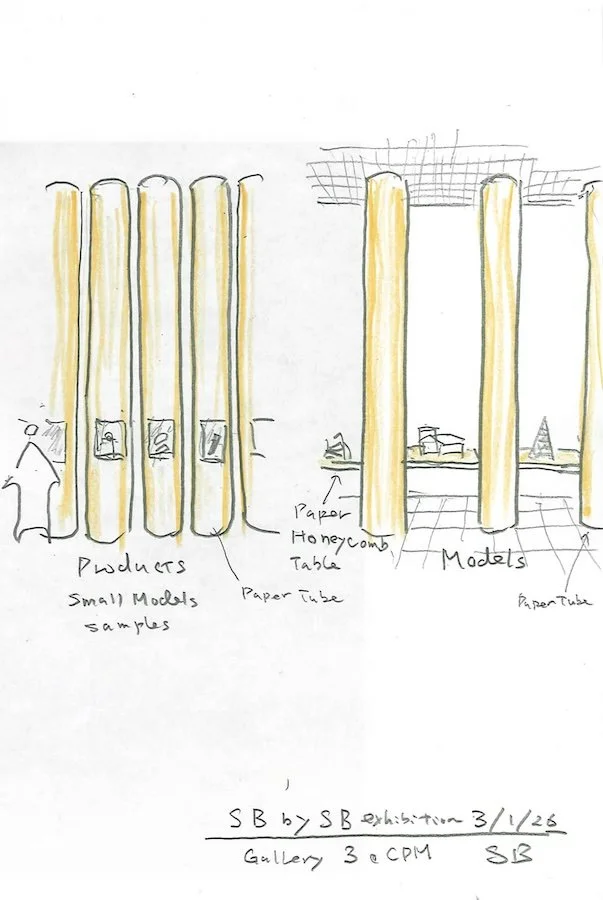
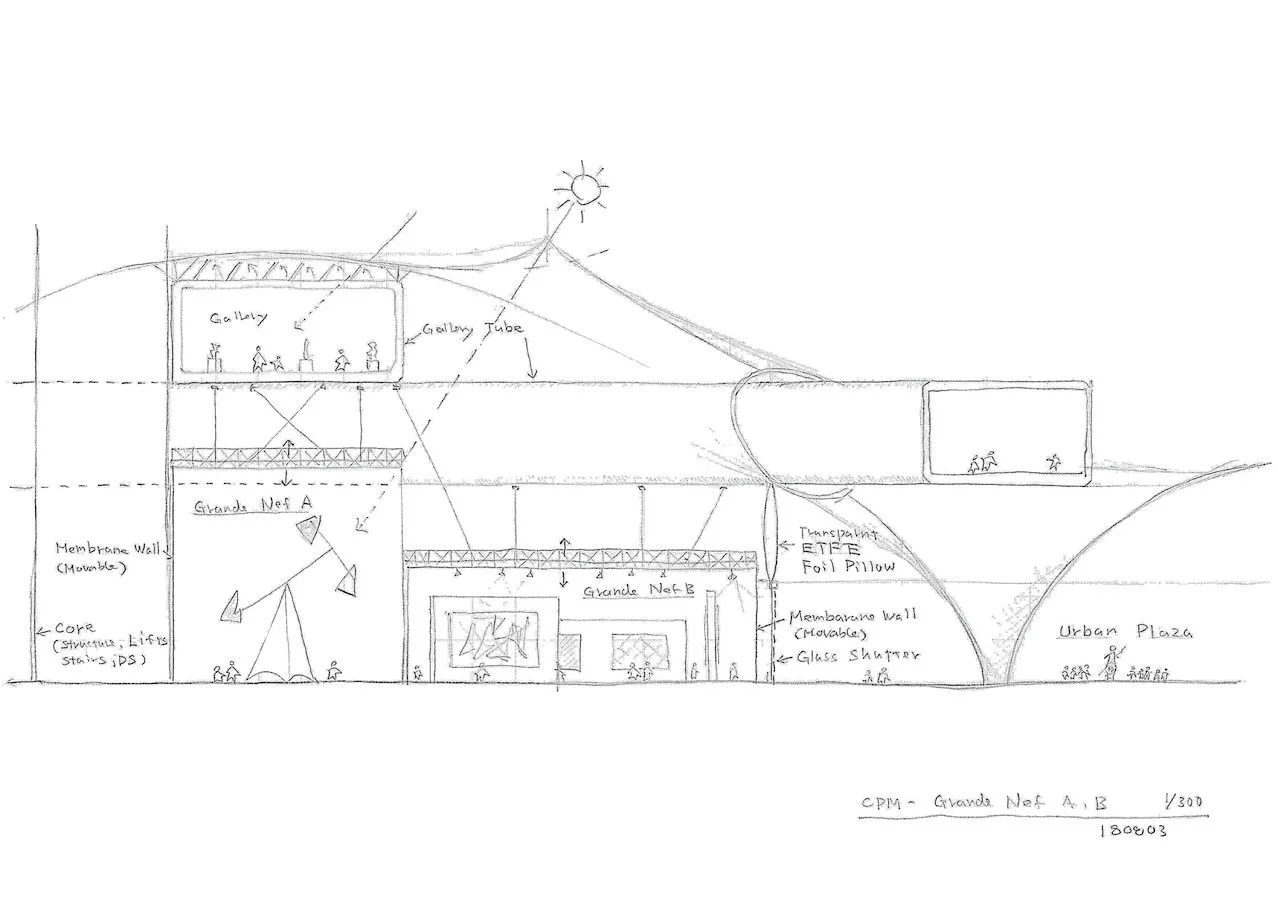
A colonnade of cardboard-tube arches runs through Gallery 3, sheltering models, prototypes and full-scale structures, from the Paper Log House and the Onagawa Container House to the model of the Christchurch cathedral itself. A wall of several hundred hand drawings traces how his ideas take shape, pencil first, always. The Forum is given over to his humanitarian work with the Voluntary Architects’ Network, founded in 1995, while later rooms follow his turn towards engineered timber, from the gridshell of the Swatch and Omega headquarters in Biel to La Seine Musicale in Paris, whose solar sail follows the sun along the Seine.
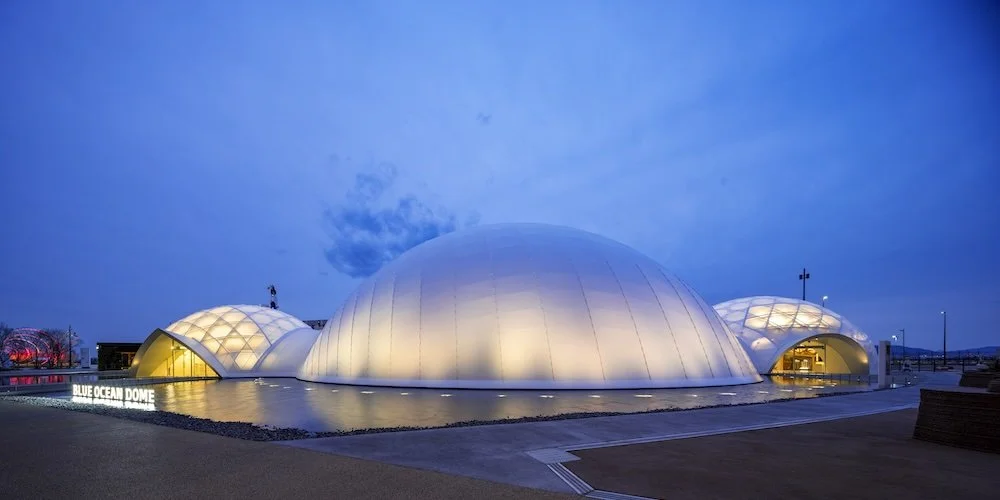
Photo : © Hiroyuki Hirai
The story does not end with the closing date. In September 2027 the Paper Dome, one of the modules of his Blue Ocean Dome from the 2025 Osaka Expo, will settle permanently beside the museum to house its school, joining the Paper Tube Studio in the garden. Metz will then hold three of his works within a few hundred metres: the institution, the workshop and the classroom. Paper, once again, outlasting its reputation.
I suspect that if a choir were to rehearse in that dome on a winter evening, the effect would be familiar.
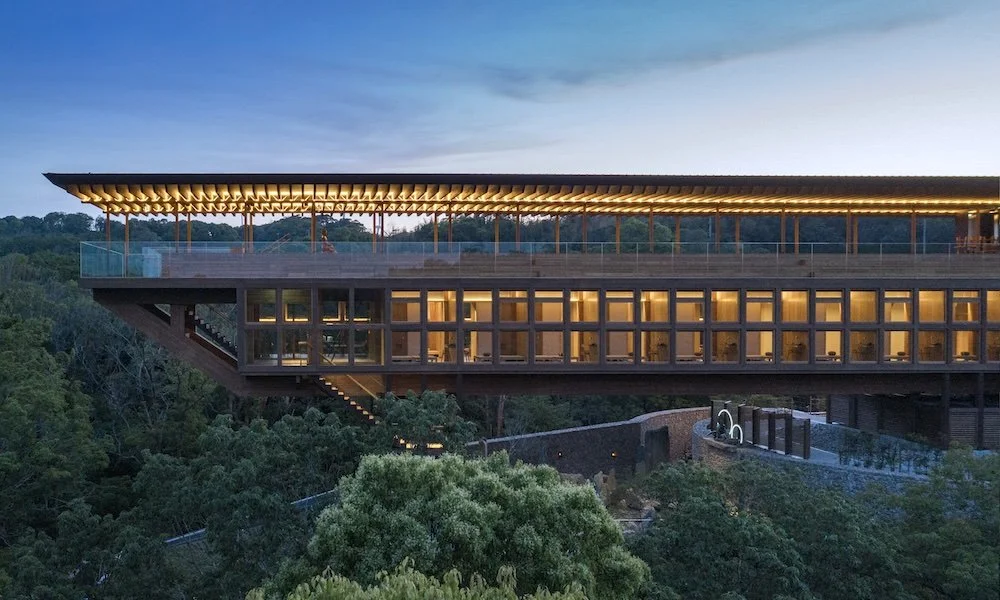
Shigeru Ban, Zenbo Seinei, Pavillon de méditation, Japon, Awaji, 2022. Copyright : Photo : © Hiroyuki Hirai
Shigeru Ban. Building a Better World, Centre Pompidou Metz, Galerie 3, Forum and Paper Tube Studio - 5 December 2026 – 30 August 2027