Living Territories: Biodesign Comes to Mexico
Mexico's first biodesign exhibition, at the Museo Franz Mayer, treats plants, fungi and microbes not as raw material but as fellow designers, and asks us to take a humbler seat at the workbench.
Last November in Rotterdam, fungi were cast as anarchists: unruly, autonomous and cheerfully indifferent to our plans. Some 9,000 kilometres away, the Museo Franz Mayer in Mexico City offers a gentler reading. In Biodiseño MX: Territorios vivos (Biodesign MX: Living Territories), fungi keep their independence but share billing with plants, animals and microbes, all of them presented as allies in a practice that no longer merely takes inspiration from nature but designs with it and from within it
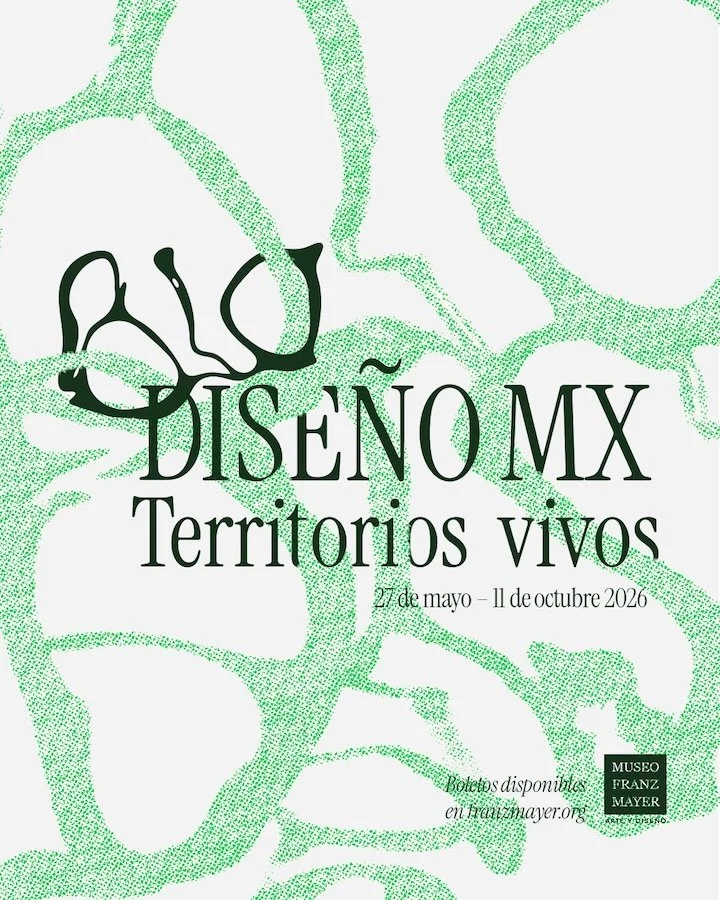
Billed as the first biodesign exhibition in Mexico, the show is part of the museum's 40th anniversary programme, and it opened in suitably unbuttoned fashion on 27 May at the Noche del Franz BioFunky. It is not every sixteenth-century building in the Centro Histórico that throws a party in honour of bacteria.
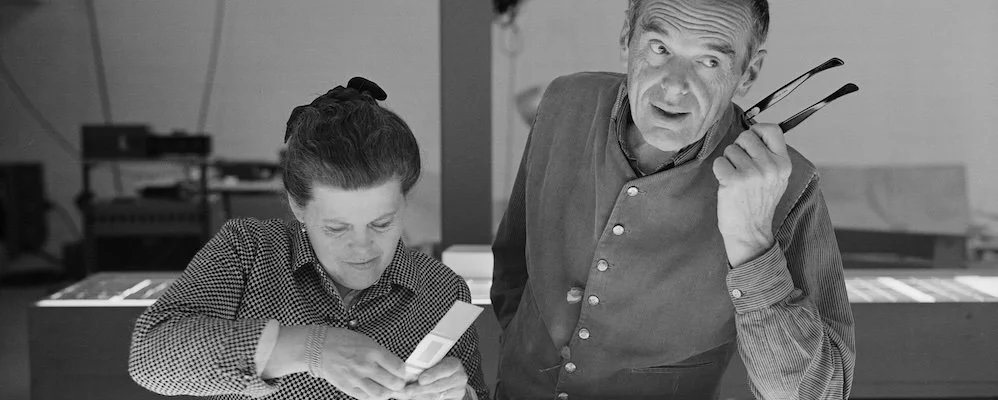
The curator, Taina Campos, is an industrial designer whose work centres on regenerative design, material experimentation and architectural research. Having lived and worked in Rio de Janeiro, London, Paris and Oaxaca, she now teaches ecodesign, biomaterials and gender in design across Mexico City's universities, and describes herself as an ecofeminist activist. That perspective shapes the exhibition's central argument: that the anthropocentric view which has long cast humans as separate and superior beings is not only outdated but a poor basis for design.
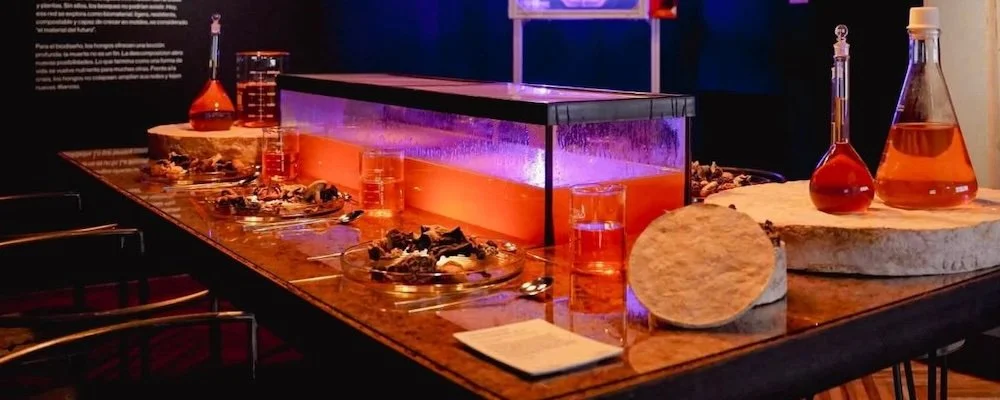
The exhibition gathers 74 works, alongside photographs, graphics and audiovisual pieces, by Mexican and international designers, artists, architects and researchers, from established names to emerging creators and interdisciplinary collectives. It unfolds across five sections: Flora, Fauna, Microbia, Funga and Bioinspiración. The word Funga deserves a moment. It is the relatively recent term proposed to give the fungal kingdom the same standing as flora and fauna, and seeing it on a museum wall feels like a quiet promotion for the organisms Rotterdam treated as rebels.
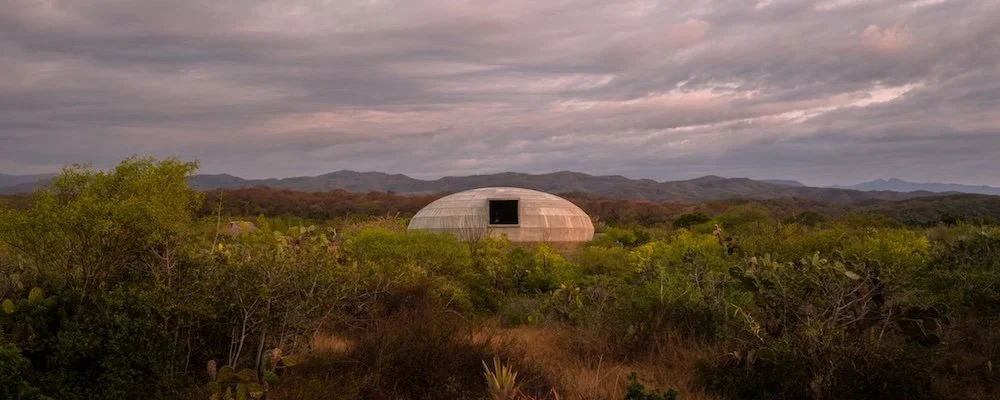
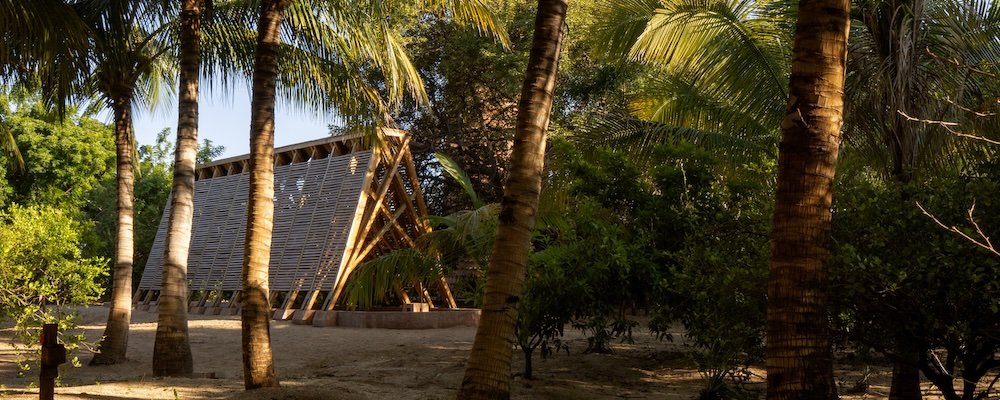
On display are biomaterials made from agricultural waste and plant fibres, biological textiles, shelters for bees, projects developed with microorganisms, and 3D-printed memorial reefs designed to help restore marine biodiversity. What distinguishes the selection is its refusal to treat biodesign as a laboratory novelty. The exhibition also draws on ancestral knowledge rooted in the land, reminding visitors that many communities have been designing with ecosystems for centuries. Biodesign emerges here less as a passing trend than as a living conversation between science, technology, craft and material memory, a lineage that in Mexico runs particularly deep.
The museum has also practised what it preaches. Several walls have been rendered by Mixterra with a coating of clay-rich earths, using age-old techniques that regulate temperature and humidity naturally, while the display furniture and labels are made from recycled materials. For once, the exhibition architecture is not a neutral backdrop but part of the argument.
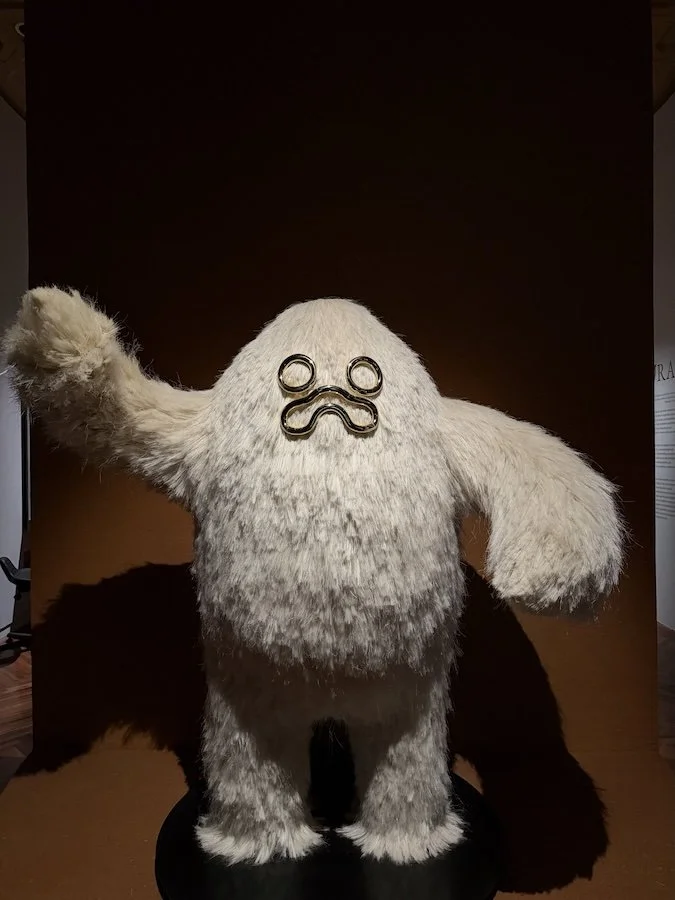
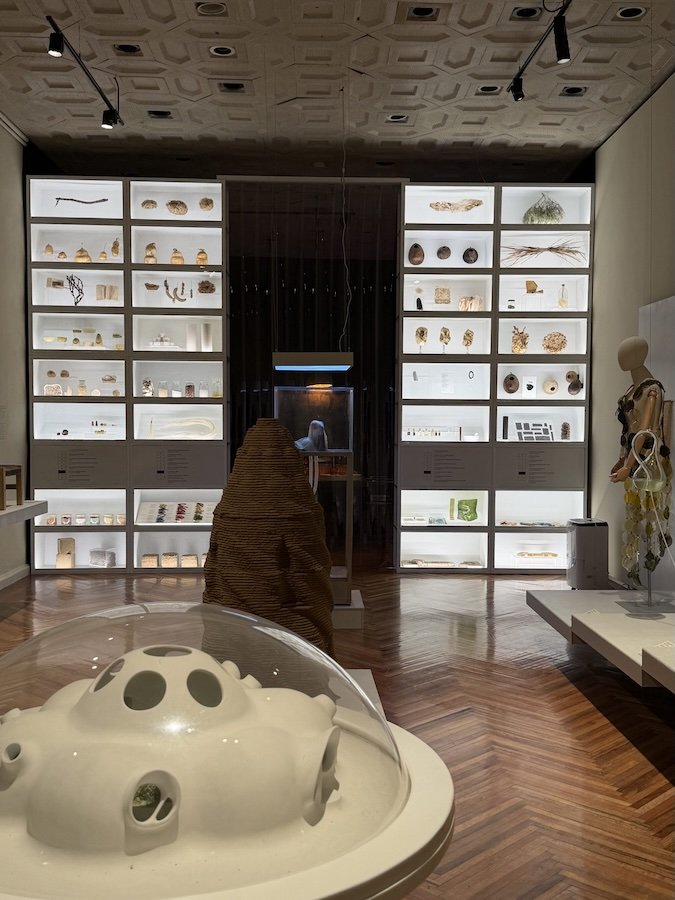
As in Rotterdam, the conclusion is a call for negotiation rather than domination, though here the tone is more hopeful than cautionary. The exhibition invites us to look at materials that grow, organisms that take part in the creative process and projects that treat nature as a partner rather than a resource. Put more simply, if fungi are anarchists, Mexico City suggests we might still persuade them to collaborate.
A catalogue will accompany the exhibition, and an education programme launched in June with the forum Diseñar con la vida, restaurar el planeta (Designing with Life, Restoring the Planet).
Biodiseño MX: Territorios vivos runs at the Museo Franz Mayer, Mexico City, until 11 October 2026.